The Gulf is on fire again — and the prediction markets are finally catching up
A reported US strike on Kangan in southern Iran has collided with Polymarket's odds on blockades and nuclear deals, exposing how thin the line between deterrence and war has become.
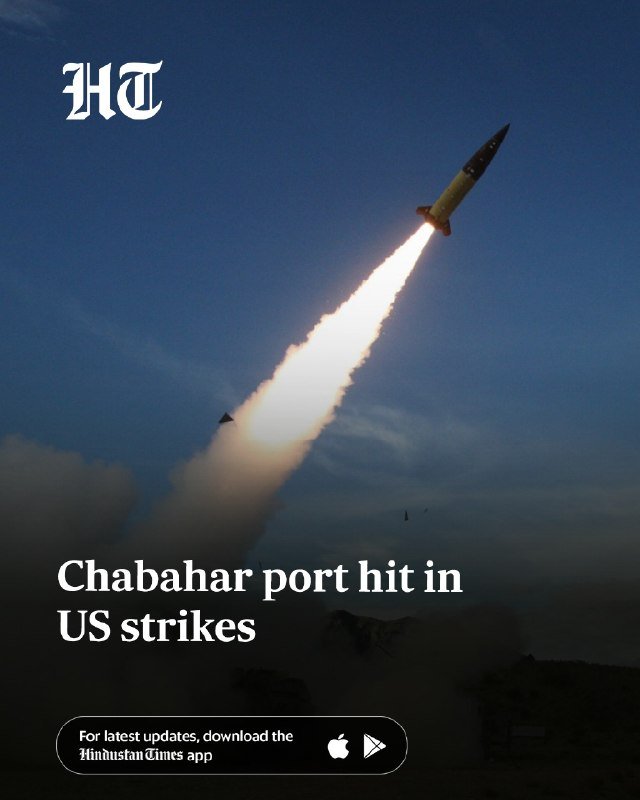
The Gulf has been here before, but rarely with this much advance warning sold at market prices. By 20:47 UTC on 8 July 2026, as Telegram channels GeoPWatch and ClashReport carried claims of a US strike on the city of Kangan in southern Iran, an X account called Sprinter Press was already broadcasting in the opposite direction: Iran, it said, was "preparing launchers, drones and planes" and the United States was about to have "a tough night in the region." The two narratives — attacker and attacked, predator and prey — were being typed into phones within minutes of each other, each side certain of its own chronology.
What is different tonight is the second-order market underneath the headlines. While the bombs (or the claims of bombs) were still settling, Polymarket was pricing the diplomacy around them. A contract on a US-Iran nuclear deal by year-end stood at 36 percent as of 16:58 UTC, a contract on a US blockade of Iran this month sat at 29 percent at 13:51 UTC, and a contract on Iran walking away from memorandum-of-understanding negotiations by month's end registered 23 percent at 13:09 UTC. Three numbers. Three probabilities. None of them add up to a coherent policy, and that is the point.
The Kangan strike — what the wires actually say
The hard factual layer is thin. Two Telegram channels — GeoPWatch, posting at 21:27 UTC, and ClashReport, at 20:51 UTC — described an attack on Kangan, a port city in Bushehr Province on Iran's southern coast, framed in their captions as a US operation. The Sprinter Press X account, at 20:47 UTC, pushed the inverse: Iranian preparations for a response. No major Western wire has been linked in the immediate thread, and the Telegram channels in question are open-source aggregators with a mixed record on attribution. The casualty figures, the ordnance used, and the question of whether any strike has been formally acknowledged by either the Pentagon or Iranian state media all remain outside the visible record. The sources do not specify.
That thinness is itself the story. A strike on a populated Iranian city, if confirmed, would represent an escalation past the shadow war that has defined the relationship for the better part of two decades — the assassinations, the cyber operations, the tanker seizures, the proxy exchanges. It would also land inside a regional environment already saturated with active fronts: the war in Gaza, the exchange-of-fire architecture on the Israel-Lebanon border, and the persistent Houthi campaign in the Red Sea. Kangan, if these reports hold, is not an isolated pinprick. It is a node in a network.
What Polymarket is really telling us
Read charitably, the Polymarket book is a portrait of an administration trying to thread three needles at once. A 36 percent chance of a nuclear deal by year-end implies that diplomacy is still alive but wounded — not dead, but no longer the base case. A 29 percent chance of a blockade this month implies that the coercion track has hardened into operational planning, not merely rhetoric. A 23 percent chance that Iran withdraws from MOU talks implies that Tehran's bargaining posture is itself fragile — the regime is more likely to walk away than to sign, but more likely to sign than to escalate unilaterally.
Read less charitably, the same three numbers describe an environment in which no single outcome is dominant. That is the textbook condition in which miscalculation becomes expensive. When each path — deal, blockade, breakdown — carries a roughly comparable weight in the eyes of well-informed bettors, the signalling between Washington and Tehran is being received through noise, not signal.
The structural frame — coercion without a doctrine
What we are watching is the visible erosion of a model that held, more or less, from the 2015 Joint Comprehensive Plan of Action until its unilateral US abandonment in 2018. That model — multilateral negotiation underwritten by sanctions relief in exchange for verified nuclear restraint — had a logic even its critics could describe. Its replacement has been a hybrid: maximum-pressure sanctions layered with episodic military signalling, conducted outside any shared diplomatic architecture. The result is a posture that is neither war nor peace, neither deterrence nor arms control.
Iran's structural position inside this frame is the one Western commentary tends to undersell. Tehran has built, over two decades, a layered deterrent: the Shahab missile family, the proliferation-resistant enrichment architecture at Fordow and Natanz, a network of partner militias from Lebanon to Yemen, and an indigenous drone industry that has exported to at least one customer operating against Western forces in the Black Sea theatre. None of this makes Iran the regional power its rhetoric claims. But it does make a quick, decisive US coercion campaign structurally improbable — and a slow, attritional one politically unsustainable. The 36-percent deal price and the 29-percent blockade price, sitting side by side, are the market's way of saying exactly that.
What remains uncertain
Almost everything. The Telegram reports of a strike on Kangan have not been independently verified within the source window. The Sprinter Press claim of imminent Iranian retaliation carries the rhetorical fingerprints of a partisan account, not a wire. The Polymarket numbers, for their part, are not forecasts — they are the weighted aggregate of positions taken by identifiable traders, and they move on the same news cycle the headlines do. Anyone treating them as ground truth is reading the wrong document.
What can be said with restraint is this: by the close of 8 July 2026, the gap between the diplomatic vocabulary still in use ("talks," "memoranda," "understandings") and the operational vocabulary now in circulation ("strike," "launchers," "blockade") has narrowed to almost nothing. The prediction markets see it. The Telegram feeds see it. The harder task — the one that belongs to governments rather than to traders or aggregators — is to decide whether to close the gap by climbing back down it or by driving through.
The desk framed this around the visible tension between open diplomatic tracks and visible military signalling, rather than around either side's narrative claim of who struck first. Sources drawn from Telegram channels GeoPWatch and ClashReport, the X account Sprinter Press, and Polymarket contract pages.
Wire provenance
This editorial synthesis draws on the following public wire/social posts:
- https://t.me/GeoPWatch
- https://t.me/ClashReport