Hormuz flare-up exposes how thin the US-Iran truce really is
A Polymarket contract puts 50% odds on Iran imposing Hormuz transit fees by mid-August; the IMF has already rebuilt its 2026 forecast on the assumption the waterway reopens — and a single Trump remark on a possible new blockade has undone it.
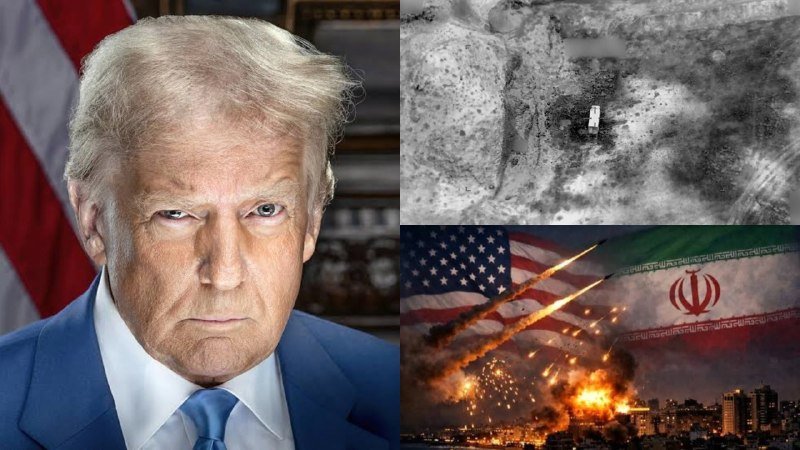
The Strait of Hormuz — through which roughly a fifth of the world's traded oil passes every day — has spent the past 48 hours behaving the way it did before the United States and Iran signed their MoU: as a pressure point that one remark can reopen. On 2026-07-08 at 14:24 UTC, the open-source monitor Osint613 posted video of Donald Trump saying the US "may reintroduce" a Hormuz blockade, directed "only" at Iran, while noting Tehran would "drop some mines if they can." The same thread carried a separate Trump clip in which he branded Iran's negotiating partners "very dishonorable people" who had, he alleged, attacked three ships after asking Washington to spare them during a funeral. Hours later, a Polymarket contract pricing a 50% probability that Iran charges Hormuz transit fees by the end of August sat on the prediction market, with The Indian Express framing the dispute as a flare-up that has "already undermined" the June understanding.
The shape of the crisis is therefore not that Hormuz is closed. It is that the ceasefire's premise — that oil flows can be counted on while diplomacy runs — has been unmade in real time by the words of one man, on one day, parsed through prediction markets and the IMF's growth desk.
What the wires actually reported
The Indian Express's 2026-07-08 14:52 UTC wire summarised two facts in adjacent items. First, that the IMF has trimmed its 2026 global growth forecast on the assumption the Strait opens by mid-July — a baseline that has now been put in doubt by Trump's remarks. Second, that Trump has "ended" the ceasefire in the article's framing, even though the US has not formally declared that position. The story's value is not in breaking news; it is in showing that mainstream business desks in Asia have already absorbed a Hormuz blockade as a planning case rather than a tail risk.
The Osint613 thread at 14:24 UTC adds the missing texture. Trump's "blockade for Iran" formulation is significant because it implies an asymmetric measure — shipping by other flags moving freely, Iranian crude and LNG carriers targeted. The companion "three ships" claim, unverified by Osint613 or by The Indian Express in the items at hand, sits closer to the kind of justification Washington has historically offered for naval operations in the Gulf. The prediction-market data point completes the picture: traders are pricing the next escalation not as a war, but as a toll.
The structural fault line
A maritime chokepoint the size of Hormuz is held open, in practice, by the willingness of the local naval power — Iran — to look the other way on transit in exchange for some combination of sanctions relief, frozen funds, and quiet. The June MoU was a price-tagged version of that arrangement. What the past 24 hours have shown is that the price is not stable: the US side treats the understanding as revocable on a presidential whim; the Iranian side can respond by extracting a fee from the roughly 20% of global seaborne oil that traverses the strait, a step that would be technically legal under its claimed territorial jurisdiction and would not, formally, be a closure.
That distinction is the analytical point. A blockade is warlike; a transit fee is sovereign regulation. Global oil markets are now having to price both possibilities simultaneously, which is why the IMF rebuilds its forecasts on a mid-July reopening that Hormuz-routed tanker traffic would not actually need in order to flow. The market needs the agreement to reopen, not just the water. The two are no longer the same thing.
Stakes for energy, trade, and the diplomatic calendar
If Iran moves to fees rather than closure, the immediate beneficiaries are the Iranian state budget and any private operator who can extract rents from panicked shippers. The losers are the refining economies of South and East Asia — India, China, Japan, South Korea — whose imports are priced in dollars but whose currencies cannot easily absorb a risk premium layered on top of an already-elevated crude tape. For Saudi Arabia and the UAE, the calculus is harder still: the Abqaiq–Hormuz pipeline corridor offers a partial workaround, but only at the cost of forgoing the leverage that comes from being the world's swing producer.
The diplomatic calendar is compressed by the same logic. Iran's negotiating position improves each week Hormuz is contested rather than closed; the US negotiating position improves only when Iran visibly reopens. A prediction market at 50% is, in that sense, a forecast that the two sides will fail to extend the MoU before it lapses — and that whichever side blinks first will pay in oil-market volatility rather than in sanctions language.
What remains uncertain
The Osint613 thread does not independently verify the "three ships" claim, and The Indian Express's framing of Trump "ending" the ceasefire outruns what the on-record statements, read literally, support. It is also worth holding open that a transit-fee Polymarket contract can drift sharply on thin liquidity; 50% is a midpoint, not a baseline. What the past day does establish, with sourcing, is that the question is no longer whether Iran could charge for Hormuz transit, but whether the diplomatic architecture that has kept the question theoretical will outlast the US presidential news cycle that reopened it.
This publication treats the June US-Iran MoU as a working arrangement whose status can change overnight; we have therefore weighted the prediction-market and IMF-baseline signals alongside the wire statements rather than treating any single quote as the definitive read.
Wire provenance
This editorial synthesis draws on the following public wire/social posts:
- https://twitter.com/Osint613/status/2074851385678406130/video/1