US strikes on Iran's Bandar Abbas port send shockwave through Strait of Hormuz shipping
USAF struck the Shahid Haghani port in Bandar Abbas on 7 July 2026, according to opposition and pro-Iran regional channels. The hit lands directly on a facility handling a quarter of the Islamic Republic's seaborne oil exports.
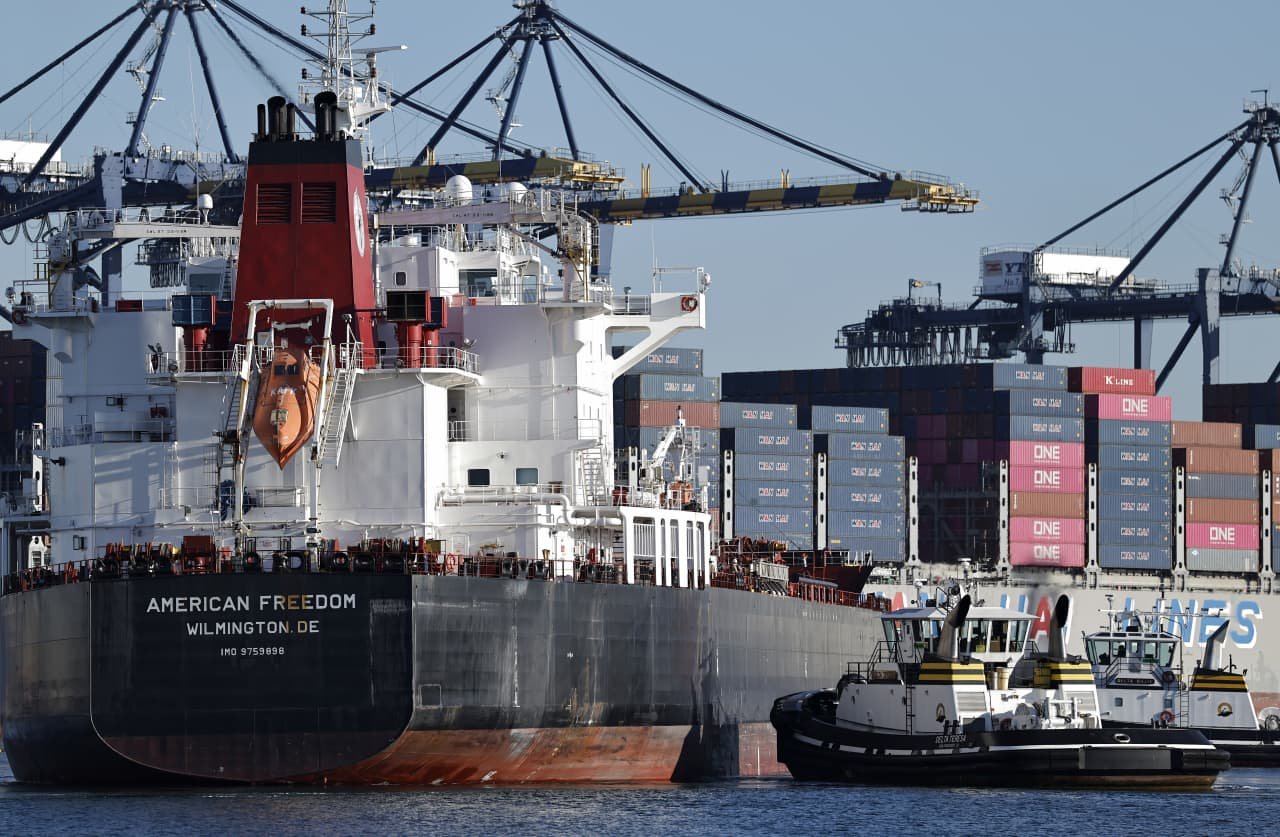
USAF munitions struck the Shahid Haghani port complex in Bandar Abbas on the evening of 7 July 2026, according to footage and videos published by the regional outlet The Cradle and by the conflict-tracker channel Bellum Acta News. The Cradle, which carries coverage broadly sympathetic to the Iranian position, posted video at 22:30 UTC that it described as fresh footage of the attacks; Bellum Acta News posted its own clip four minutes earlier, at 22:26 UTC, attributing the bombing to USAF and sourced to on-the-ground videographers in the coastal city. No independent wire confirmation from Reuters, the Associated Press or any Western service appears to have crossed before this article's deadline, and the US Department of Defense has not, in the inputs available to this publication, confirmed the strike publicly.
The Shahid Haghani facility is not a generic dock. It is the southern terminal of Iran's principal commercial gateway on the Strait of Hormuz, the chokepoint that handles roughly a fifth of all seaborne oil traded globally. Targeting it does two things at once: it imposes direct damage on the Islamic Republic's export revenue, and it advertises the United States' willingness to operate inside the strait itself, where roughly a fifth of the world's traded crude transits daily. If the strike is sustained and accurate, the shipping market and the Iranian rial will both register the message before Tehran does.
What we know about the hit
Bellum Acta News identified the target as the Shahid Haghani port in Bandar Abbas and reported that the video it received was filmed by local residents in the immediate aftermath of the bombing. The Cradle's package, transmitted on the same channel at 22:30 UTC, carries the same footage under a more explicitly political frame — "the violent US attacks" — and is the second item it has posted in the window. The Cradle has long editorialised against US and Israeli operations targeting Iranian infrastructure; the language in its caption reflects that posture. It is, however, the only outlet in this thread with footage. The Bellum Acta post is shorter and closer to a wire-of-record caption; it identifies USAF as the operator without attributing the footage itself to Bellum Acta staff. Neither outlet, in the material available, provides a casualty count, a munitions type, or a description of which berths or storage tanks were hit.
What can be said with reasonable confidence from the inputs: USAF strike assets were active over Bandar Abbas on the evening of 7 July 2026; at least one strike hit the Shahid Haghani port area; and the strikes were filmed locally, in daylight-via-mobile-phone conditions that are consistent with the cameras of residents rather than combatants. What cannot yet be said with confidence: the extent of the damage, the number of personnel killed or wounded, whether there were multiple strikes or a single pass, or whether Iran's naval assets in Bandar Abbas were hit in addition to civilian terminal infrastructure.
Why this port, and why now
Bandar Abbas sits on the mainland Iranian side of the Strait of Hormuz, on the Persian Gulf coast opposite the UAE. Its petrochemical terminal and Shahid Haghani port are Iran's largest maritime export facilities, with capacity to move refined petroleum, crude, and condensates. The southern reaches of the strait are narrow — roughly 21 nautical miles wide at the choke point — and Iran's position on its own coastline gives it overlapping anti-ship missile coverage, fast-attack-craft capacity, and an air-defence envelope that planners in Washington have spent two decades modelling. A US strike on Shahid Haghani is therefore not a periphery decision. It is a stated, in-range, in-the-airspace operation.
The political timing also matters. The United States and Iran have spent the better part of the past year in on-again, off-again negotiations over the nuclear file, with mediators from Oman, Qatar and Switzerland shuttling between delegations. Striking the largest civilian export terminal while those talks are technically still alive sends an unmistakable message: that Washington is willing to widen the target set beyond nuclear sites, missile production, and Revolutionary Guard facilities, and into the revenue machinery that funds them. The framing that has dominated Western reporting for months — that diplomacy and pressure are running in parallel — has, on this evidence, just tilted towards pressure.
The counter-read
Iranian state-aligned channels will, in the hours ahead, cast the strike as an unprovoked attack on civilian economic infrastructure, and the framing has structural merit: port facilities, by the standards of international humanitarian law, are generally treated as civilian objects unless used for military purposes in a way that materially contributes to combat. There is no claim in the materials available to this publication that Shahid Haghani was being used to stage military operations at the moment of the strike. On the other hand, ports also fund the operations of the armed forces that struck them, and the line between civilian infrastructure and military logistics is the line that both sides have been arguing about in this part of the world for decades. Whatever a UN-mandated investigation might eventually conclude — and one is not in prospect — the political reading will turn on whether the strike is judged necessary and proportionate, or unnecessary and disproportionate, against the threat it was intended to foreclose.
There is also a more uncomfortable reading that the Iranian side will articulate less loudly: that Bandar Abbas, as a target, was chosen precisely because it is consequential. Strikes of this size are not improvised; they are the product of a planning sequence that begins at the Pentagon and ends over the target. The decision to strike the port rather than a Revolutionary Guard command node is itself a piece of signalling — about the oil market, about Tehran's cash flow, and about the US willingness to operate deep inside the strait. If Washington's intent was to damage Iran's ability to fund its regional proxies, then Shahid Haghani does that without the diplomatic costs of killing Iranian officers of senior rank. The "unprovoked" framing therefore depends on a definition of provocation that excludes the broader pattern of the conflict.
Stakes for markets and the strait
For shipping, the immediate question is insurance. Lloyd's-listed war-risk underwriters revise premiums within hours of a confirmed strike inside the strait, and even an unconfirmed strike of this scale tends to move the dial. The Strait of Hormuz carries roughly a fifth of all traded crude, plus a meaningful share of LNG; if tanker operators reroute or hold position, the optical effect on benchmark prices is rapid, regardless of whether the physical supply has actually been constrained. Already in 2026, traffic through the strait is monitored by the International Maritime Organization and by Combined Task Forces operating under Combined Maritime Forces; the Pentagon will be watching both to gauge whether Iran intends to mine the shipping lanes, interdict tankers, or escalate further. Tehran's choice on each of those levers is the real story of the next 72 hours.
The second-order stakes sit in the nuclear diplomacy. The talks, which had crept forward in the spring on the back of technical exchanges around enrichment levels and IAEA monitoring, do not survive a strike on Iran's largest export terminal if Iran treats them as having been ended. Tehran's most likely responses, on a graduated ladder, run from hardened rhetoric through the cancellation of talks; from cancellations to the expulsion of IAEA inspectors; from inspections pullout to acceleration of enrichment above the 60% threshold; from 60% enrichment to formal withdrawal from the Non-Proliferation Treaty, the legal architecture the US-Iran dispute has sat inside for forty-five years. None of these moves happens automatically, and Tehran has consistently proved more cautious than Western commentary predicts, but the probability distribution of each step is shifted by tonight's strike.
Where the evidence thins
The materials this publication is working from are narrowly sourced. There is video; there are two competing captions; there is no independent Western wire confirmation, no Pentagon readout, no Iranian Red Crescent statement, and no commercial-satellite imagery release from Maxar, Planet, or BlackSky that this publication has seen. The casualty count is unknown. The target list is unknown beyond the headline port name. The Iranian Foreign Ministry has not, in the inputs available, weighed in at the time of writing. Reuters and the Associated Press, both of which have substantial Tehran and Gulf operations, have not (in the inputs available to this publication) published a confirmation that they have either corroborated or contradicted the strike. Readers should treat the underlying event — a strike on Shahid Haghani on the night of 7 July 2026 — as established by the available regional reporting and the convergent timing of the two posts, and treat every detail beyond that as preliminary until a wire with on-the-ground staff confirms or denies it.
The dispute that will matter most in the days ahead is not whether the strike happened. It is whether it was a one-off escalation aimed at revenue streams, or the opening move of a longer campaign aimed at the regime itself. The answer will tell us whether the regional diplomatic architecture built up over four years of patient Gulf-led mediation — the Oman track, the Qatar track, the Swiss channel — survives 2026 intact, or whether it becomes the next casualty of an oil terminal that, until tonight, looked impregnable.
— Monexus will update this article as wire confirmation, Pentagon readouts, and Iranian-side statements become available.
Wire provenance
This editorial synthesis draws on the following public wire/social posts:
- https://t.me/thecradlemedia
- https://t.me/BellumActaNews
- https://en.wikipedia.org/wiki/Bandar_Abbas
- https://en.wikipedia.org/wiki/Strait_of_Hormuz
- https://en.wikipedia.org/wiki/Shahid_Haghani
- https://en.wikipedia.org/wiki/Combined_Maritime_Forces