Hormuz goes from leverage to liability: the new arithmetic of the Strait
After US strikes on Iranian territory, Tehran's threat to choke the Strait of Hormuz has moved from background noise to a tradable risk — and the bet is no longer who blinks first, but who pays the bill.
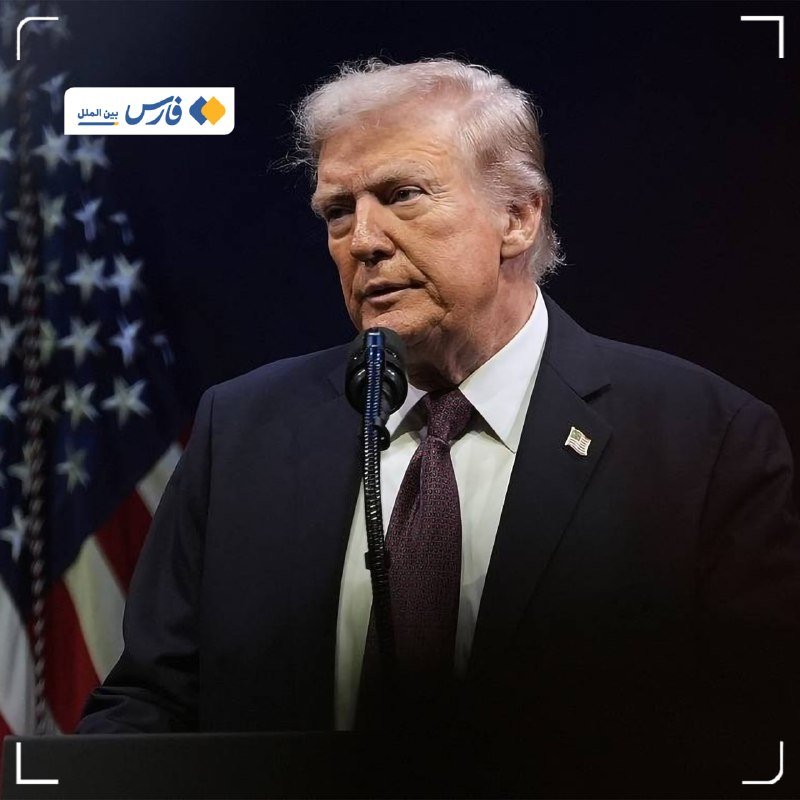
For decades the Strait of Hormuz has been the oil market's quiet constant — a narrow corridor at the mouth of the Persian Gulf through which roughly a fifth of seaborne crude moves, talked up in Pentagon briefings and forgotten in boardrooms. On 8 July 2026, the corridor moved firmly back to centre stage. After US strikes on Iranian territory, the threat level against shipping in the Strait was upgraded to "severe," and benchmark crude prices rose nearly 2% in a single session, according to The Indian Express, citing wire reporting on the escalation. By the same day, prediction markets on Polymarket were pricing in a 50% probability that Iran would impose transit fees on Hormuz traffic by the end of the following month — a number that, a week earlier, would have been filed under satire.
The shift is not just tactical. It is structural. Tehran has spent two generations building a layered deterrent — fast-attack craft, shore-based missiles, mining capability, the clerical-political will to use it — around a chokepoint it does not need to hold indefinitely, only threaten credibly. Washington's answer has been a forward naval presence and periodic shows of force. The new question, after the strikes, is whether escalation has changed the deterrence equation, or merely revealed that the equation was already tilted against the side that depends most on oil flowing freely.
From chokepoint to leverage point
Iran's strategic doctrine has long treated the Strait as a compensator. When Iranian conventional forces are outmatched, the logic runs, the Strait raises the cost of any campaign to a level the attacker cannot bear. The "severe" threat designation — reported by The Indian Express on 8 July 2026 — is the language of operational planners, not of diplomats. It implies that Iranian forces are postured in a way that US and allied naval commanders take seriously.
The market read it that way. Crude's near-2% intraday move is modest by Middle East standards, but the direction matters more than the magnitude: it confirms that traders are no longer treating the corridor as a tail risk. They are pricing it as a base case.
What Polymarket is really telling us
Prediction markets are not oracles; they are aggregators of beliefs under money. The 50% line on Hormuz transit fees by end-August is striking because it implies that roughly half of informed bettors expect Iran to convert its military option into a fiscal one. Tolls on a fifth of global oil flows would be a textbook asymmetric move: small enough to be physically enforceable by Iran's Revolutionary Guard naval units, large enough to be politically legible in Tehran as a sovereign act rather than a provocation requiring a kinetic response.
The caveat is honest. Polymarket participants skew crypto-native, dollar-aware, and fluent in sanctions arbitrage. They are not representative of the median Gulf analyst or the Lloyd's underwriter. But the price is a signal: the consensus expectation has shifted from "Iran will posture" to "Iran will monetise."
The bill the Gulf pays first
If Hormuz becomes a toll road, the first bill lands in the Gulf itself. Saudi Arabia, the UAE, Iraq, Kuwait, and Qatar export almost entirely through the Strait. Their fiscal break-evens on crude remain the highest in OPEC; any sustained discount to offset a Hormuz risk premium erodes them fast. Riyadh and Abu Dhabi have spent fifteen years building pipeline bypasses — the East-West pipeline to Yanbu, the Habshan-Fujairah line — but those arteries are sized for normal cargoes, not the full Gulf export slate.
The second bill lands in Asia. China, India, Japan, and South Korea absorb the bulk of Gulf crude. Beijing has spent the last decade building a parallel oil-supply architecture: long-term contracts with Russia and Iran under sanctions, SPR build-outs, the yuan-settled trades through the Shanghai exchange. None of that insulates China from a global price spike, but it changes who feels the shock first and how it is paid for.
Stakes, in plain terms
If the trajectory holds, three things follow over the next quarter. First, insurance and freight rates for Gulf-bound tankers rise into double digits, embedding a permanent risk premium in delivered crude. Second, the diplomatic bandwidth spent on a re-opened file — Hormuz security — crowds out other regional agendas, from Lebanon to the Red Sea, that were already thin on attention. Third, the political constituency for a negotiated settlement inside Iran grows, because transit fees work only if the regime is confident the Strait will remain open enough to collect on.
The counter-read is straightforward: the strikes may have been calibrated precisely to deter the fee regime, and the 2% price move may be the market acknowledging that deterrence has, for now, held. Iranian state-media framing of the strikes — cast in the Persian press as proof of American adventurism — does not contradict that read; it complements it.
What remains unresolved
The reporting on 8 July 2026 does not specify which Iranian assets were struck, what the operational definition of "severe" threat level entails in the US Navy's posture guidance, or whether any third-party flag-state has issued convoy advisories. The Polymarket line is a price, not a probability in any rigorous sense; it will move on the next headline. What is clear is that the chokepoint has re-entered the market's working memory at exactly the moment the diplomatic file is thinnest. The arithmetic of Hormuz has not changed — Iran cannot hold the Strait forever, and the US cannot police it alone. What has changed is that both sides are now openly running the numbers in public.
This article was framed around the wire reporting on the 8 July 2026 escalation and the market pricing that followed; Monexus does not have on-the-ground sourcing inside Iranian naval command and treats the "severe" threat designation as the US-allied characterisation it is.