From answer keys to a video-call thumbs-up: a snapshot of an Indian news week
Three Indian Express dispatches in a single morning tell a wider story: an exam regime under strain, a diaspora family fighting for access, and a national obsession that still cannot find its next coach.
Three bulletins from a single morning's wire say almost nothing about each other, and almost everything about where the country is sitting on 8 July 2026. The University Grants Commission's National Eligibility Test sits between roughly a million graduate students and their academic futures. A non-resident Indian daughter prepares to see a mother in a Delhi courtroom over a screen. And the most-capped football nation outside Europe admits, in print, that it has forgotten how to play.
What unites the three is not subject matter but tempo: India in mid-2026 is a country running several reform timelines at once, each with its own friction points, and each now being adjudicated in spaces far more contested than they were a decade ago. The threads are small, but they rhyme.
An exam, a million scores, and the regulator's clock
The UGC NET June 2026 answer key is expected this week, with provisional keys and response sheets likely to be released through the National Testing Agency's portal. NET — short for National Eligibility Test — gates eligibility for junior research fellowships and assistant professorship in Indian universities. A delayed or contested key is not a clerical footnote; for candidates, it determines whether the next academic year begins on time or slips into a familiar limbo of writ petitions and stay orders.
The institutional wrinkle is that the NET has effectively migrated from the Central Board of Secondary Education to the NTA, a transfer of high-stakes testing capacity that has not always run smoothly in recent cycles. Sources did not specify a publication hour or a glitch report on this occasion; the framing is procedural rather than crisis-driven. Still, the assumption baked into the bulletin — that an answer key will appear, that response sheets will follow, that merit lists can be reconstructed — is an assumption about state capacity that India is no longer willing to take on faith.
Distance, jurisdiction, and the courtroom as a video-link
In a separate dispatch, an NRI daughter was granted supervised access to an ailing mother, the contact mediated by video call inside a courtroom. The photograph that the wire circulated showed the mother offering a thumbs-up — the kind of detail that turns a procedural ruling into a human story.
The underlying dispute was not described in detail by the bulletin, and Indian family-law reporting typically guards the specifics of guardianship and eldercare cases. What the item does surface is the geography of contemporary Indian family conflict: petitioner abroad, respondent often elderly, contact permitted only under court supervision and increasingly only through a screen. Diaspora Indians now number in the tens of millions; family-property and eldercare disputes are a predictable downstream effect of that demographic. The court's willingness to treat a video call as a meaningful form of access — rather than a substitute — is itself the news.
Brazil's lesson for Indian football — read carefully
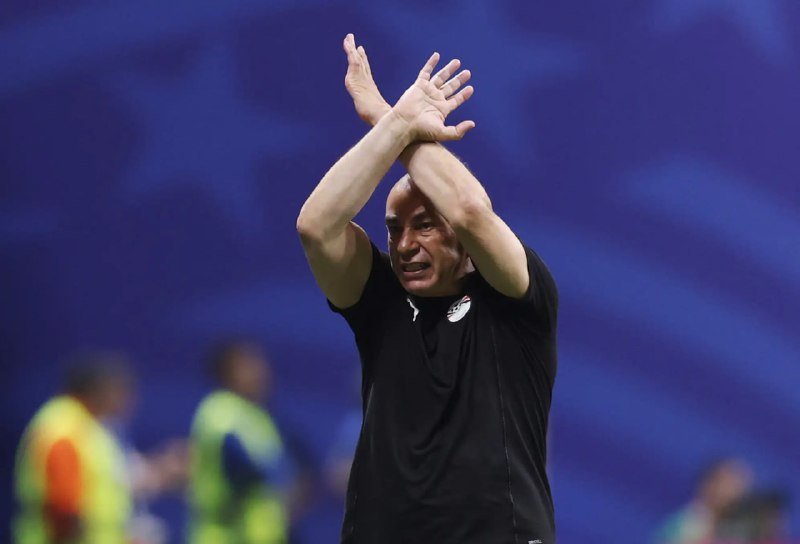
The third item, headlined "To be world champions again, Brazil must remember how to be Brazil," is a sharply editorialised football column from the Express. The subject is the Seleção, not the Blue Tigers — but the column lands in an Indian sports section for a reason. Indian readers recognise the syndrome it names: a former superpower of the game's periphery, weighed down by federation politics, by the gravitational pull of European leagues, and by a generation of technically superb players who never quite cohere.
The strategic debate the piece rehearses — national identity versus tactical modernity, federation reform versus results on the pitch — is one Indian football has been having, in weaker terms, for at least a decade. The Indian Super League, the country's attempt to compress a domestic competition into relevance via celebrity signings and broadcast money, has produced a more visible top tier without yet producing a side capable of qualifying from the AFC Asian Cup's group phase against full-strength opposition. The Express's Brazilian case study is, deliberately or not, a mirror.
Stakes and what the wires did not say
What the bulletins collectively leave out is the connective tissue. The UGC NET story does not say how many candidates sat this cycle or how the June paper compared in difficulty with the December one. The court case does not name the petitioner, the respondent, the bench or the jurisdiction. The football column does not name the Seleção's next permanent coach or set a date for when "Brazilian football" might plausibly return. A staff-level read has to live with those silences — the wire's job is to surface, not to speculate.
What can be said with confidence is that India in July 2026 is reading itself across three registers at once: institutional, familial, athletic. Each register is being adjudicated inside institutions — examination body, family court, federation — whose credibility is the story as much as the decisions they hand down. Whether the UGC NET key arrives on schedule, whether the courtroom video-call becomes a precedent or an exception, and whether the Indian federation can borrow anything from Brazil's reckoning are, for now, three open questions sitting on a Tuesday morning.
Desk note: The wire offered three discrete items in one bundle — an exam regulator, a diaspora family, a football lament — and the editorial move here was to treat the bundle as a portrait rather than three briefs. Single-source days are a discipline test, not a coverage gap.