Tehran frames US strikes and oil-permit withdrawal as a single breach — and promises a military answer
In statements issued within twenty minutes of each other on 8 July 2026, the Iranian Foreign Ministry linked US strikes to the cancellation of an Iranian oil-sales permit and warned that its armed forces will target the source of any further aggression.
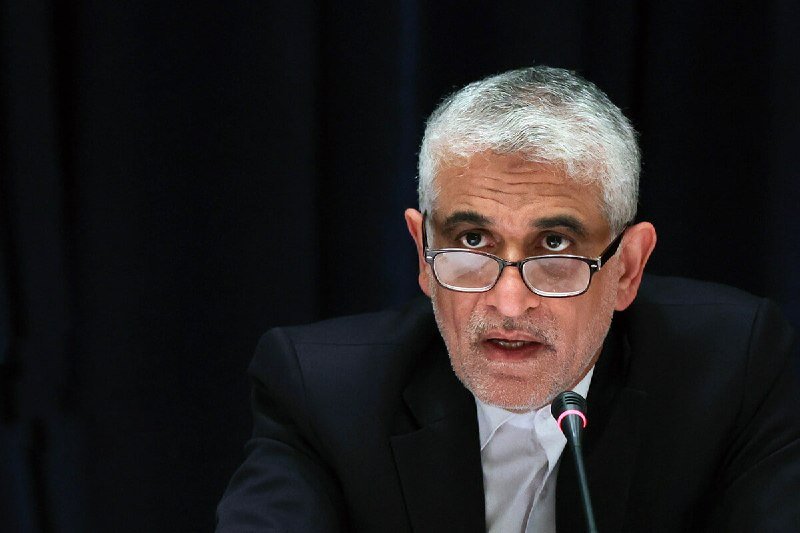
Iran's Foreign Ministry spent the early hours of 8 July 2026 doing something more deliberate than issuing a condemnation: it was constructing a legal-political frame. In three statements released between 06:53 and 07:16 UTC, the ministry bound two otherwise distinct US actions — recent strikes on Iranian territory and the cancellation of a permit authorising the sale of Iranian oil — into what it called a single violation, and warned that the country's armed forces would respond against the source of any further aggression.
That framing matters because it forecloses the most common Western de-escalation playbook: treating military action and economic strangulation as separate levers that can be turned independently. Tehran is saying they cannot.
Two actions, one breach
The first statement, carried at 06:53 UTC by Al Alam's Arabic channel, put responsibility squarely on Washington for what it called "the serious repercussions of the recent escalation." Three minutes later, a second statement — also carried by Al Alam — sharpened the threat: "Our armed forces will target the source and source of the aggression and attack on our lands." A third statement at 07:16 UTC, distributed via the Open Source Intel channel, fused the military dimension to the economic one: "The combination of the attacks with the decision to cancel the permit for the sale of Iranian oil is a violation of the agreement."
The sequencing is the story. Read separately, each sentence is familiar diplomatic boilerplate. Read together, they describe a counter-doctrine: that an oil-permit revocation is being treated as a use-of-force event, and that the Iranian response will be calibrated against the combination, not its components. The ministry did not name a specific agreement; "the agreement" reads as the shorthand Tehran has used in recent months for the broader understanding around sanctions licensing and nuclear constraints.
What is actually being revoked
The thread's wording — "the permit for the sale of Iranian oil" — refers to a sanctions-licensing arrangement, of the kind that has functioned as a transactional pressure valve in previous US-Iran confrontations. Such permits typically authorise a named set of buyers, banks or vessels to handle a defined volume of Iranian crude over a defined window, outside the broader embargo architecture. Cancelling one mid-stream, as Iranian statements imply happened here, doesn't simply deny revenue; it can also strand tankers, complicate escrow arrangements, and expose counterparties to secondary sanctions.
This publication has not independently verified the permit's scope, the specific licence number, or the date of revocation; the sources in the thread assert the cancellation without those particulars. What is verifiable is that Tehran has chosen to characterise that cancellation alongside kinetic action, in the same breath, in the same hour. That choice is itself a piece of signalling.
The counter-doctrine in plain terms
Western sanctions policy has long rested on the premise that economic coercion and military action are substitutes that can be sequenced: tighten the noose, then negotiate; or strike, then offer relief. The Iranian framing on 8 July rejects that premise at its root. If a licence revocation is a "violation" on par with a strike, then any future US administration contemplating a new sanctions package inherits a tripwire: the next round of economic measures is, by Tehran's stated logic, an act of aggression triggering a military response.
This is not a new Iranian position, but its open juxtaposition with a kinetic track makes the doctrine visible. It also lands inside a wider regional pattern in which non-Western states have begun treating dollar-clearing access as a frontline instrument rather than a back-channel pressure point.
What this changes, and what it doesn't
The immediate stakes are operational. Iran's armed forces have now publicly reserved the right to strike at the "source of aggression" — language that, in the Iranian doctrinal tradition, can stretch from forward-deployed bases to the naval and logistical architecture that services them. Energy-market participants should price a wider risk corridor: any vessel, terminal or counterparty tied to the revoked permit sits inside a described threat surface, whether or not Iran's capacity to act on the threat is uniform.
The counter-read is that Tehran is bargaining, not marching. The triad of statements could equally be read as the opening move in a negotiation to restore the permit under different terms — a way of making the status quo untenable enough that a face-saving deal becomes attractive on both sides. That reading has historical precedent, and it is the one most Western analysts will reach for first.
What remains genuinely uncertain is whether the Iranian framing is a prelude to a calibrated retaliation aimed at permit-enforcement infrastructure — sanctions lawyers, compliance officers, the brokers who make licence-driven trade possible — or at a kinetic target the statements have left deliberately unidentified. The Iranian statements name neither a place nor a date. That ambiguity is, at this hour, the whole point.
This article was filed from publicly available wire and channel reporting; the Iranian statements cited are paraphrases from Telegram-distributed translations and have not been independently verified against Tehran's English-language ministry feed.
Wire provenance
This editorial synthesis draws on the following public wire/social posts:
- https://t.me/osintlive
- https://t.me/alalamarabic
- https://t.me/alalamarabic