Iran's Martyr-Made Diplomacy and the Stagecraft of Sovereignty
Tasnim's live coverage of a senior figure's funeral procession reveals how the Islamic Republic fuses grief, geography, and projection — and what the wire misses when it only quotes the briefing room.
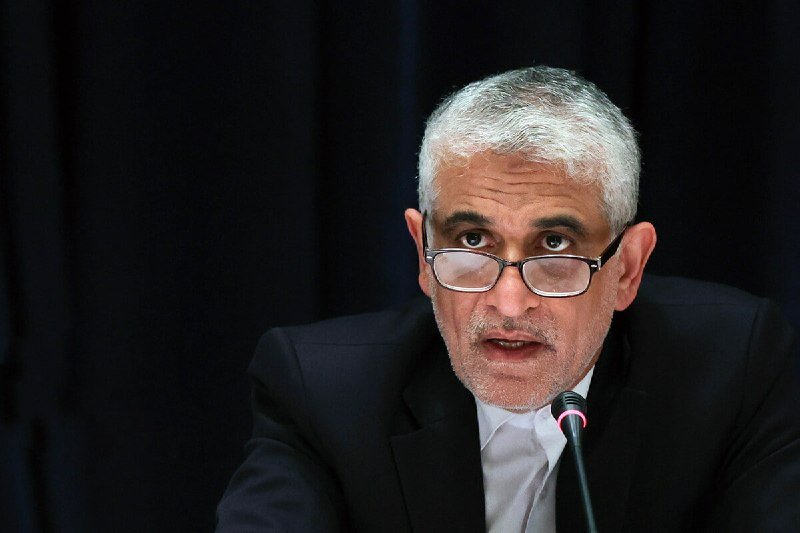
For two hours on the evening of 8 July 2026, the English desk of Iran's Tasnim News Agency ran an unbroken ticker from Karbala: crowds massing on Imam Reza Street, a body borne to the two holy shrines, censuses taken of the mourners, salutations whispered in chorus. The man's name is not the story. The choreography is.
Western coverage of Iran tends to arrive in two registers — the nuclear file, or the protest file. Both are real, both matter, both are under-covered in their own ways. But they share a flaw: they treat the Islamic Republic as a bureaucratic actor, a sanctions ledger, a security service. They miss that the regime's most durable export is not centrifuges or drones but a politics of grief — a way of converting mourning into legitimacy, and legitimacy into presence, in cities it does not formally govern.
What the wire actually shows
The thread is unglamorous by design. Five posts, all from Tasnim's English channel, between 21:15 and 22:51 UTC on 8 July 2026. The text is sparse. The hashtag — #Badarqa_Aghai_Shahid_Iran — is the spine; "must_rise" is the kicker. The content is mostly location: Bin al-Harameen, the last farewell; the two holy shrines of Karbala in Ma'ali; a census of the mourners; a collective whispering of salutations to the eighth Imam on a street named for him. Nothing in the ticker names a politician, a general, a cleric with portfolio. The state is visible only as a camera crew and a hashtag.
That is the point. Sovereignty, in the Iranian telling, is not principally about the writ that runs from Tehran outward. It runs from Karbala, Najaf, Damascus, and Beirut inward, through a shared martyrology that the Islamic Republic curates but did not invent. When Tasnim logs a census of mourners in Karbala, it is asserting a kind of reach that no sanctions committee can audit and no foreign ministry can contest.
The framing the Western wire cannot afford
Mainstream reporting on Iran’s regional role still leans on the security-services paradigm: the Quds Force, the proxy armoury, the missile programme. That paradigm is not wrong. It is, however, incomplete in a way that distorts the picture. A state that can fill a street in another country's holiest city, that can make a hashtag trend from a thousand kilometres away, is exercising power by means the sanctions regime cannot touch and the briefing room cannot counter.
This is not a defence of the apparatus. It is an observation that the apparatus is bigger than the apparatus the wire describes. The Reuters ticker on a given day in July 2026 will tell you what the IAEA inspectors saw, what the European foreign ministers agreed, what the rial is trading at. It will not tell you why, on the same day, Tasnim's English desk considers a funeral in Karbala to be its lead story. The omission is itself an editorial position.
Sovereignty as stagecraft
The structural insight is plain enough once you stop reaching for a theorist. Sovereignty in the Iranian case is staged. It is performed in streets, shrines, and hashtags, with the same discipline that a central bank applies to a currency peg. The performance has three functions. It binds a transnational Shia public to the Islamic Republic as a custodian rather than a governor. It signals to rivals — Israel, Saudi Arabia, the United States — that the Republic's depth cannot be measured by its formal borders. And it gives the domestic audience a story in which the state is the protagonist of something larger than the next negotiation.
None of this requires believing that every mourner is a believer, that every hashtag is sincere, or that the camera never lies. State media lies as a matter of routine, in every country that has a state media. The point is that the camera is pointed in a direction the Western wire rarely looks.
The stakes, plainly stated
If you read the Islamic Republic only through the IAEA file, you will misread its resilience. The regime has survived decades of sanctions by selling something other than oil: a narrative in which Iranian sovereignty and Shia grief are the same currency. The Karbala procession, logged in real time on an English-language Telegram channel with the discipline of a press conference, is that sale in microcosm. It costs the state little. It reaches a global Shia audience that no embassy can service. And it produces, every few weeks, a piece of evidence that the Republic is not the isolated garrison its enemies like to describe.
The counter-reading is also real. The same stagecraft can be brittle: an audience that can be assembled by a hashtag can be dispersed by a cheaper one. The economy grinds, the rial moves, the young emigrate. The funeral is a powerful thing. It is not, on its own, a balance of payments.
Monexus treats Tasnim's English feed as a primary source for what the Islamic Republic wants the world to see — and as a useful, if partial, indicator of what it cannot afford to stop showing. The wire, by contrast, treats it as either propaganda to be paraphrased or background to be ignored. Both choices are editorial positions. Only one of them is honest about the fact that a state which can fill Karbala's streets on a Tuesday in July is not the state its enemies' models predict.
This publication reads Tasnim's English desk as primary source material, not as colour. The piece is opinion; the citations are wire provenance.
Wire provenance
This editorial synthesis draws on the following public wire/social posts:
- https://t.me/tasnimnews_en
- https://t.me/tasnimnews_en
- https://t.me/tasnimnews_en
- https://t.me/tasnimnews_en
- https://t.me/tasnimnews_en