The Iran File Is Open Again: What the 8 July Strikes Tell Us About the Limits of American Leverage
Three days after coordinated strikes on Fordow, Natanz and Isfahan, the Trump administration issued a Saturday deadline for an Iranian declaration keeping Hormuz open. Tehran replied that only the war-ready deserve the table. The objective the strikes were meant to serve is still not on paper.
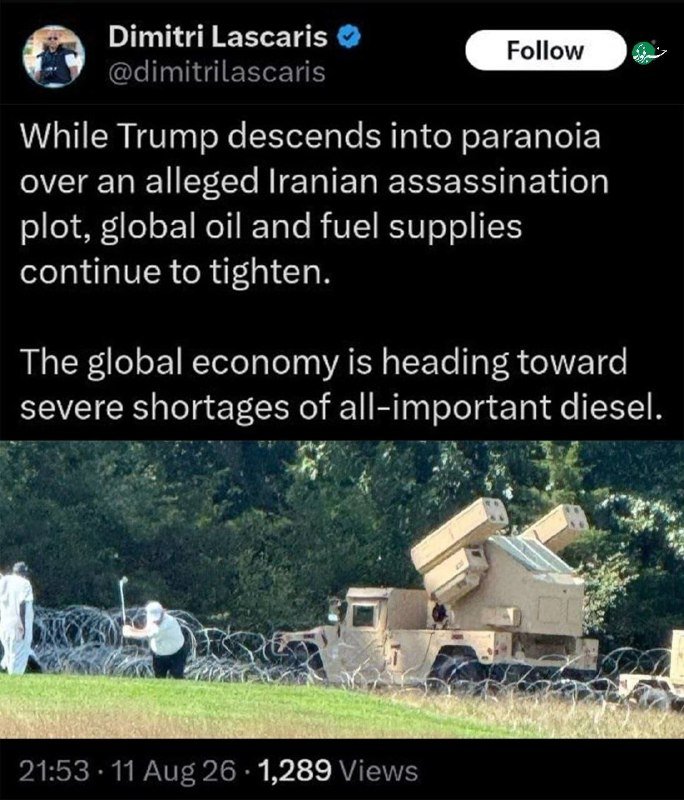
On the morning of 8 July 2026, the White House dispatched a coordinated strike package against hardened nuclear sites at Fordow, Natanz and Isfahan. Within hours, Brent had spiked, insurance writedowns on Hormuz-bound tonnage were repricing in the Lloyd's pits, and the commander-in-chief was airborne for Ankara, reportedly so wary of Iranian missile retaliation that his advance team swapped aircraft. The kinetic event is now public record. What is not, is what diplomatic objective the strikes were meant to serve.
The answer, almost a week on, appears to be that there wasn't one. By the evening of 10 July the Trump administration was publicly demanding that Tehran issue, by Saturday, a written declaration keeping the Strait of Hormuz open to commercial shipping and ending attacks on merchant vessels, according to reporting by Axios's Barak Ravid. That kind of ultimatum, dropped with a self-imposed deadline running into the weekend, is the language of an administration that ended a ceasefire two days earlier without a successor document in the drawer. It is also the language of an administration that, per the Newsmax report surfacing via OSINTdefender, temporarily sidelined the USS Boxer and its embarked 11th Marine Expeditionary Unit during the opening weeks of the conflict after an engine cooling failure, a quiet fact that explains why the post-strike posture has read as coercive bargaining rather than escalation dominance.
The bargaining on offer
Tehran's response to the new demands has been brittle. Iranian Foreign Ministry spokesman Esmaeil Baghaei declared that Iran will not allow inspections on terms dictated by Washington. Parliament Speaker Mohammad Bagher Ghalibaf, speaking through IRNA, framed the negotiating posture bluntly: Tehran harbours no trust in the United States, and only those ready for war can negotiate with Washington. UN ambassador Amir Saeid Iravani went further, telling the Security Council that continued American violation of its obligations releases Iran from its own, and that the strikes on Iranian nuclear facilities constitute a violation of the UN Charter that has already weakened the non-proliferation regime.
Each of those statements is calibrated, and each forecloses a different part of the bargaining space. Baghaei closes the inspection file. Ghalibaf relocates the test of seriousness onto American intent. Iravani internationalises the legal frame so a follow-on sanctions push, or worse, a coalition maritime operation in the Strait, lands in a courtroom rather than a cable. Read end-to-end, the Iranian signalling says the regime has concluded that the only currency Washington will now accept is humiliation, and humiliation is not a tariff the Islamic Republic has ever agreed to pay.
Satellites and silencers
The strategic backdrop is less reassuring than the White House messaging implies. The Institute for Science, working off June and early July commercial imagery, has documented repair activity at Taleghan 2 inside the Parchin Military Complex, signal that Iran is intent on rebuilding a site long associated with the former Amad Plan weaponsisation architecture. Covert reconstruction at Parchin is precisely the kind of activity that the June strikes were designed to foreclose, and the fact that it is observable from orbit before the post-strike regime has even been negotiated is, on its own, the clearest available answer to whether Washington secured its stated objective.
Inside the regime the picture is fractured. Seyyed Ali Khomeini, the late founder's grandson, used his platform this week to criticise government officials for mobilising the population in crisis and discarding them once calm returns. The line is not dissidence; it is the internal grammar of a theocracy that knows the cost of the next round will fall on the same constituency that funded the funeral rites for the martyred leadership. President Masoud Pezeshkian's own warning against regional sabotage, framed as adherence to commitments for peace, is pitched at the same audience. American pressure has the merit of being legible; the Iranian counter-pressure is being levied by Iranians, on Iranians, before any new document is signed.
What leverage actually buys
A barrel of crude futures and a marine insurance contract are blunt instruments, and they move on what is plannable, not on what is just. The political facts on the table on 8 July were that the MOU with Tehran had been voided without replacement, that the Iraqi dollar concession that quietly sustained Iran's hard-currency float had narrowed, and that no declared American objective tied the day's kinetic instruments to a verifiable Iranian concession. Oil moved because traders were correct to read that combination as a one-way door. Three days later, the same door is still open and the ultimatum that was meant to close it has been issued to a parliament that just told Washington it does not trust it, by a negotiator who said on the same day that only the war-ready deserve the table.
The fork ahead
The near-term calendar is now the story. Saturday's Iranian statement, if it comes, will set the price of the next insurance underwriting cycle and the tone of the next CENTCOM tasking order. If it does not come, the administration has a choice between doubling the ultimatum, by which point the diplomatic file is closed in every meaningful sense, or compounding the original sin, which was striking a nuclear architecture without a written Iranian concession in escrow. The first option trades escalation dominance for an Oval Office success narrative. The second, less remarked, trades an undeclared objective for another one. Neither is the kind of outcome that a hegemonic order, if that is still what the United States is offering, presents to client capitals as a model. The file on Iran is open again. What was in it before the strikes remains unanswered, and the page that replaces it is currently blank.