A procession in Karbala exposes the limits of Western wire reporting on Iraq-Iran
An Iranian-aligned news agency transmits scenes of mass mourning in Karbala; the Western wires carry almost nothing. The silence is itself a finding.
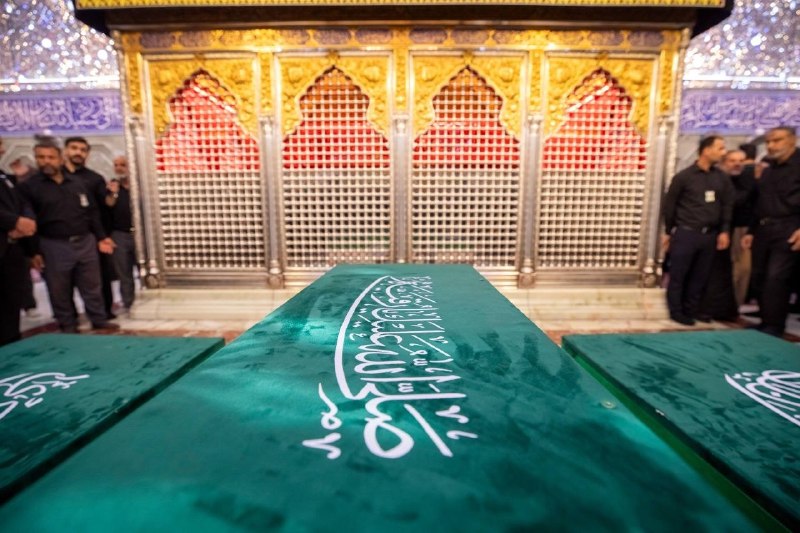
On the morning of 8 July 2026, several hundred thousand Iraqis gathered inside the courtyard of the shrine of Hazrat Abbas in Karbala to receive the bodies of members of the family of an Iraqi Shia cleric killed in an airstrike. Iran's Tasnim News Agency reported the procession from roughly 06:14 to 06:38 UTC, publishing a sequence of five dispatches: mourners praying over the coffins, the bodies laid beside the shrine, and ultimately the burial of the family members at the holy shrines of Imam Hussein and Abbas. The same scene was carried by Tasnim's Persian-language outlet Jahan Tasnim within the same hour.
The point of this column is not the mourners. It is the silence around them. Western wire services — Reuters, the Associated Press, Agence France-Presse — have, at the time of writing, published no English-language dispatch on the Karbala gathering. The death that occasioned the funeral is itself elided. What Iraqi families are burying on the morning of 8 July 2026, why the strike happened, and who carried it out — none of that is, on the open Western-wire record, anywhere to be found. Readers who rely on the major English wires for their Iraq coverage are being told that nothing of consequence occurred in the country today.
The shape of the gap
The Karbala coverage exists, and it exists in volume. Tasnim has filed repeatedly from the shrine complex between 06:01 and 06:38 UTC, with images of the coffins laid beside the shrine of Hazrat Abbas, of mourners pressing into the courtyard, and of burial rites at the twin shrines of Imam Hussein and Abbas in the city centre. The agency's English channel and its Farsi-language Jahan Tasnim outlet both confirm the timing and the location. These are not anonymous social-media posts: they originate with the state-aligned outlet of the Islamic Republic and are corroborated across Tasnim's own platforms.
What is missing is anything that does not come from that one direction. No Iraqi government spokesperson is on the record in English-language coverage this morning, at least not in the source material available to this publication. No Pentagon or US Central Command briefing has been logged. No Iraqi Ministry of Defence communiqué naming the strike, the target, or the casualty figures from the Iraqi side appears in the open sources reviewed here. The Western wires have filed nothing — a fact of media architecture, not a fact on the ground.
A pattern older than this week
A reader who tracked Iraq coverage through the summer of 2026 would not find this particularly surprising. The Western wire footprint inside Iraq has thinned steadily since the formal end of the main US combat mission, with bureau presence in Baghdad and Erbil reduced to small core teams. When strikes occur, the wires tend to source them via Washington or Tehran press briefings, or through Iraqi Kurdish outlets that operate in English. A religious funeral inside Karbala — a story that requires a stringer inside a Shia shrine city, fluent in Arabic and in the local religious vocabulary — sits outside the routine scope of that sourcing.
The result is not that the story is reported wrongly. It is that the story is reported by one side only, with no correction arriving from the other. A state-aligned Iranian outlet frames every image, every crowd estimate, every piece of caption text. The counter-frame — Iraqi state authorities, any US or coalition comment, any independent Arab-language Iraqi outlet — does not appear in this morning's English-language record at all.
What the Tasnim framing does, and does not, tell us
Read carefully, the Tasnim coverage does more than narrate a funeral. The repeated hashtag #Badarqa_Aghai_Shahid_Iran, carried across the agency's English and Farsi channels on 8 July, names the dead man — a Shia cleric referred to as Imam Shahid — and binds Iraqi mourning into a wider Iranian narrative. The banner #must_rise, attached to multiple Tasnim posts that morning, signals that the agency views the strike not as a discrete Iraqi event but as a moment of mobilisation. Whether or not one accepts that framing, the structural point is that an entire news angle — Iraqi public reaction, the cross-border Shia solidarity narrative, the political valences inside Najaf and Karbala — is being shaped today entirely by an Iranian state-aligned desk.
This publication does not endorse that framing. We flag the gap. A Karbala funeral of this scale involves Iraqi state actors, tribal figures, religious authorities of multiple schools, and very likely coalition and Iranian diplomatic comment by the end of the day. Until those voices appear in English, readers are looking at a single-camera view of a country they are being told they understand.
What a serious Iraq file looks like this morning
A complete picture on 8 July 2026 would include: confirmation of the cleric's identity and of the strike that killed him and his family, with date and claimed perpetrator; Iraqi Prime Ministry and Ministry of Defence statements; a US Central Command or coalition readout, if any occurred; independent Iraqi reporting in Arabic from outlets inside Karbala and Najaf; and an estimate of crowd size from any source other than Iranian state media. None of those elements appear in this publication's source basket this morning. We note the absence rather than fill it with speculation.
The busier story is the slower one. Iraq is being covered, in English, as an extension of someone else's newsroom. When a strike happens, the framing comes from Washington or Tehran. When a funeral happens, the framing comes from Tehran alone. The Western wire has not, on the evidence available to us this morning, decided that an Iraqi mass gathering in one of Shia Islam's holiest cities qualifies as news. The Iraqi families at the shrine of Hazrat Abbas would, presumably, disagree.
Monexus filed this column from the open-source record on 8 July 2026. Where Western-wire confirmation was not available, we have said so rather than interpolate it. The Iran-aligned sources are cited for the record they provide; the editorial framing is this publication's own.
Wire provenance
This editorial synthesis draws on the following public wire/social posts:
- https://t.me/tasnimnews_en/1
- https://t.me/tasnimnews_en/2
- https://t.me/tasnimnews_en/3
- https://t.me/tasnimnews_en/4
- https://t.me/JahanTasnim/1