The procession that isn't on the wire: a missing narrative from a Karbala funeral
Tasnim and Al-Alam on Tuesday night carried moving footage of crowds escorting the body of a slain cleric through Karbala. Western wires carried almost nothing — a pattern worth examining, not least for what it says about whose grief gets translated into English.
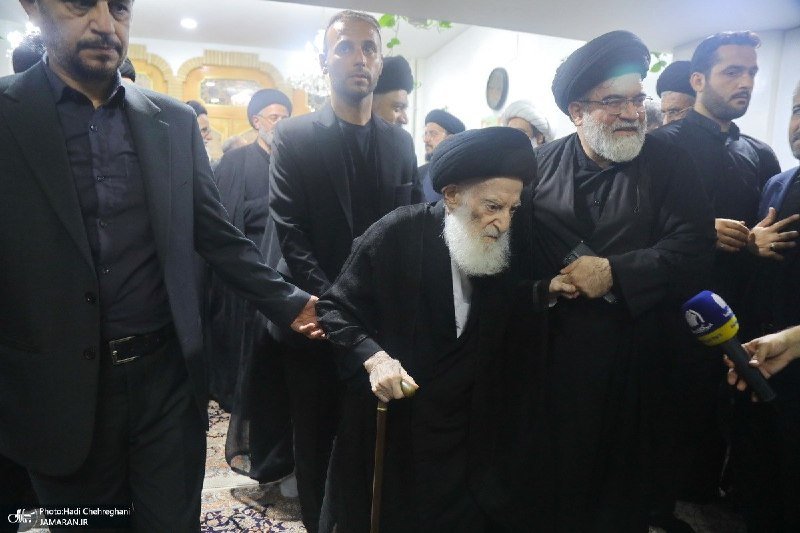
At 21:32 UTC on 8 July 2026, Iran's Tasnim News English channel posted footage it described as Al-Abbas Street in Karbala "drowned in welcoming the body of the Martyr Imam." Within an hour, Tasnim pushed a follow-up video of crowds "escorting the holy body of the Martyr Imam Mujahid to the holy shrine." By 22:31 UTC, Al-Alam Arabic — the Iranian state broadcaster's Arabic arm — was running near-identical language, situating the procession on Al-Abbas Street moving "towards the area between the Two Holy Mosques," the shrine district in central Karbala. The hashtag Tasnim attached — Badarqa Aghai Shahid Iran — and the editorial framing in both channels leave little ambiguity about how the killing is being read in Tehran: a martyrdom to be mourned publicly, and a story to be told.
The two wires carrying this material are state-adjacent. They are also, in this case, the only wires carrying it. A Western reader searching Reuters, AP, AFP, the BBC or the Guardian for Karbala on Wednesday morning would find, on the evidence available in this thread, almost no English-language coverage of the procession. That is not because the event is small — the volume of footage, the consistency of the framing across two distinct outlets and the use of shrine-space terminology all suggest a coordinated, religiously consequential public act. It is small, on this showing, to the audience that English-language wire desks consider their audience.
What the footage actually shows
The two sources in this thread are consistent on the geography and the choreography. Al-Alam specifies Al-Abbas Street, the broad ceremonial axis that runs from the outskirts of old Karbala toward the precinct of Imam Husayn's shrine and, just beyond it, the shrine of Imam Abbas. Tasnim's language is the religious shorthand: Badarqa Aghai Shahid Iran — a reference to a 1983 operation in which Iranian fighters were sent to clear Iraqi minefields ahead of advancing units during the Iran–Iraq war, an event still invoked in Iranian state discourse to anchor contemporary losses within a long martyrology. The escort described in both channels is the standard Shia public-mourning format: the body, mourners on foot, slow movement toward the shrine, a route designed to be visible.
Neither Tasnim nor Al-Alam in this thread identifies the cleric by full name, gives the date or manner of death, names the militant organisation to which the slain figure belonged, or specifies the family of origin — all details that would normally travel with any Western-wire obituary or funeral story. The framing is deliberately elliptical. It assumes an audience that already knows.
Why the silence is the story
Coverage gaps are themselves evidence. Two plausible reads sit side by side. The first is logistical: Western wire bureaux in Iraq have thinned over the past two years, weekend and overnight assignments in Karbala are no longer routine, and English desks ration their resources toward events where they already have named spokespeople, draft copy and a buyer. A mourning procession, however large, without a named Western-relevant principal and without an immediate policy hook — a strike, a sanction, a vote — falls below the threshold. The second read is editorial: the slain figure is treated inside Iranian discourse as a martyr in an ongoing struggle, and the procession is therefore legible to Western editors as a piece of adversary propaganda. Both reads can be partly true. Neither is flattering to the wire system.
What neither read justifies is the absence of even a two-paragraph context piece naming the route, the crowd size where it can be verified, the shrine and the broader Shia commemorative calendar Karbala sits inside. The information cost of writing such a piece is low; the editorial benefit, in a region where misperception compounds quickly, is high.
The structural point, in plain prose
An older debate about whether the global press covers the world or only the parts of the world that match its institutional categories usually gets conducted in the abstract. This story is a concrete case. The same evening that Tasnim and Al-Alam were publishing a coordinated, shrine-centred account of a Karbala funeral, the English-language wire space around them was empty. The reader is left to assemble the picture from translated hashtags, or not at all. That asymmetry of attention is not a conspiracy and does not require one to explain. It is what the market for English-language news produces when the underlying event is a Shia religious procession in southern Iraq, the principals are framed as martyrs by an adversary state, and no Western capital has an immediate operational stake in the outcome. It is worth saying so plainly, because the asymmetry is also what readers in Baghdad, Najaf and Karbala are themselves watching.
What we don't know — and why that matters
The sources in this thread do not name the cleric, do not give a date or cause of death, do not specify a militant affiliation, and do not put a number on the crowd. Tasnim's hashtag situates the figure inside an Iranian-Islamic Revolutionary Guard Corps commemorative vocabulary; Al-Alam's Arabic framing, by contrast, leans on Iraqi shrine geography and gives no organisational marker at all. That difference in framing across two outlets working the same story is itself a small data point about how the death is being read in Tehran versus how it is being broadcast to an Iraqi Shia audience. Without a Western wire on the ground, or at least a Western-readable Iraqi source of record, the basics of who died and how remain, for English readers, an inference drawn from a hashtag. The procession is real. The silence around it in English is real too. Both are worth naming.
Desk note: Monexus framed this piece as a media-coverage gap rather than an obituary, because the source items carry the mourning but do not carry the identity of the mourned. Where Western wires had no copy, we declined to invent any.
Wire provenance
This editorial synthesis draws on the following public wire/social posts:
- https://t.me/alalamarabic/
- https://t.me/tasnimnews_en/
- https://t.me/tasnimnews_en/