Live Wire
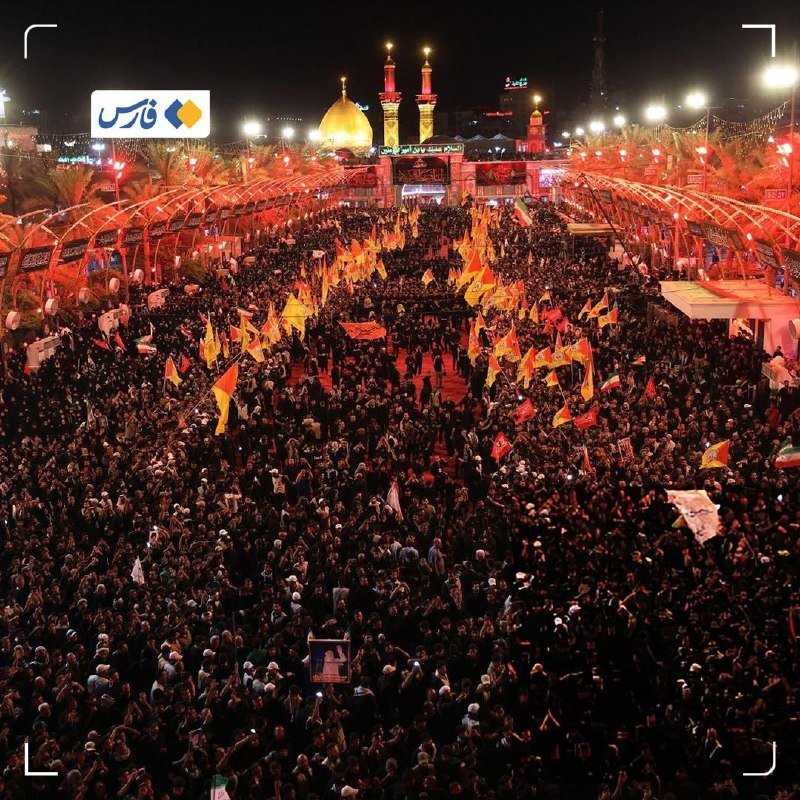
07:08ZKHAMENEIENA memorable frame of the massive turnout of Iraqi mourners at Thawrat al‑Ishrin Square in Najaf for the funer…07:08ZTWOMAJORSVolkswagen shareholders, including the billionaire families Porsche and Piech, have found themselves in a dif…07:07ZMIDDLEEASTEstimated 1.2 million gather in Iraq, preliminary count shows07:07ZPRESSTVIran condemns US strikes, threatens retaliation over alleged breach of Islamabad agreement07:06ZWFWITNESSRussian drone strikes postal warehouse in Dnipro, sparking fire07:05ZTASNIMNEWSPreparations underway at Imam Reza shrine for farewell ceremony07:05ZDDGEOPOLITPower outages reported in Odessa, Nikolaev, Poltava, Sumy, Kharkov, Zaporozhye regions07:05ZTASNIMNEWSThousands gather in Najaf for burial ceremony
Markets
S&P 500747.71 0.48%Nasdaq25,819 1.16%Nasdaq 10029,173 1.77%Dow528.45 0.31%Nikkei93.07 2.31%China 5032.49 0.00%Europe89.04 1.03%DAX42.05 1.43%BTC$62,523 1.23%ETH$1,745 1.86%BNB$565.15 2.42%XRP$1.09 3.80%SOL$77.9 4.42%TRX$0.3287 0.19%HYPE$67.85 4.44%DOGE$0.0719 4.64%RAIN$0.0148 1.75%LEO$9.45 0.41%QQQ$709.43 1.85%VOO$687.08 0.51%VTI$369.61 0.55%IWM$296.19 0.91%ARKK$81.19 2.89%HYG$79.76 0.14%Gold$377.49 1.21%Silver$54.46 2.94%WTI Crude$108.92 4.38%Brent$41.93 4.98%Nat Gas$11.76 0.43%Copper$37.39 1.19%EUR/USD1.1433 0.00%GBP/USD1.3386 0.00%USD/JPY161.89 0.00%USD/CNY6.7935 0.00%
CLOSEDNYSEopens in 6h 19m
The Monexus
Vol. I · No. 189
Wednesday, 8 July 2026
Saturday Ed.
Updated 07:09 UTC
  • UTC07:09
  • EDT03:09
  • GMT08:09
  • CET09:09
  • JST16:09
  • HKT15:09
← The MonexusGeopolitics

Khamenei Laid to Rest at Najaf as Iran Faces a Leadership Void

Ayatollah Ali Khamenei was mourned in Najaf on 8 July 2026, two days after an Israeli strike in Tehran killed Iran's supreme leader. The funeral procession signals both ritual continuity and an unresolved succession crisis.

A large crowd marches down a palm-lined street at dusk, waving numerous yellow flags and holding up framed portraits. @Middle_East_Spectator · Telegram

Najaf filled with mourners in the pre-dawn hours of 8 July 2026 as the body of Ayatollah Ali Khamenei, Iran's supreme leader, was brought to the shrine of Imam Ali for funeral prayers before being moved on to Najaf International Airport for public tribute. Photographs and short videos circulated by the Telegram channel Middle East Spectator showed dense crowds inside the shrine compound and on the access roads, while Iran's Arabic-language state channel Al-Alam broadcast an "urgent" notice confirming the prayers would be held "over the pure bodies of the leader of the revolution, the martyr Khamenei, and his family" inside the shrine of the Commander of the Faithful. A separate message on a channel affiliated with Khamenei's own office described the airport reception hall as the place "where the body of the martyr imam was placed... so that those who wish could pay tribute to his lordship."

The Najaf ceremonies are the first major public ritual of an Iranian leadership crisis that began, according to multiple regional reports cited earlier in the week, with an Israeli strike inside Tehran that killed Khamenei two days earlier. The choice of Najaf — the burial place of Imam Ali and the spiritual heart of Shia Islam — is itself a political signal. Khamenei had spent much of his early clerical career studying in Najaf in the 1960s, and burial or memorial in the city, rather than in the Iranian holy cities of Qom or Mashhad, asserts a pan-Shia rather than narrowly Iranian frame for his passing.

What the footage shows, and what it does not

The video and image material released in the early hours of 8 July UTC is consistent: a very large crowd at the shrine, a procession moving toward Najaf International Airport, and a heavy security presence on the route from the city to the airfield. Middle East Spectator posted three clips within twenty minutes of each other between 00:31 and 00:55 UTC, the first captioned "Najaf, mourning for Ayatollah Khamenei, recorded a few hours ago," followed by footage of the funeral prayer inside the shrine and then the airport reception.

What the material does not establish is the identity of who now leads Iran. Iranian state outlets broadcast on 8 July in Arabic described Khamenei as "the martyr" and the "leader of the revolution," language that confirms his death but does not name a successor. The Islamic Republic's constitution provides for an interim council of clerics, headed by the president and the head of the judiciary, to organise a new supreme leader within days, but the public rituals broadcast from Najaf offer no indication of how that process is unfolding behind closed doors in Tehran.

A reading from the Iranian side

Iranian and Iran-aligned outlets framed the Najaf ceremonies in language that emphasised continuity rather than rupture. Al-Alam's urgent bulletin described the funeral as a religious act centred on the shrine of Imam Ali, with no reference to the political question of succession. The framing is consistent with how Iranian state media has historically handled leadership crises: ritual precedence first, political resolution later. The implicit argument is that the system — the Assembly of Experts, the Guardian Council, the interim council — will produce a successor in its own time, and that the mourning period is not the appropriate venue to discuss it.

A countervailing read, advanced in commentary circulating among opposition Iranians and echoed in some Gulf-based outlets, is that the framing of Khamenei as "martyr" rather than simply "the deceased" is itself a political choice. The word elevates his death into the founding mythology of the Islamic Republic, alongside the original martyrology of the 1979 revolution and the Iran-Iraq war dead, and ties any successor directly to the obligation of retaliation. That reading treats the Najaf funeral less as a purely religious event and more as a staging post for an escalation cycle.

A reading from outside

For governments watching from Washington, Riyadh, and the European capitals, the more pressing question is not the theology of the funeral but the operational one. Israeli officials, according to reporting cited in regional wires earlier in the week, framed the strike that killed Khamenei as a defensive act against an imminent Iranian-directed attack. Iranian state-aligned outlets have framed the killing as an act of war that demands a response. Both readings treat the succession question as secondary to the military one.

In that frame, the Najaf ceremony is significant not for what it says about who will wear Khamenei's turban, but for what it does not yet say. Iran's regional allies — the Iraqi Shia militias that operate under varying degrees of Iranian Revolutionary Guard Corps direction, Hezbollah in Lebanon, the Houthi movement in Yemen — have not, in the material circulated on 8 July, publicly endorsed a specific successor. That silence is itself the most informative data point. It suggests that the succession is being negotiated, and that the public rituals in Najaf are running on a parallel track to a private, intra-elite competition inside Tehran.

What the structural frame makes of this

What is unfolding in Najaf is the visible surface of a quieter contest: the recalibration of an axis that has, for nearly four decades, organised Shia politics from the Gulf to the Levant around a single figure. The institutional architecture the Islamic Republic built — the network of allied movements, the clerical training pipelines between Najaf and Qom, the religious-tourism economy that links the shrine cities of Iraq to Iranian pilgrims — was designed for a world in which one man's authority anchored it. When that authority is removed by a strike rather than by natural death, the architecture is suddenly required to legitimise itself on its own terms, and it does so first through ritual.

The structural question is whether the institutional apparatus can absorb the shock without externalising it into a war. Historical precedent is mixed. The 1989 succession from Ayatollah Khomeini to Khamenei was managed internally and produced no regional escalation, but the regional order was different and the new supreme leader had decades to consolidate. The present succession, by contrast, is occurring under bombardment, with a regional war already active in Gaza and Lebanon, and with Israeli and US forces on heightened alert across the theatre.

The stakes over the next weeks

Three concrete stakes follow from the Najaf ceremonies.

First, the timing of a successor announcement. Iranian constitutional procedure allows the Assembly of Experts up to several weeks, but the political pressure to move faster is acute: markets, regional allies, and Iran's domestic security services all need to know who is in charge. The longer the interim period runs, the more room there is for an institutional miscalculation.

Second, the framing of retaliation. The choice of whether to describe Khamenei's death as a martyrdom that obligates a military response, or as a crisis to be managed through institutional continuity, is now being made in real time inside Iranian state media. Al-Alam's choice of the word "martyr" on 8 July is an early data point in that framing contest.

Third, the regional signalling. The decision to bring Khamenei's body to Najaf rather than directly to Qom signals that Tehran wants the funeral to be read as a pan-Shia event, not an Iranian one. That is a message to Iraq's Shia political class, to Lebanon's Shia community, and to the Shia communities of the Gulf that the Islamic Republic intends to remain the centre of gravity of Shia politics even without its long-serving leader.

What remains uncertain

The source material available at the time of writing does not name a successor, does not specify a date for an Assembly of Experts meeting, and does not confirm the operational chain of command inside Iran's security services during the interim period. Western wire reporting on the strike that preceded the funeral is not present in the materials reviewed for this article, and the Iranian framing of the strike as an act of war is reported here without independent corroboration of the specific Israeli operational claim. Monexus will update this piece as primary-source confirmation of any of those points becomes available.

This piece draws exclusively on Telegram-channel footage and Arabic-language Iranian state broadcasts circulated in the early hours of 8 July 2026 UTC. Wire confirmation from Reuters, the BBC, or the major dailies has not yet been incorporated.

Wire provenance

This editorial synthesis draws on the following public wire/social posts:

  • https://t.me/Middle_East_Spectator
  • https://t.me/alalamarabic
  • https://telegram.me/Khamenei_ru
© 2026 Monexus Media · reported from the wire