The Strait of Hormuz Is Now a Sanctions Battlefield — and a Test of Dollar Leverage
Washington has revoked Iranian oil-sale waivers after reported attacks on commercial shipping, turning the world's most important energy chokepoint into a test of how far financial coercion still travels.
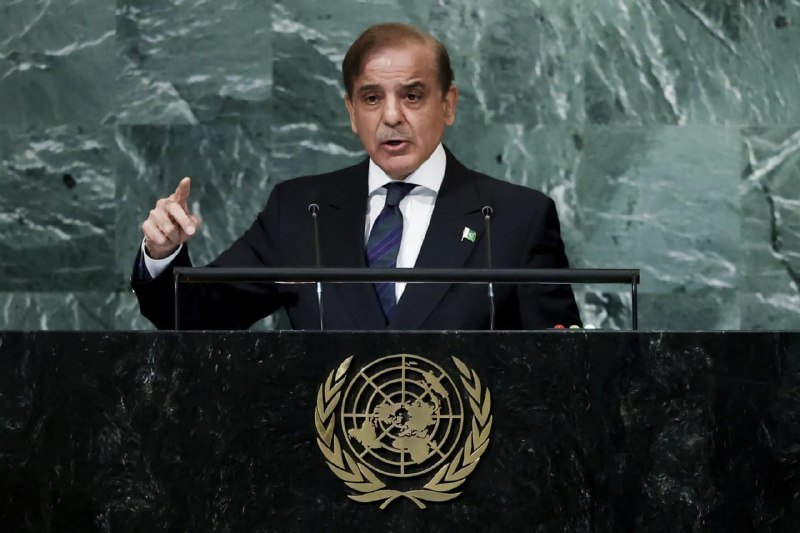
On 7 July 2026, the U.S. Treasury revoked the licenses that had allowed a limited volume of Iranian crude to reach international buyers, citing what one U.S. official told Reuters were attacks on commercial vessels in the Strait of Hormuz. The move, confirmed by Axios the same day and elaborated by Treasury on 8 July, was framed in the bluntest possible terms: "We will not tolerate Iran's actions in the Strait of Hormuz under any circumstances." Tehran, for its part, told Iranian state media that traffic in the chokepoint is governed by "Iranian arrangements," and warned that any "provocative action" by Washington will be met with "an immediate and decisive" response. Iran's foreign affairs apparatus has separately declared a sovereign right to control "parts" of the strait — an extraordinary claim over one of the world's two or three most consequential waterways.
The U.S. decision is, on its face, an enforcement action against a sanctioned oil economy. It is also, in effect, a referendum on whether the dollar's plumbing — the correspondent-banking system, the maritime insurers that price risk in greenbacks, the refineries that settle in petrodollars — still gives Washington a usable lever over a country that has spent fifteen years building workarounds. The question is no longer whether Iran can sell oil. It clearly can. The question is whether the United States can make that sale painful enough, fast enough, to deter the kind of escalation unfolding this week.
What was actually revoked
The Treasury action did not invent a new sanctions regime — Iranian oil has been under heavy U.S. restriction since 2018. What changed is the waivers that, over recent months, had permitted a trickle of crude to move through intermediaries, mostly to buyers in Asia. According to the Reuters report relayed by the Two Majors channel on 8 July, the licences have been rescinded and the prior tolerance window closed. Axios framed the timing as a direct response to Iranian attacks on shipping in the strait, with the Guardian cited by Unusual Whales reporting that those attacks have "intensified." The sequence — incidents at sea, then a financial lever pulled — is the model the United States has used before, most recently in 2019 and in episodic confrontations since. What is different in 2026 is that the volume Iran has managed to move, primarily to Chinese and a handful of other buyers, is meaningfully larger than during the maximum-pressure years of the first Trump administration, and the price of crude is more sensitive to marginal supply.
The Iranian counter-read
Tehran's framing of the events is not, on inspection, pure bluster. Iranian military and diplomatic sources point to a long-standing legal argument that coastal states have regulatory authority in their territorial sea and, in narrow transit corridors like Hormuz, a recognised right to manage traffic for safety and security. Press TV, citing an informed source on 8 July, framed the strait as operating "in accordance with Iranian arrangements" — language that, if stripped of its nationalist packaging, reflects a real dispute in international maritime law about where coastal-state authority ends and the international right of free navigation begins. The Iranian declaration of a sovereign right to control "parts" of the strait, reported on 7 July, is a maximalist version of that argument, and Western wire services have treated it as escalatory. Both readings are simultaneously true: the legal claim is contested, and the political signal is unambiguous. Iran is asserting that the chokepoint is not a free-fire zone for adversaries.
What the dollar lever can — and cannot — do
Revoking waivers is a financial instrument with a delayed fuse. The mechanism works not by physically stopping tankers but by raising the cost of doing business for any buyer, insurer, shipowner, or refiner that touches sanctioned crude. Most major insurers are domiciled in London or other Western financial centres, and their policies are denominated in dollars. That architecture is what gives the United States reach into third-country transactions. The structural advantage is real. The structural limit is also real: the same globalised shipping market is what allows shadow fleets, ship-to-ship transfers, and a slow drift toward non-dollar settlement. Each time Washington tightens the screw, the marginal incentive to build out alternatives strengthens. The fact that Iran is still selling meaningful volumes under a sanctions regime that has been nominally comprehensive for years is itself evidence that the system leaks. The question raised by this week's escalation is not whether the leak can be closed — it cannot — but whether the cost of the leak can be raised high enough to change Tehran's risk calculus at sea.
The shipping corridor is the actual prize
The drama around oil licences is partly a proxy for the deeper issue: who controls the corridor. Roughly a fifth of global seaborne oil transits Hormuz. Any sustained disruption — even the perception of one — moves the benchmark by dollars per barrel within hours and reshuffles shipping insurance pricing within days. Iran's reported attacks on commercial vessels are not, on the evidence available, an attempt to close the strait; that would be suicidal. They are an attempt to demonstrate that the United States cannot guarantee safe passage to everyone, all the time, in a waterway Iran sits on the shore of. The U.S. response — financial, not naval, at least for now — is a bet that the shipping and insurance industry will price the risk of carrying sanctioned cargo so high that Iran cannot weaponise the corridor without cutting off its own revenue. That bet has historically held. The conditions around it have rarely been this tense.
What remains genuinely uncertain
Three things are not yet clear from the available reporting. First, the scale and attribution of the attacks on commercial shipping: the Guardian is cited as the source for "intensified" attacks, but the specific incidents, their targets, and any casualty or damage figures are not detailed in the wire material at hand. Second, whether the waiver revocation is comprehensive or partial — Treasury's public framing suggests the former, but the operative licences have not all been published. Third, and most consequentially, how the buyers in Asia respond. China's state oil companies have been the most consistent purchasers of Iranian crude at a discount; whether Beijing accelerates, holds, or quietly reduces those flows will determine whether the U.S. lever produces a price signal or a political one. The sources do not specify, and reasonable analysts will differ.
What the available evidence does support is a clear reading of the strategic posture. Washington has decided that the cost of tolerating Iran's reported escalation at sea is higher than the cost of tightening the financial vice. Tehran has decided that the cost of ceding the corridor is higher than the cost of provoking the United States. Both sides are now operating with thinner margins than at any point since 2019. The dollar's plumbing is the most powerful non-military instrument on the table, and it is being used. Whether it is sufficient is a question that will be answered, as it usually is, not in Washington or Tehran but in the freight rates out of the Persian Gulf.
This publication treats the dollar's role in the sanctions architecture as a first-order fact, not a slogan. The framing above puts the Treasury action in the context of a long-running contest over who prices the risk of moving oil out of the Gulf, and treats Tehran's legal and political claims on the strait as a serious position to be engaged, not dismissed.
Wire provenance
This editorial synthesis draws on the following public wire/social posts:
- https://t.me/two_majors
- https://t.me/IRIran_Military
- https://x.com/unusual_whales/status/1
- https://x.com/polymarket/status/2
- https://x.com/unusual_whales/status/3