Syria Comes Off Washington's Blacklist — and In From the Cold of Regional Statecraft
President Trump moved on 8 July 2026 to drop Syria from the US list of state sponsors of terrorism, citing commitments by President Ahmad al-Sharaa on Hezbollah — a diplomatic realignment with material consequences in Damascus, Beirut and Washington.
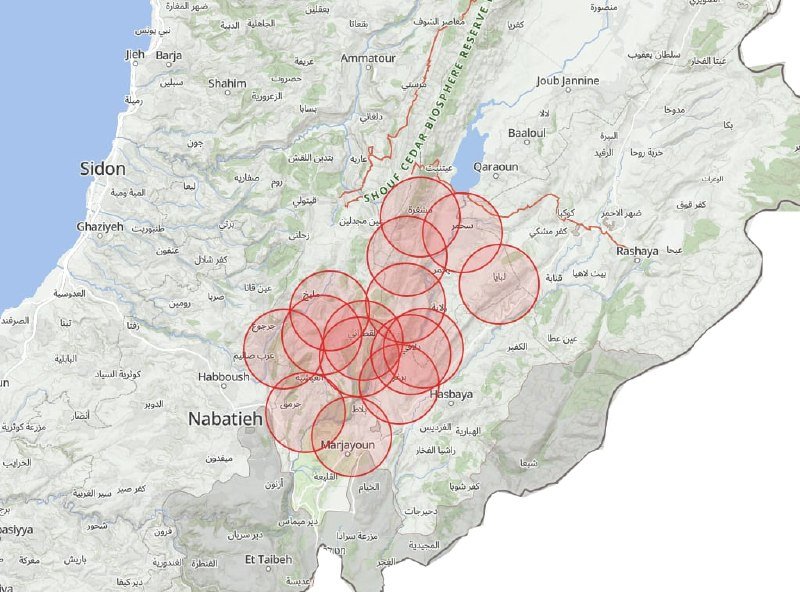
The announcement landed at 21:36 UTC on 8 July 2026. President Donald Trump told reporters that he was moving to delist Syria as a state sponsor of terrorism, citing what he described as efforts by Syrian President Ahmad al-Sharaa to unify a country still recovering from a decade-long civil war and the late-2024 collapse of the Assad government. A separate readout — distributed via Telegram at 22:40 UTC the same evening — added a second commitment reportedly extracted in the meeting: cooperation with the United States on Hezbollah in neighbouring Lebanon.
That is two leverage points toggled in one sitting. The terrorism-sponsor designation, in place since 1979, carried broad sanctions exposure, foreign-aid restrictions and a near-comprehensive arms embargo. Stripping it back opens Syrian banks to the global dollar clearing system, clears the way for oil-sector investment, and signals to Gulf capitals and European chancelleries that the United States now treats Damascus as a working partner rather than a pariah. The Hezbollah file, by contrast, embeds al-Sharaa in the contest shaping the eastern Mediterranean: a slow-attrition campaign against an Iranian-aligned militia in Lebanese politics and along the Israel-Lebanon border.
What was actually said
Al Jazeera English reported the delisting announcement at 21:36 UTC, framing it around al-Sharaa's domestic consolidation. Earlier in the day, at 16:19 UTC, a Polymarket news wire flagged Trump's signal that removal from the terrorism-sponsor list was under active consideration during the meeting — a detail consistent with a process that had been telegraphed for several weeks but formally initiated only today. The third input, distributed by a Telegram account that tracks regional intelligence reporting, asserted that al-Sharaa "made commitments" on Hezbollah. None of the three inputs include a direct quotation of either leader on the Hezbollah question, and the wording — "commitments," "may remove" — leaves the substantive content under-specified. That gap matters: it is the difference between a binding agreement, a public posture and a private assurance.
Coverage routinely defers to the language of official spokespeople in this kind of moment, and this story is no exception. Syrian government officials have been broadly framing the transition as a sovereignty restoration; American officials are framing it as a transactional reward for cooperation. Readers should hold both characterisations in mind until the implementing documents appear.
Why the timing
The designation was originally placed on Syria in 1979, long before the Assad dynasty's eventual collapse, and survived the 2003 Iraq war, the 2011 uprising, the rise of ISIS, and the Turkish interventions in the country's north. It has functioned less as a terrorism instrument and more as a structural sanctions architecture — a way to deny the Syrian state dollar access without the diplomatic friction of a new UN resolution. Removing it therefore looks larger than any single dossier.
Two pressures converged on 8 July. First, Gulf states — particularly Saudi Arabia and the UAE — have pushed for normalisation with the transitional government in Damascus, partly as a counter to Turkish and Iranian influence, partly as a way to bring Syrian reconstruction contracts inside their own investment circles. The United States is aligning, not leading. Second, the Lebanese state remains structurally fragile, with Hezbollah retaining a residual armed wing despite the political and military depletion of recent years. A Syrian government willing to act on the group's external supply lines and recruitment networks is materially useful to a Washington looking for cost-free wins in a region where direct intervention has lost domestic political licence.
The counter-narrative — held in some Russian, Iranian and Lebanese quarters — is that US re-engagement with Damascus is a transactional carve-up of the post-Assad landscape designed to marginalise actors who backed Syria's territorial integrity over the past decade, including Russia and Iran. From that vantage point, normalising relations with a government whose armed faction grew out of the anti-Assad insurgency is less a victory against extremism than a reconfiguration of which external powers enjoy privileged access. That view should be taken seriously, even by readers predisposed to welcome the delisting.
What changes on the ground
The most immediate effects are administrative, not dramatic. Syrian state banks can expect to reconnect to the SWIFT correspondent network within months; Syrian-registered aircraft will regain overflight and landing rights in Western jurisdictions; the legal basis for sanctions on Syrian state oil and the central bank — currently operated under a general licence framework — will narrow. Reconstruction, which has been running on Gulf and Russian capital at roughly a tenth of pre-2011 trade volumes, becomes plausibly financeable.
The Hezbollah side moves more slowly. Cross-border rail, electricity and smuggling routes between Syria and Lebanon's Bekaa Valley have been chokepoints of the group's logistics for years, and any disruption would need to be enforced by a Syrian security apparatus that still does not fully control its own territory. The Turkish-backed Syrian National Army in the Aleppo and Afrin corridors, the residual Islamic State presence in the central desert, and Kurdish-led forces in the northeast all limit what al-Sharaa's transitional government can credibly deliver. A "commitment" is a thinner thing than a verifiable shutdown.
Stakes
The delisting is, on the evidence available today, real and consequential; the Hezbollah pledge is provisional and contested. For Damascus, the next ninety days determine whether reconstruction contracts written in riyals and dirhams are joined by ones written in dollars, and whether Syrian refugees in Jordan, Lebanon and Turkey return in meaningful numbers or remain parked abroad. For Washington, the bet is that al-Sharaa governs well enough — and acts decisively enough on Hezbollah logistics — to keep the domestic political coalition behind the move. For Tehran, the announcement narrows the room in which the Islamic Republic can pose as Syria's indispensable partner. For Moscow, it is a quiet reminder that the post-2024 settlement in Syria is increasingly being written without Russian input.
The honest uncertainty is in the gap between the three source inputs themselves. Al Jazeera's framing centres on al-Sharaa's unification project; Polymarket's frames the announcement as a presidential prerogative unfolding in real time; the regional-intelligence Telegram account goes furthest on Hezbollah, in the most un-attributed language. None of the three provides a written joint statement, a Treasury press release, or a State Department fact sheet. Until one appears, Monexus reads this as a policy direction rather than a completed policy.
Desk note: Monexus treats the Syria file under the same sourcing discipline as Israel-Palestine coverage — Israeli and Western-wire sources lead, regional state-media framings (Iranian, Russian, Lebanese party-aligned) appear as counter-claim material with explicit caveats. Syrian government statements are reported as primary fact but treated with the same rigour applied to any executive in transition.
Wire provenance
This editorial synthesis draws on the following public wire/social posts:
- https://t.me/rnintel