Tehran's funeral diplomacy and Trump's 'worthy' question: what the Mashhad procession actually tells us
As mourners fill Mashhad for a senior Iranian cleric, Trump publicly muses that Tehran has 'called' wanting a deal — but 'I don't know if they are worthy.' The choreography on both sides is the story.
On the evening of 8 July 2026, the streets of Mashhad filled with a procession Iranian state media spent the day broadcasting as a single sustained image: a sea of black, tears, clenched fists, and a coffin bound for the holy shrines of Karbala. Tasnim News, the outlet closest to the Islamic Revolutionary Guard Corps, ran the footage in near real time — the cortege moving through the city, the body approaching the two holy shrines of Karbala across the border in Iraq, the framing of the dead cleric as 'Imam Shahid' and the hashtags that followed. By 22:57 UTC, the same news cycle carried a different, English-language sound: a short, dismissive line from the president of the United States. Donald Trump, asked about Iran, said Tehran 'called a while ago' seeking a deal, and added: 'I just don't know if they are worthy.'
These two things are not unrelated. They are the same negotiation, performed in two registers — and reading only one of them means missing the actual exchange.
The choreography inside Iran
Iranian state media's coverage on 8 July did not present a routine funeral. Tasnim's rolling video showed the body of the cleric moving through Mashhad and then onward toward the two holy shrines of Karbala in Ma'ali, with crowds described in its captions as answering 'Trump's insult.' The choice to route a domestic Iranian funeral procession through Karbala is itself a piece of regional signalling: it links the dead man to a Shi'a sacred geography that runs through Iraq, not just through the Islamic Republic's own shrine cities. A separate Tasnim segment from earlier in the day framed the gathering in Mashhad as 'the historical night' and as a 'wave of hatred against Trump and the arrogant' — the latter term, in Persian political vocabulary, a fixed label for the United States. Monexus cannot independently verify the crowd size claims that often accompany such broadcasts, and state-affiliated outlets have a documented interest in maximising the visual scale of regime-aligned rituals. The procession itself, however, was clearly real and clearly large.
What the day demonstrated is that the Iranian state retains the capacity to convert a bereavement event into a foreign-policy signal aimed, simultaneously, at a domestic base and at Washington. The frame Tasnim chose — 'the lovers of Imam Shahid' answering Trump's 'jokes' — is a frame that treats the American president as an interloper in a sacred space, and treats the size of the crowd as a counter-argument to anything he might say about Tehran's standing.
What Trump actually said
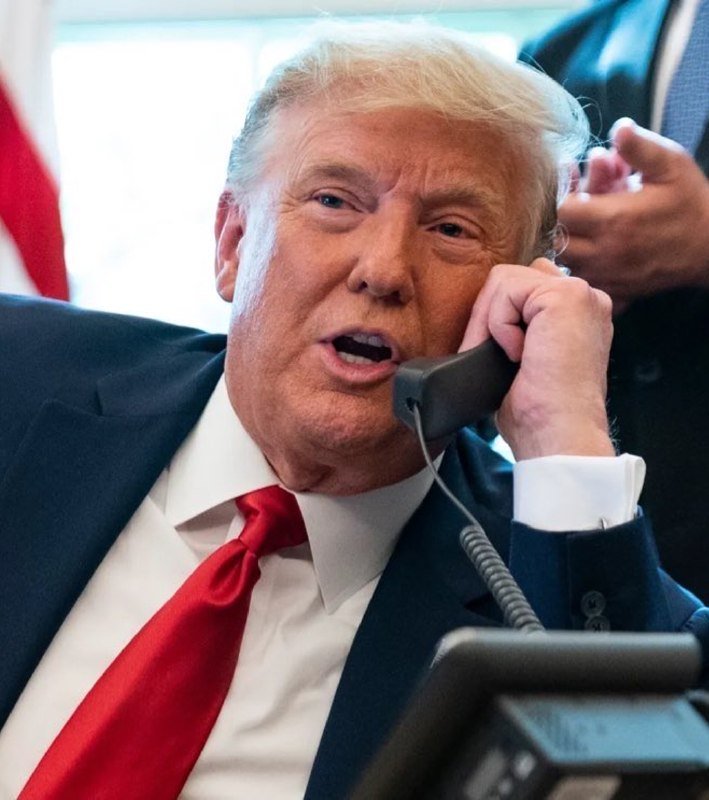
The US side of the exchange, as carried on the day, was much shorter and much colder. Trump's comment, captured and circulated in the 22:57 UTC window, was not a refusal to negotiate. It was a refusal to dignify. 'Iran called a while ago,' he said. 'They want to make a deal so badly. I just don't know if they are worthy. I don't know if they are going to honour the deal. That's the problem.' Note what is present in those lines: an acknowledgement that a channel of communication exists, an assertion that the request for one came from Tehran, and an explicit conditional — worthy — that places the burden of proof on the Iranian side. The question of whether Iran is 'worthy' of a deal, in this register, is not about Iran's bargaining position in any narrow economic sense. It is about whether, in the American telling, the regime across the table can be trusted to hold to the terms it signs.
This is a familiar American script — used in negotiations with everyone from North Korea to the Soviet Union in earlier decades — and it has a specific function. It tells a domestic American audience that the door is open but the bar is high; it tells the Iranian side that the price of admission is public demonstrations of reliability; and it tells third-party observers (Gulf states, China, Russia, the European parties still inside the Joint Comprehensive Plan of Action framework) that the United States reserves the right to be the gatekeeper of legitimacy, not just the larger party at the table.
Why the framing matters more than the fact
What makes the 8 July exchange worth reading carefully is the gap between the two performances. Iran showed a crowd. The United States showed a standard. Both are designed to move the other side's cost-benefit calculation, but they operate on different objects: Iranian state media is talking to its own street and to the wider Arab Shi'a public; the US comment is talking to negotiators, to markets, and to allies who will be asked, soon, to align with whatever the American position becomes. A fair reading of the day does not conclude that one side is bluffing and the other is sincere. It concludes that both sides are performing for different audiences, and that a negotiation that begins with two performances pointed in two directions is not yet a negotiation — it is the run-up to one.
There is also a structural point that the day's coverage makes visible. Coverage of Iran in Western wire copy routinely reduces Tehran's moves to a single dimension — nuclear progress, sanctions exposure, missile capability. Coverage of Iran in Iranian state media routinely reduces Washington's moves to a single dimension — insult, regime-change intent, disrespect for the dead. Neither reduction is wrong, exactly, but each is incomplete. On 8 July, the Mashhad procession and the 'worthy' remark sat alongside each other in the same news cycle, and neither outlet spent much time on the other's frame. That asymmetry is itself the story: the harder question of the next several weeks is not whether a deal happens, but whether the two publics being addressed are being addressed in a language that allows one to happen.
What we still do not know
The sources available for this article do not specify the name of the cleric being mourned, the cause of his death, or his institutional role within the Iranian state. They do not specify whether the phone call Trump referenced took place directly with Iranian officials, through an intermediary government, or through a backchannel. They do not specify which 'deal' is under discussion — nuclear file only, or a wider package including missiles, regional behaviour, and hostages — or whether the Iranian side has signalled any change in its negotiating posture in response to the Mashhad choreography. Each of these is a load-bearing detail that would change the weight of the day's events. Until they are filled in by named, datable sources on the record, the most this publication can responsibly say is that two performances occurred on the same day, in the same news cycle, and that the distance between them is the space a real negotiation will have to cross.
— Desk note: Monexus framed the Mashhad coverage as primary material with explicit caveat, per our standing rules on Iranian state media; Tasnim's video is treated as evidence of what the Iranian state wanted to show, not as independent verification of scale.
Wire provenance
This editorial synthesis draws on the following public wire/social posts:
- https://t.me/tasnimnews_en/189201
- https://t.me/tasnimnews_en/189200
- https://t.me/ClashReport/294418
- https://t.me/tasnimnews_en/189198
- https://t.me/tasnimnews_en/189197
- https://t.me/tasnimnews_en/189195