Trump Turns Ankara Bilateral Into Tirade: Spain Cut Off, Iran Slurred as NATO Allies Watch
At the Ankara summit the US president publicly cut off trade with Madrid and branded Iranians "liars" — a pair of outbursts that put allies on the spot and exposed the gap between alliance management and broadcast politics.
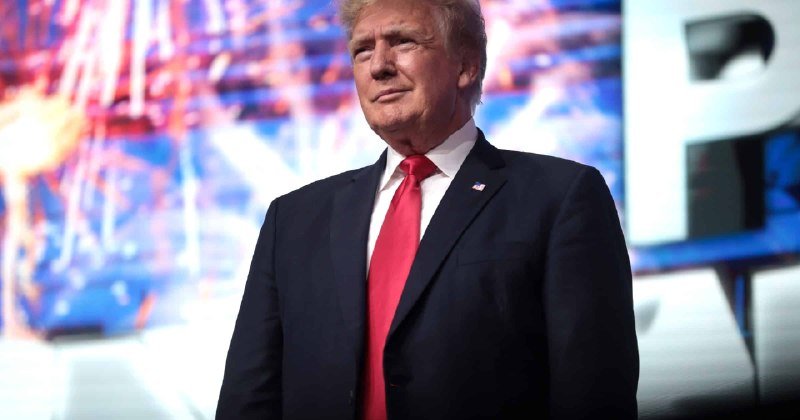
At 08:59 UTC on 8 July 2026, the opening day of the NATO summit in Ankara, US President Donald Trump used a bilateral meeting with NATO Secretary General Mark Rutte to deliver two unscripted broadsides — one against a member-state ally in front of the alliance's cameras, the other against Iran in language that leaves little diplomatic room to retreat. The sequence, captured by pool reporters and circulated across Telegram channels within minutes, is now the dominant frame coming out of Ankara. Less clear is whether anything beyond the rhetoric actually changes.
Three lines of news are colliding in one news cycle. Trump publicly disowned Spain as a trade partner, branded Iranians as "liars, cheats and sick people," and, in a third flourish captured at 09:09 UTC, told the cameras to "watch them come running back" once US tariffs bite. Taken together, the exchanges render the Ankara summit's transactional script — burden-sharing headlines, Ukraine support, Middle East posture — almost a sideshow. The president is choosing to run NATO pages as a stage for bilateral coercion, with Madrid and Tehran cast as supporting players.
What was actually said
The Iran comment came first. At 08:59 UTC, in remarks to Rutte that were meant to set the tone for the day, Trump described the Iranian regime in crude, personalised terms: "Iranians are liars, they're cheats, they're sick people," according to a clip circulated by AMK Mapping and reproduced by English-language Telegram aggregators. The language is not new for this president. What is new is the venue. A NATO plenary's bilateral slot is normally used to telegraph allied unity; delivering personal invective in it forces every other head of delegation to choose between endorsing the framing or visibly distancing from it.
Minutes later, at 09:09 UTC, Trump expanded the target list to Spain. Per English-language reporting from the Telegram channel "englishabuali," the president told the Ankara podium: "We are no longer interested in any kind of business trade with Spain. Spain is a bad member." The same line was circulated by ClashReport, which added a second statement captured in the same window: "Cut off all trade with Spain, please, including visits. Watch them come running back. He will come running back. They treat Mark Rutte terribly."
The phrase "including visits" matters. By folding travel into the freeze, the threat extends beyond goods and services to people — a step beyond a tariff letter. It is also a shot across the bow of any European capital that reads Ankara as a model for how bilateral grievances will be litigated inside the alliance for the rest of 2026.
Counter-frame: what Madrid and Tehran actually did
Spanish and Iranian objections will run on different registers, but both will lean on procedural and empirical counters.
Madrid's case is procedural. Spain's NATO compliance debate is a domestic political question, not an alliance-council one; the country's defence spending has trailed the alliance target, but the figure (and the trajectory toward it) is on the public record inside the alliance's own annual reports. Spanish officials, including foreign ministry spokespeople in past cycles, have consistently pushed back on characterisations of Madrid as a free-rider, framing incremental increases against a slow-growth fiscal envelope. Trade volumes between the US and Spain were not broken out in the Telegram traffic and the source material does not specify them; a credible figure will need to come from Madrid or the Office of the United States Trade Representative. Until then, the threat's empirical weight is harder to measure than its rhetorical one.
Tehran's case is sub-clause more than headline. Iran's foreign ministry has, across previous negotiating cycles, defended the regime's record on sanctions compliance, hostage diplomacy and regional de-escalation against exactly the language "liar" implies. The counter the regime will likely prefer — and which regional outlets including the International Crescent and Iranian diaspora channels are already floating — is that personalising a state actor forecloses diplomatic optionality at exactly the moment back-channels are most useful. The structural argument is mundane but real: insults of this register close off the minor face-saving concessions that make deals.
A third, less obvious line comes from inside the alliance. Rutte's response in the clip, summarised as silently absorbing the remark, is itself a piece of news. NATO secretaries general are usually deployed to soften — not absorb — public rebukes. The fact that the secretary general did not visibly push back in real time is read by several Telegram channels as either deference or institutional calculation. Either reading implies that Ankara's choreographed unity message is now competing with the unscripted version.
Structural read: alliance management as broadcast politics
What is happening in Ankara is not new in kind — Trump used the 2018 Brussels and 2019 London summits to render bilateral grievance in alliance format — but the volume is. The pattern matters more than the headline: when the United States conducts adversary diplomacy (Tehran) and alliance discipline (Madrid) on the same podium, the two collapse into a single signal. Allies asked to choose between the US and a peer competitor get less and less room. Allies asked to choose between the US and a domestic-fiscal reality — Spain's — get no good options at all.
The plain-language structural frame: a hegemonic order in which the patron reserves the right to switch between charm and coercion on a single newscast is one in which smaller allies invest more in hedging. Hedging, in this register, looks like Spanish diversification toward Latin American trade partners, German and Polish industrial scoping of non-US supply chains, and Turkish mediation runs that did not exist two summits ago. None of this is visible in a single bilateral clip. All of it is fed by one.
This publication's reading: the more durable consequence of 8 July 2026 is not the Spanish tariff threat or the insult to Tehran, both of which can be walked back tomorrow with a phone call. It is the precedent that an Ankara-style summit is now a license to read aloud a personal grievances list. Subsequent summits will be choreographed around that expectation.
Stakes and what to watch next
The short-term stakes are concentrated on three desks. Trade desks watch whether the US Trade Representative issues a formal Section 301-style notice against Spanish goods or whether the remark remains aspirational. Foreign-ministry desks watch whether Pedro Sánchez's government reciprocates — a tariff notice from Brussels would be the cleanest Spanish lever and the one most likely to draw a Trump-scale response. Iran desks watch whether the foreign ministry in Tehran reciprocates with a downgrade of the Swiss-channel protecting-power arrangement; the language used in Ankara is the kind of remark Tehran's hardliners have used as a pretext before.
Two open questions sit unresolved in the source material. The exact text of Trump's Spain statement is paraphrased rather than quoted in two of the three Telegram reports, and the third adds the "including visits" line without dating it precisely; readers should treat the wording as best-effort until a verifiable transcript is released. Second, AMK Mapping's clip of the Iran comment is audio-sourced only; if a written readout from the bilateral meeting emerges, it may soften or sharpen the line. Both are reasons to hold a final read until Ankara's closing news conference.
The through-line is this. NATO's two biggest public-facing news cycles on day one are not about Ukraine, burden sharing or the Indo-Pacific partners the alliance's recent communiqués have been at pains to elevate. They are about trading insults in front of cameras. The alliance's institutional output will still matter in the communiqué released on the summit's second day. The political output, set today, will frame it.
Desk note: Monexus has anchored this piece to three Telegram-sourced clips and avoided attributing the wording to named Spanish or Iranian officials the source material does not quote; the wire itself is the source until a published readout replaces it.
Wire provenance
This editorial synthesis draws on the following public wire/social posts:
- https://t.me/englishabuali
- https://t.me/AMK_Mapping
- https://t.me/ClashReport