Trump's Iran ceasefire gambit collapses, exposing the limits of coercive diplomacy
On 8 July 2026 Donald Trump declared the Iran ceasefire 'over' hours after fresh US strikes, leaving a familiar question hanging: was there ever a deal to walk away from?
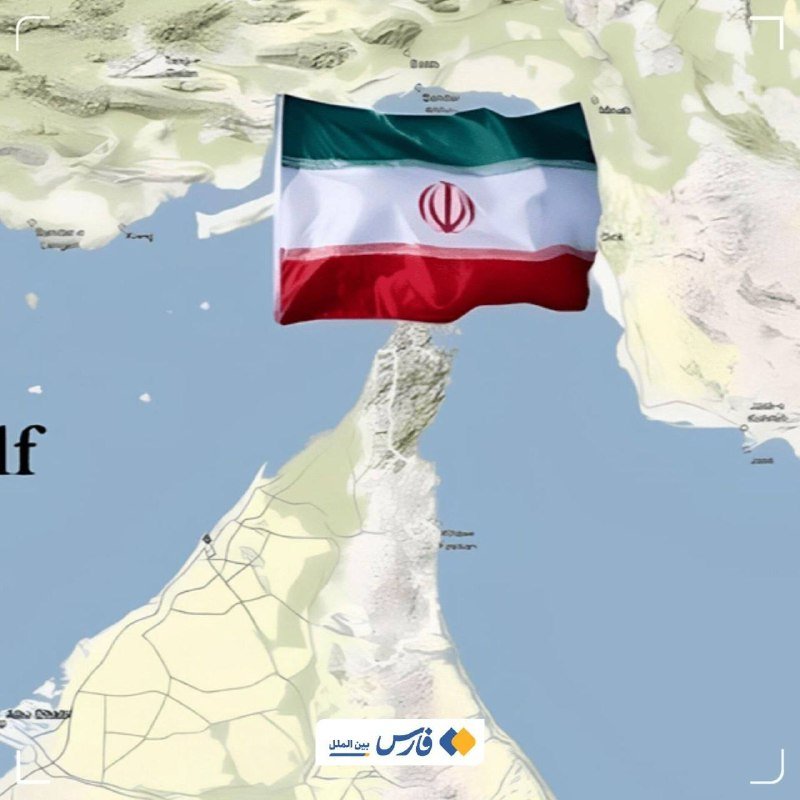
Within hours of announcing fresh US strikes against Iranian targets on 8 July 2026, President Donald Trump declared the ceasefire with Tehran "over" — while conspicuously leaving the door ajar for renewed talks. The contradiction, captured in a single news cycle, is the story. The deal that Washington now says is finished was, by most independent accounts, never a deal at all.
This is the throughline worth following: the United States has spent the better part of a year conducting coercive diplomacy against Iran — sanctions, sabotage, episodic military action, and intermittent negotiation — and the pattern has produced neither the regional de-escalation the White House promised nor the regime collapse its hardliners wanted. What it has produced is a fog of announcements in which "ceasefires" and "deals" function as communication tools for domestic audiences rather than binding instruments between sovereigns.
The 8 July sequence
Reporting from New Delhi and Nairobi, both picking up the same wire material, placed Trump's comments in a tight 24-hour window. The Indian Express filed its dispatch on 8 July 2026 at 10:52 UTC, characterising the day as one in which Trump "says Iran ceasefire 'over' after fresh US strikes, but leaves door open for talks." The Daily Nation of Kenya ran a more direct version of the same news under the headline "Trump says deal with Iran is over," timestamped 09:56 UTC. The framing differs, but the underlying facts converge: a US president announcing that an arrangement has collapsed, on the same day his own forces are striking the party to that arrangement.
The strikes themselves, by the public reporting, are what triggered the rhetorical recalibration. The customary pattern of the past year has been that military action is followed by a pause, a flurry of off-the-record diplomacy, and a fresh round of presidential claim-making about how close the two sides are to an agreement. The 8 July cycle inverted the sequence: the deal died, and the negotiations that were supposedly underpinning it are now being offered as a new beginning.
The "deal" that wasn't
The structural problem is older than 8 July. Coverage throughout 2025 and into 2026 has repeatedly described a US-Iran track in which the headline-grabbing claims from Washington — "we are very close," "they are begging for a deal," "we have a deal" — were routinely walked back within days. Independent reporting from outlets such as Axios, which has been ahead of the curve on these negotiations, has tended to show that what the White House was presenting as a finished arrangement was, in private channels, closer to a framework of understandings, riddled with carve-outs and subject to reinterpretation by both sides.
Iran's own framing has been consistent: foreign minister-level statements have insisted that any agreement must address sanctions relief and respect Iranian enrichment rights, and that military pressure is not a substitute for negotiation. By contrast, the US line has oscillated between maximalist demands and a more flexible posture depending on which audience the president is addressing in a given hour. The result is a negotiating environment in which neither side is quite sure what the other side has agreed to, and in which the term "deal" is doing far more rhetorical work than it can support.
Coercive diplomacy and its discontents
A closer reading of the 8 July sequence suggests the structural pattern of the past year is now openly visible. Coercive diplomacy — the deliberate use of military and economic pressure to bring an adversary to terms — is at its most effective when the cost-imposition is tightly coupled to a credible off-ramp. When the pressure continues and the off-ramp moves, the adversary has little incentive to climb down. Iran's response across the past year, including restrained retaliation and selective de-escalation, has read less like a state on the brink of capitulation and more like a state managing a hostile relationship on terms that maximise its own room to manoeuvre.
A second counter-reading is worth registering: critics of the administration's Iran policy inside the United States argue that the 8 July sequence is not a breakdown of diplomacy but the diplomacy itself — a deliberate use of crisis as a communication tool to manage oil markets, signal to Gulf partners, and shape the domestic political narrative ahead of congressional elections. On this reading, "the deal is over" is less a piece of news than a posture. The available reporting does not resolve which reading is correct, and may not for several days.
The regional ripple
The stakes extend beyond the bilateral relationship. Gulf states that have hedged between Washington and Tehran, and that depend on the Strait of Hormuz remaining navigable, are now recalculating. So are energy markets, where any sustained move toward a hotter Gulf will price in quickly. The Iranian response to the 8 July strikes, and Washington's own next move, will set the trajectory for the rest of the year.
What remains genuinely uncertain is whether the "talks" Trump left the door open for are a substantive track or another round of messaging. The reporting as of 8 July 2026, late morning UTC, does not name a venue, a counterpart, or a timeline. The sources also do not specify the targets of the US strikes, the casualty toll, or whether Iran's proxies in the region have been instructed to stand down. The wire reporting, in other words, leaves most of the substantive questions unanswered. What it does establish is that the rhetorical pattern of 2025-26 — strike, claim, walk back, re-claim — is intact, and that the term "ceasefire" is being used in a way that no neutral observer would recognise as standard diplomatic usage.
Desk note: Monexus treated the 8 July announcement as a story about the architecture of US coercive diplomacy toward Iran, not as a one-day tactical episode. The wire headlines in South Asia and East Africa offered complementary framings, and we held both in view rather than letting either dominate.
