Trump tears up Iran memorandum, ceasefire declared “over” as oil jumps 5%
On 8 July 2026 the US president abandoned a months-old memorandum with Tehran, sending Brent crude up more than 5% and reviving the prospect of open confrontation across the Gulf.
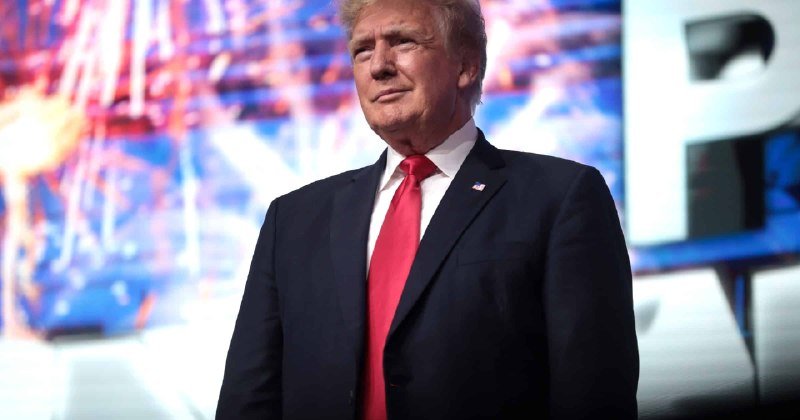
At 10:20 UTC on 8 July 2026, US President Donald Trump declared that the ceasefire arrangement with Iran was effectively finished and described the diplomatic track as a “waste of time,” according to an Axios scoop published the same morning. Within hours, Reuters was reporting that benchmark crude prices had risen by more than 5%, an immediate market verdict on the renewed risk premium attached to Gulf shipping lanes and to Iranian export infrastructure.
The sequence — presidential repudiation, market repricing, headline reaction — is a familiar choreography for this administration. What is unusual this time is the speed, and the explicit framing. The ceasefire, in Trump’s telling, never really functioned; the talks built on it were an exercise in futility. The implication is that Washington is not abandoning a working framework, but closing the door on a framework that, in the president’s view, had already failed.
What actually changed on 8 July
The proximate trigger was a memorandum of understanding that the administration has now publicly disowned. According to the Reuters dispatch circulated by the Gaza Alanpa Telegram channel at 09:29 UTC, oil futures climbed more than 5% on the news that Trump had announced the end of that memorandum. The Axios report, attributed to its long-standing diplomatic correspondent Barak Ravid, set the political context: a ceasefire “over” and talks that the president considers a sunk cost.
Trump, asked in the same news cycle about Iranian intentions to target him personally, was characteristically blunt. “I’m on all their hit lists,” he said, per an excerpt captured by the English Abuali Telegram channel at 09:33 UTC. “And so far, I guess I’ve been a bit lucky, but maybe that won’t last much longer. That’s how it is, we have excellent people.” The remark is not evidence of a specific plot, but it does signal that the White House has internalised the personal-security framing of the Iran file — a framing that historically narrows the diplomatic space.
Why the markets moved on the headline
A 5% intraday move in crude is not, on its own, a panic. It is, however, a price. It says that traders believe the probability of an operational disruption — a strike on an Iranian export terminal, an Iranian retaliation against Gulf shipping, a reimposition of biting secondary sanctions on Chinese refiners — has risen materially over the trading session.
Three structural facts make that read plausible. First, the administration has form on oil-market shocks tied to Iran decisions, and the trading desk has learned to pre-position. Second, the memorandum being torn up was already the de facto ceiling on Iranian exports, so its removal removes a ceiling rather than imposing a floor; the asymmetry is upward for prices. Third, there is no public indication of what — if anything — replaces the arrangement, and markets price the unknown.
The counter-read: tactical posturing, not strategic rupture
The case for treating the 8 July moves as theatre rather than substance rests on three observations. The first is that presidential rhetoric on Iran has cycled between threats and reopenings for the entire post-2024 period, with limited follow-through on the most extreme language. The second is that no new sanctions architecture has been announced, no naval deployment telegraphed, and no allied capital has been briefed out of step with the White House line — at least not in the public reporting available on 8 July. The third is that an administration facing a domestic price-pressure problem has an interest in jawboning volatility rather than delivering it.
That case is real, but it is also weaker than it looks. The Axios reporting frames the president’s own characterisation in unusually terminal terms — not “paused,” not “reviewing,” but “over” and a “waste of time.” Once a leader closes the rhetorical door on a channel, reopening it without a domestic concession becomes expensive. And the explicit naming of a personal threat — “I’m on all their hit lists” — is the kind of line that, once on the record, constrains future flexibility. Tehran can now point to the remark as evidence that no deal the US signs will be honoured by this White House.
What this sits inside
The deeper pattern is the steady conversion of the Iran file from a nuclear-arms-control problem — where the metrics are inspectors, centrifuges, and plutonium stockpiles — into a personal-security and regime-behaviour problem, where the metrics are assassination attempts, proxy attacks, and televised slights. That shift makes the diplomatic channel narrower by construction. There is no inspector-friendly compromise that resolves a question framed around whether a foreign leader poses a physical threat to the US president.
It also accelerates the bifurcated architecture now hardening around Iranian crude. China, the largest single buyer of Iranian exports, has been the structural beneficiary of every previous collapse in the US-Iran framework; a more hostile US posture reinforces the case for an alternative payments-and-shipping rail that bypasses the dollar system entirely. Gulf producers, by contrast, face the familiar dilemma of any oil-dependent monarchy bordering the Strait of Hormuz: the higher the risk premium attached to the chokepoint, the louder the local calls for de-escalation from capitals that cannot afford a sustained shock. India, Turkey, and South Korea — the next tier of Iranian crude customers — will, as ever, calibrate between US secondary-sanctions exposure and discounted feedstock. The relative price signals on 8 July reflect that entire lattice repricing at once.
Stakes and what remains unresolved
In the near term, three things matter. Whether the administration follows the rhetoric with a sanctions package, a naval move, or a designation of Chinese refiners as the enforcing edge of the new posture. Whether Tehran retaliates in kind — through a proxy strike, a hostage-card move, or a managed nuclear escalation — and on what timeline. And whether the next OPEC+ meeting, already pencilled in for later this summer, treats the 5% move as a reason to add barrels or as a windfall to be harvested.
What remains genuinely uncertain is whether the 8 July package represents a strategic decision to abandon the diplomatic track, or the latest iteration of a coercive bargaining strategy in which the threat is the product. The sources available on the day do not settle the question. Trump’s own framing — ceasefire “over,” talks a “waste of time” — leans toward closure. The absence, on the day, of any visible allied coordination, sanctions paperwork, or force-movement announcement leans toward posturing. The market’s 5% move is consistent with both: it prices the probability of a real escalation higher than before, without committing to one.
That ambiguity is the point. A US president who wanted certainty about a coming Iran war would telegraph it; a US president who wanted optionality would say exactly what was said on 8 July. The trading desk has paid for the optionality. The Gulf, and the Iranian opposition in exile, and the Chinese refiners, and the Indian downstream buyers, will now live with the consequences — whatever the president eventually chooses.
Desk note: Monexus treats the 8 July moves as an inflection point, not a verdict. The Axios scoop is the wire-of-record on the presidential framing; Reuters is the wire-of-record on the market reaction; the Trump comments on personal targeting are sourced to the Telegram capture in the public record. Until a sanctions architecture, a force movement, or an Iranian response is independently documented, the gap between rhetoric and operational reality remains the story.
Wire provenance
This editorial synthesis draws on the following public wire/social posts:
- https://t.me/gazaalanpa
- https://t.me/englishabuali
- https://t.me/osintlive