Trump Pulls the Plug on the Iran MOU — and the Ceasefire With It
On 8 July 2026 the President declared the Iran memorandum of understanding 'over,' called Tehran 'scum,' and walked away from the ceasefire framework his own administration had assembled.
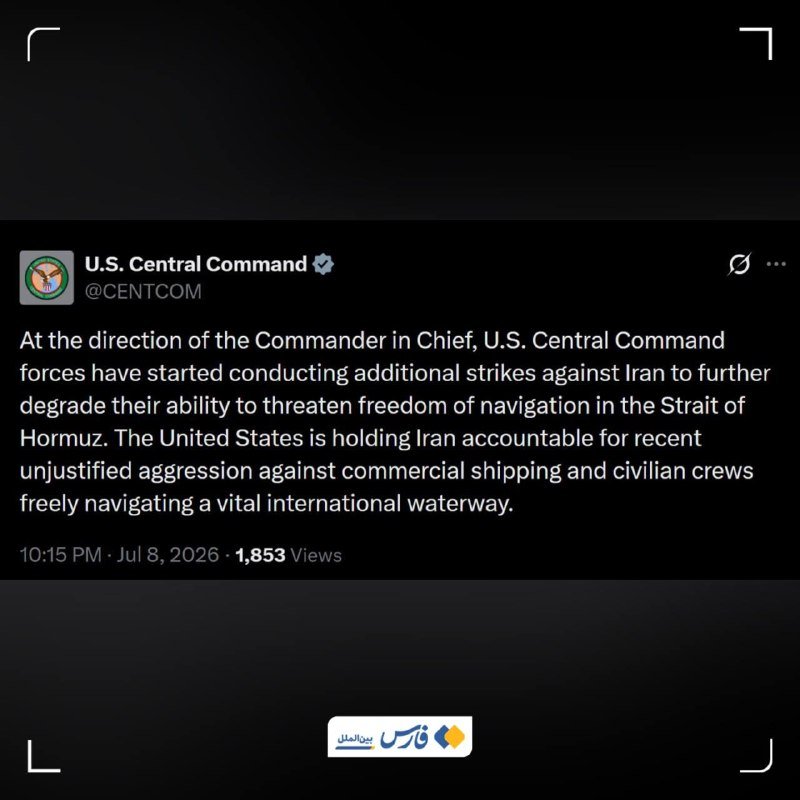
At 08:47 UTC on 8 July 2026, an on-camera statement carried by Open Source Intel and reposted across the monitoring channels left little room for diplomatic parsing: the memorandum of understanding with Iran is "over," and the people running the Islamic Republic are, in the President's word, "scum." Within the hour, two further items — one at 08:48 UTC framing the move against the backdrop of reported US strikes on "80 targets," and one at 09:18 UTC pulling the ceasefire itself into the same sentence — collapsed the distinction between a transactional walk-back and a structural rupture. What had been, until Tuesday, an unstable but functioning détente has now been declared terminated by one of its two principal signatories.
The pattern matters more than the language. The President did not announce new sanctions, did not name a new negotiating track, and did not invoke the authority of an allied government. He declared a document dead. That is a different instrument from the sanctions machinery, the carrier-strike deployment, or the diplomatic demarche — and it tells us where the escalation is being driven from.
What was actually signed — and what was actually broken
The "MOU" in question is not a treaty, and it has never been submitted to the Senate. It is the loose, executive-to-executive architecture that has, since the spring, governed the exchange of de-escalation gestures between Washington and Tehran: oil-licensing signals, informal nuclear-program benchmarks, the calibrated silence over Houthi and proxy activity. Its legal weight is roughly that of a press communiqué. Its political weight, until this morning, was considerably higher.
By calling it "over," the President is not annulling a ratified accord. He is signalling to Tehran, to Gulf intermediaries, and to the domestic base that the de-escalation track has been retired — and that the available substitutes are kinetic rather than negotiated. The 80-target figure, recycled across the Open Source Intel and Faytuks channels in the same hour, is the price tag attached to the announcement. It is the counter-argument the administration is offering to anyone tempted to ask whether the diplomatic route was exhausted.
The ceasefire was already in ICU
The second item, surfacing in the 09:18 UTC and 09:19 UTC windows, is the more analytically interesting one. The framing pushed by several aggregators — "Trump says he thinks the Iran ceasefire is over" — implies a discrete event that can be dated. A reasonable counter-read, captured in the same monitoring stream, is that the ceasefire "can't be over if it never started." Both readings deserve airtime. The first treats the MOU as a ceasefire; the second treats it as a non-binding political signal that was honoured in the breach long before 8 July.
The evidence supports the more cynical framing. Strikes were already being reported, sanctions were already tightening, and the proxy theatre in the Gulf, Iraq and the Levant was already hot. What the President did at 08:47 UTC was less to break something than to ratify a state of affairs the previous eight weeks had been producing — and to attach his name to the result.
Why now — and why this way
Three pressures plausibly converged. The first is domestic: a President who built the spring détente on the promise of short, transactional wins finds himself, by July, with neither a signed nuclear file nor a politically useful fight. Declaring the MOU dead returns the file to the opposition, not to the negotiators. The second is Israeli: Tel Aviv has long objected to any architecture that treats the IRGC's regional posture as negotiable, and a US walk-back — accompanied, as the 80-target framing suggests, by a renewed strike tempo — closes the gap. The third is Iranian: Tehran's refusal to provide forensic cooperation on previous strikes, and the continued pace of enrichment reporting, left the MOU without a defensible success metric.
None of those pressures required this particular announcement, in this particular register, on this particular morning. The use of "scum" and "sick people" — the language carried verbatim across the OSINT feeds at 09:19 UTC — is not the vocabulary of a negotiator preserving a lane. It is the vocabulary of a closure.
Stakes — concrete, not rhetorical
The first losers are the intermediaries: the Gulf states that had been quietly carrying messages, and the European foreign ministries that invested spring capital in keeping the MOU alive. The second losers are the oil markets, which had been pricing a soft Q3 and now have to price the return of a kinetic premium. The third losers are Iranian civilians, who absorb the cost of sanctions tightening without ever having been at the negotiating table.
The first winner is the Israeli security cabinet, which gets the strategic file it wanted. The second winner is the US defence-industrial base, which gets an order book. The third winner, less comfortably, is the Iranian hardline — for whom a US walk-back is the recruitment argument it has needed for a decade.
What remains genuinely uncertain is whether the administration intends the rhetoric as a prelude to a new round of strikes, or as a maximum-leverage opening for a renegotiated deal under worse terms for Tehran. The 80-target figure points one way; the absence of any named Iranian counter-signatory points the other. The monitoring feeds disagree. The diplomatic record, by 12:00 UTC, is silent.
This publication's read is that the language has already foreclosed the negotiating track, even if the strikes have not. Documents can be relitigated. "Scum" cannot.
Monexus framed this as a closure event rather than a negotiating posture, on the grounds that the President chose vocabulary that rules out the negotiating table — and that the same monitoring stream carried both the MOU-killing line and the ceasefire-collapse line within thirty-one minutes, which is the signature of a single decision rather than two.
Wire provenance
This editorial synthesis draws on the following public wire/social posts:
- https://twitter.com/Osint613/status/2074771436925812974/video/1
- https://twitter.com/AZ_Intel_/status/2074771436925812974