Trump, NATO, and the choreography of a US-Iran deal
A single afternoon produced three incompatible Trump statements — strikes on Bushehr, NATO concessions, an Iranian phone call — and the gap between them is now the story.
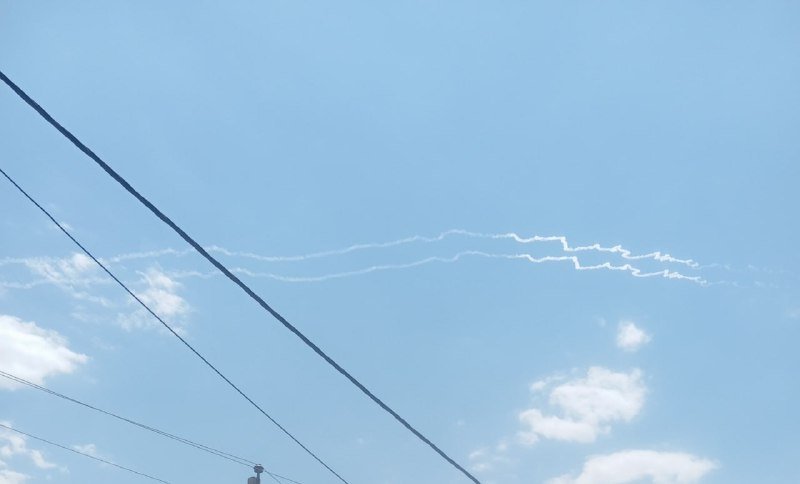
In the span of roughly two hours on 8 July 2026, three statements attributed to President Donald Trump landed in public circulation. Smoke was reported rising in Iran after US strikes. NATO, the President said, "made some concessions" during the day's engagements. And Iran, having watched the first item, was now — by the same President's account — on the phone, "desperate to make a deal." Taken in isolation, each line is a routine moment of presidential commentary. Taken together, they form a sequence that says more about the choreography of US Middle East policy than any one of them does alone.
The thread is thin, the timing is tight, and the leverage is visible. That combination is the story.
The strike comes first
The earliest item in the sequence is the kinetic one. At 21:17 UTC, the BRICS News channel on Telegram carried footage of smoke rising in Iran following US strikes; at 21:49 UTC, a follow-up post showed what the same channel described as the aftermath of US strikes in Bushehr, a port city on the Persian Gulf that hosts one of Iran's two major nuclear-related facilities and a large petrochemical complex. Within roughly an hour of the first frame of smoke, the President was describing a NATO negotiation as productive — and, within another two hours, was reporting that Tehran had requested a call. The sequence is not subtle. Pressure is applied; movement is requested; the request is then described by the party applying the pressure as evidence that the pressure is working.
The NATO line is the tell
What makes the NATO statement worth pausing on is not its content — "made some concessions" is the kind of phrase that can be stretched to mean almost anything in a readout — but the fact that it appears at all in the same news cycle as a strike on Iranian soil. NATO does not negotiate Iran policy. The alliance is a Euro-Atlantic collective-defence treaty, not a Middle East envoy. For the President to bracket a kinetic action against Iran with an observation about NATO behaviour is to insert the transatlantic relationship into a bilateral crisis it does not, on its face, belong to. The most parsimonious read is that the NATO line is doing diplomatic work the Iran line cannot do directly: signalling to European capitals, and to oil markets, that the United States is not asking its allies to underwrite the escalation, only to accommodate it. Whether that reading is correct is a separate question. The positioning is what matters.
The "desperate to make a deal" line
The 23:06 UTC item — that Iran "called and is desperate to make a deal with US" — is the line that will travel furthest, because it confirms a particular narrative the administration is invested in: that maximum economic and military pressure produces negotiation, and that negotiation on US terms is now imminent. There is, on the available evidence, no way to test the claim. Iranian state media has not, in the items available to this publication, confirmed the substance of the call; the BRICS News framing is a relay of a presidential statement, not an independent account. The framing also flatters the speaker. A foreign government that has just absorbed strikes on a major energy-and-nuclear site picking up the phone is not, on its face, behaving desperately. It is behaving like a state with limited escalation options that nevertheless wants to keep the channel open. Whether the channel produces a deal, and on whose terms, is the only question that will matter in three months.
The structural frame
What the day illustrates, in plain terms, is the gap between the rhetoric of a deal and the practice of coercion. The United States under this administration has consistently framed diplomacy with adversaries as the product of applied pressure — sanctions, strikes, force posturing — rather than as a parallel track. The Iran file, in that reading, is not a negotiation that may or may not follow from a strike; it is a strike that exists to produce a negotiation. NATO, in this construction, is not a partner in the strategy so much as an audience to it: a body whose members are being asked to absorb the energy and refugee externalities of a Middle East policy they did not design, while the headline credit for any deal flows back to Washington. The structural fact underneath the day's headlines is that the United States is increasingly the actor setting the tempo on both escalation and de-escalation, with allies consulted after the fact rather than before it. That is a posture, not a policy, and postures have a habit of running out of road when the underlying costs land.
Stakes, and what remains uncertain
If the choreography holds, the immediate winners are short: oil traders pricing in a near-term diplomatic premium, regional states that prefer a deal to an open-ended confrontation, and the administration itself, which can claim a win on its preferred terms. The immediate losers are the populations around Bushehr and any other struck sites, the European governments asked to absorb the spillover of a policy they did not shape, and the longer-term credibility of a non-proliferation architecture that survives only as long as strikes and deals are treated as substitutes for it. The serious question is whether what is being described as a deal is in fact an interim arrangement — sanctions relief in exchange for a managed nuclear slowdown — or a settlement that addresses the underlying dispute. The available items do not say. What they do say, plainly, is that on the evening of 8 July 2026, the US President was the single author of the day's three largest headlines about Iran, and that Iran was the second-largest. That is not, in itself, a settlement. It is the prelude to one, or the prelude to the next strike.
Desk note: Wire coverage of the day's events is being run on the BRICS News Telegram channel, which has a tendency to amplify statements without independent corroboration. This publication has paraphrased those statements rather than quoted them, flagged the unverifiable claim of a direct Iranian call, and declined to amplify casualty or strike-damage figures that the source items do not actually contain.
Wire provenance
This editorial synthesis draws on the following public wire/social posts:
- https://t.me/s/bricsnews
- https://t.me/s/bricsnews
- https://t.me/s/bricsnews
- https://t.me/s/bricsnews