Trump's NATO theatre: stay-or-go ultimatum dressed up as reassurance
The same day the president called Spain a "terrible partner," he told allies he wants the US to stay in NATO. Both signals landed inside an hour — and both are being read carefully in Madrid and Brussels.
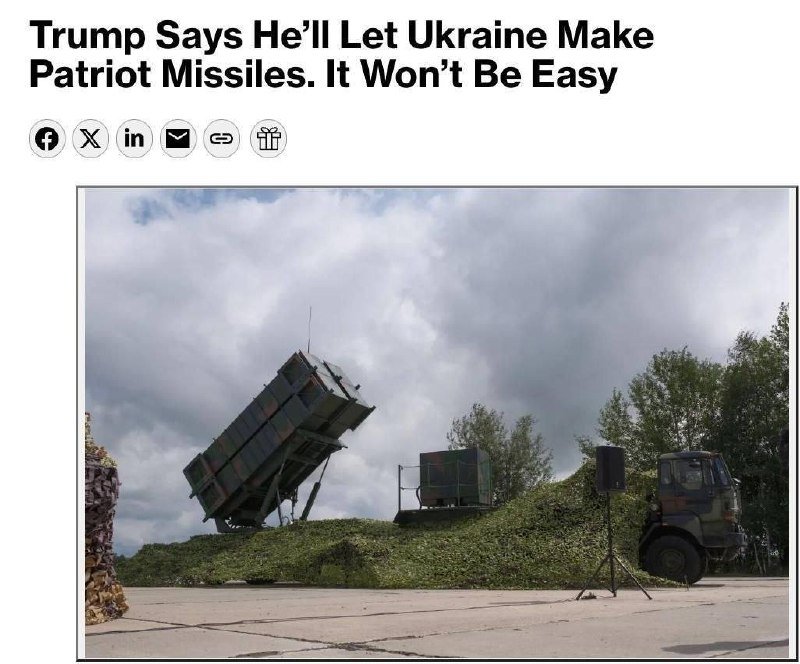
Within a single hour on 8 July 2026, Donald Trump told NATO leaders that the United States "wants to remain with you," then publicly branded Spain a "terrible partner in NATO" and threatened to cut off trade. Both messages landed before the afternoon European close. Both were reported by the same wire. Both are now being parsed in capitals from Madrid to Bucharest as a single, deliberate performance.
The picture is not whether America leaves the alliance — prediction markets put that near-impossible outcome at four percent by year-end — but whether the threat of leaving has become a routine bargaining chip, deployed in real time against individual member states. The spectacle works because it is deniable. The reassurance and the insult travel down the same phone line.
A transactional alliance, narrated in public
According to Polymarket's market on NATO withdrawal, traders priced the probability of any member state formally exiting the alliance by 31 December 2026 at roughly four percent as of 20:03 UTC on 8 July — a low enough number to treat as background noise, but high enough to be a tradable asset. The four-percent figure reflects, more than any operational threat, the residual credibility that Trump's ultimatum-style foreign policy has accumulated since January 2025: low-probability, high-tail-risk, priced accordingly.
At 13:38 UTC, the same platform reported Trump's on-camera statement to NATO leaders that "we want to remain with you," attributed to Reuters wire coverage circulated at 14:57 UTC. The phrase is notable less for its content — every sitting US president has said something equivalent since 1949 — than for its timing: delivered inside the same news cycle in which Spain, a NATO member since 1982 and a core contributor to southern-flank operations, was singled out for public punishment.
The Spain flashpoint
The 14:17 UTC Polymarket flash that Spain had been called a "terrible partner" with a trade cutoff floated does not specify which Spanish policy triggered the language. Reporting earlier in 2026 has placed Madrid at odds with Washington over defence-spending trajectories, Iran policy and the broader question of how loudly European capitals should publicly distance themselves from US tariff rhetoric. Spain's NATO defence spending has sat below the alliance's two-percent-of-GDP guideline — a complaint shared, to varying degrees, by Canada, Belgium, Italy and several newer members — but Spain is the first member singled out by name on the same day a reassurance message was sent to the alliance as a whole.
That distinction matters. The threat-to-Spain is bilateral. The reassurance-to-NATO is multilateral. By separating them into two statements within ninety minutes, the White House turns NATO from a security community into an audience for a bilateral pressure campaign.
The €49.4 billion tell
If the news cycle had been only insults, the day would read as prelude to rupture. It was not. At 10:48 UTC, Polymarket flash reported NATO allies announcing a 49.4-billion-dollar long-range missile project framed as keeping the alliance "safe for years to come." That figure — more than double Estonia's annual defence budget — is the kind of commitment that gets signed when members believe the US security guarantee is, on net, durable.
The juxtaposition is the story. Alliance members are voting with their procurement budgets that the reassurance is operative. They are also voting with their domestic politics that the threat to Spain is real enough to plan around. Both can be true; the missile programme can survive a punitive turn against Madrid precisely because the contract has already been signed.
What stays unclear
Three questions the day's reporting does not resolve. First, what specific Spanish action triggered the language — the wire coverage circulated does not name a policy file. Second, whether "cut off trade" is a tariff threat, a contracting threat or the looser rhetoric of a tweet; the four-percent Polymarket line suggests traders are not yet pricing rupture. Third, whether the long-range missile announcement was timed to soften, or to harden, the day's other headlines — alliance communiqués are scheduled well in advance, but the optics of a 49.4-billion-dollar commitment landing on the same day as a NATO-member-shaming outburst are unlikely to be accidental.
What can be said without overreach is this: an alliance that absorbs both a reassurance message and a member-state insult inside ninety minutes, and responds with a multi-decade missile commitment, is operating on something other than a crisis footing. It is operating on a footing in which instability has been priced in, institutionalised, and is now part of the procurement cycle. That is its own kind of structural shift — quieter than withdrawal, harder to reverse, and more revealing of what NATO has actually become in 2026.
Desk note: Monexus treated Polymarket's wire-flash reporting as the primary attribution chain for the day's three NATO-related claims, supplemented by the Reuters-cited reassurance language. The four-percent withdrawal probability is reported as a market price, not a forecast.
Wire provenance
This editorial synthesis draws on the following public wire/social posts:
- https://x.com/unusual_whales/status/1813053000
- https://x.com/polymarket/status/1812980000
- https://x.com/polymarket/status/1812930000
- https://x.com/polymarket/status/1812820000