Trump pledges US-made Patriots for Ukraine in Ankara meeting with Zelensky
At the NATO summit in Ankara, Donald Trump told Volodymyr Zelensky the US would give Kyiv "the right to make" Patriot interceptors — a framing short of an outright delivery pledge and one that opens a fresh debate over what the White House is actually offering.
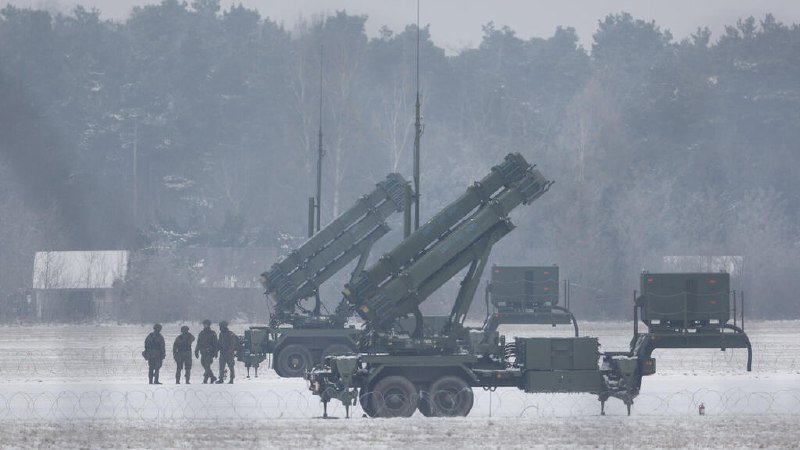
On the margins of the NATO summit in Ankara, US President Donald Trump told his Ukrainian counterpart Volodymyr Zelensky on 8 July 2026 that Washington would give Kyiv "the right to make" Patriot air-defence missiles — a formulation he described on camera as a "gamechanger," but one that stops short of a confirmed US government-to-government transfer of the interceptors themselves. The language, captured by reporters in the meeting room and circulated by Ukraine-facing outlets within minutes, reopens a long-running question about how much control over the supply chain the Trump administration is willing to hand Kyiv, and how much it intends to keep inside American borders.
The episode is small in the literal number of sentences exchanged and large in what those sentences do not yet commit to. Patriot remains the most capable land-based interceptor system in the Western inventory and the one Ukraine has repeatedly identified as the single biggest gap in its layered air-defence architecture. What Trump offered on 8 July is, on its face, the legal right to manufacture the system — an arrangement that, if it materialises, would be measured in years rather than weeks. What Ukraine needs at the front this autumn is rounds.
A deal, a phrase, or both
Zelensky entered the Ankara meeting with a public ask centred on air defence. The Ukrainian presidency had spent the run-up to the summit framing Patriot as the existential gap — the one system capable of intercepting the ballistic missiles, glide bombs and high-end cruise missiles that have driven much of Russia's long-range strike campaign in 2025 and 2026. According to France 24's account of the exchange, Trump responded in front of reporters that the deal "would be a gamechanger," and confirmed that the US would give Ukraine "the right to make" the missiles.
The "right to make" framing is not the same as a delivery. Production licences for sensitive US weapons systems are normally layered: an executive-branch authorisation, a State Department review under the International Traffic in Arms Regulations, an end-use monitoring arrangement, and — in the case of a system like Patriot — a co-production agreement with the prime contractor. None of those downstream steps were enumerated in the readout, and the White House has not, in the materials available at press time, published a fact sheet defining what the right to make covers, on what timeline, and at what production volume.
That ambiguity is not necessarily a contradiction. The Trump administration has used similarly elastic language on other Ukraine military-aid decisions, most notably around ATACMS provision in late 2024, where public statements trailed the operational reality by weeks. The pattern is familiar enough to make analysts cautious about reading too much into the verb tense in Ankara.
What Kyiv is actually short of
Ukraine's air-defence problem is a math problem with three variables: interceptors, launchers, and crews. Western deliveries over 2024 and 2025 rebuilt the country's medium- and short-range capacity with IRIS-T, NASAMS, Gepards and various legacy Soviet systems refurbished by allies. The persistent gap is at the upper tier — the high-altitude, long-range intercept layer that only a handful of Western systems can credibly provide. Patriot is the centrepiece of that tier.
The Ukrainian argument, repeated by Zelensky in Ankara, is that even a sizeable stockpile of interceptors is consumed in weeks when Russia is conducting sustained strikes at the scale seen in the spring and early summer of 2026. The implication is that domestic production — even slow-ramp domestic production — changes the strategic calculus by removing the Ukraine-side constraint from the supply equation. Western primes can still constrain delivery of the seeker, fuze and propulsion components that only US manufacturers produce, but the airframe, container, and integration work could, in principle, be done in Ukraine.
What the reporting does not specify, and what remains contested even among analysts who follow the air-defence file closely, is whether the Trump formulation envisages full airframe manufacture in Ukraine, integration of US-supplied seeker sections, or something closer to a final-assembly and testing partnership on NATO territory. Without a published arrangement, the open-source record cannot resolve that.
The counter-narrative: a rhetorical concession
The most plausible alternative reading of the Ankara exchange is that Trump is signalling political alignment rather than committing to a production programme. The "right to make" line, in this interpretation, is calibrated for two audiences simultaneously: a Ukrainian side that needs a diplomatic win on the summit floor, and a domestic US audience that remains split on the scale of further aid commitments. The phrase gives Zelensky something to take back to Kyiv and gives the White House room to narrow the offer in subsequent interagency review.
There is precedent for this. Trump's first term produced multiple statements on Ukraine aid that were later walked back or quietly constrained by the Pentagon and the defense industry. The current administration's posture toward European industrial defence has also emphasised co-production as a job-creation story in the United States — a frame that does not always translate cleanly into offshore manufacturing licences.
Against that reading, two factors push the other way. First, Zelensky's own readout, distributed through Ukrainian-aligned channels, treats the Patriot commitment as a substantive step rather than a headline. Second, the NATO summit setting is unusually visible: any future retreat from the announced position would carry a reputational cost for the US president in front of allied heads of state.
Structural stakes
The larger pattern this exchange sits inside is the slow-moving industrial pivot of the Western defence base toward wartime tempo. Patriot's prime contractor operates a single US production line for the Ground Launched Cruise Missile-style PAC-3 interceptor family, and that line has been the rate-limiting factor in deliveries to every customer — including the US Army itself. The arrival of a new, large-volume, allied-customer demand profile inside Ukraine forces a conversation about capacity expansion that the prime contractor, the Department of Defense, and Congress have so far handled through marginal production-rate increases.
The air-defence question is also a question about whether the transatlantic industrial base can be reorganised fast enough to underwrite the kind of deterrence posture NATO committed to at its 2024 Washington summit. A "right to make" formulation, if it does mature into a real programme, would represent one of the first concrete instances of the alliance turning a political commitment into a transnational production arrangement. If it does not, it will be cited for years as the moment the rhetoric outran the industrial paperwork.
For Kyiv, the calculus is narrower. Russia has been able to set the cadence of the war by conducting massed strikes against civilian energy and rail targets; the only durable answer to that cadence is interceptor supply that is not gated by transatlantic logistics. A domestic production pathway is, on that logic, the most strategically significant single Ukrainian ask of 2026.
What we verified / what we could not
The reporting from France 24, the on-the-ground commentary circulated by Telegram-based open-source channels including noel_reports and OSINTdefender, and the Kyiv Post compilation converge on the same core fact: that Trump publicly used the "right to make" formulation and the "gamechanger" characterisation in front of Zelensky and the press on 8 July 2026 at the NATO summit in Ankara. These four sources, taken together, give the basic exchange a solid evidentiary footing.
What the public record does not yet contain is a US government document defining the scope of the licence, the production timeline, or the interceptor variant involved. The reporting does not specify whether the offer covers PAC-3 (the high-end hit-to-kill interceptor most often named in Ukrainian requests) or earlier PAC-2 variants, or a mix. The reporting does not specify which Ukrainian entity would hold the licence, nor whether European co-production sites — Poland has been mentioned in past commentary but is not in the source material for this exchange — would be involved.
This publication will treat the Ankara formulation as a presidential-level political commitment awaiting the technical and contractual specification that normally follows such commitments in the US system. That framing is consistent with the source material and avoids asserting facts — variant, volume, timeline, contractor — that the public record does not yet support.
The prospects for resolution in the near term are good. Patriot production decisions tend to produce a written record within weeks of a public presidential statement, because the contractor, the Department of Defense and the relevant congressional committees all require a documented basis for any follow-on action. If no such record emerges by late summer 2026, the absence itself will become the news.
Wire provenance
This editorial synthesis draws on the following public wire/social posts:
- https://t.me/noel_reports
- https://t.me/OSINTdefender
- https://t.me/Kyivpost_official