Washington and Tehran trade blows while diplomats hold the line: a 24-hour snapshot of the Iran crisis
A US strike package of more than 80 targets meets an IRGC shoot-down claim and a Tehran negotiator who insists the era of bullying is over — the contradictions of one crisis in a single news cycle.
Within twelve hours the United States and the Islamic Republic of Iran moved along two parallel tracks that almost never coexist: a deep-strike air campaign on Iranian military infrastructure, and a diplomatic channel in which Tehran's lead negotiator publicly declared that "the era of bullying and extortion is over" and that "we do not fold." The contradiction is not a reporting artefact. It is the operating logic of the crisis as it stood on 8 July 2026.
At 02:11 UTC on 8 July, Telegram channels tied to conflict-monitoring outlets began carrying a CENTCOM read-out stating that the latest United States strikes on Iran were over after hitting more than 80 military targets, including air-defence systems and boats operated by the Islamic Revolutionary Guard Corps. Twenty-two minutes later, by 02:33 UTC, Iranian state media was broadcasting a very different message from the country's top negotiator, framed explicitly as a rejoinder: the era of pressure tactics leads nowhere, and Iran will not capitulate. By 03:18 UTC, IRGC-linked channels were claiming the downing of a US MQ-9 Reaper drone over Iran's south. Three signals, three timelines, one news cycle — and none of them cancel each other out.
What the US side says it did
According to the CENTCOM statement carried by Telegram channels at 02:11 UTC, the strike package was deliberately large and bracketed. Targets included Iranian air-defence sites, radar installations, missile systems, and IRGC boats, with the brief explicitly described by US Central Command as concluded at the moment of announcement rather than paused. The same framing — finished, not deferred — was carried by BRICS-aligned channels at 01:51 UTC, citing a "new round" of attacks and listing the same target set: air defences, radar sites, missile systems, IRGC boats. Both read-outs converge on the scale figure of more than 80 targets hit.
The 80-target figure matters in two ways. Operationally, it suggests a strike package calibrated to degrade Iran's layered air defence in a defined geographic arc rather than to escalate to strategic targets: the named categories are all conventional-military infrastructure that would enable Iran to threaten Gulf shipping or US air assets over Iranian territory, not nuclear facilities or population centres. Politically, announcing completion rather than continuation leaves Washington room to claim that escalation is paused; it gives Tehran no immediate pretext to retaliate against a strike that, in CENTCOM's telling, has already ended.
What Tehran says happened
Iran's communications layer produced two simultaneous claims. The first, attributed to the IRGC and carried at 03:18 UTC, asserted that an American MQ-9 long-endurance drone had been shot down in southern Iran. Press TV, Iranian state television's English outlet, has historically been the primary carrier of such claims; it remains the mouthpiece through which Tehran chooses to announce military events before any foreign ministry framing. The second claim came from Iran's chief negotiator, broadcast at 02:33 UTC, that pressure tactics and economic extortion "lead nowhere" and that Iran "does not fold." Read together, the two messages are doing separate work: the IRGC is signalling that Iran's airspace costs something to penetrate, while the negotiator is signalling that the diplomatic channel is alive.
That split is not new. Iran's crisis playbook for the last several years has consistently separated coercive signalling from diplomatic positioning: one cohort of officials talks about retaliation, another about conditional return to talks. What changed in the 24 hours covered here is that both threads were activated within minutes of each other and broadcast on coordinated timelines.
How to read the contradiction
The cleanest reading is that nothing has actually contradicted anything yet. CENTCOM's "over" describes kinetic activity, not the strike campaign as a political posture; the IRGC's shoot-down claim, if corroborated, describes a separate engagement altogether, possibly against ISR (intelligence, surveillance, reconnaissance) aircraft that were not part of the strike package proper. An MQ-9 operating after a strike package concludes is consistent with post-strike battle-damage assessment — which is exactly the kind of mission an air force would want to run, and exactly the kind of mission Iran would want to contest.
The harder reading is that the claim of downing an MQ-9 is meant to reset the narrative. After a strike package of more than 80 targets, a successful intercept is the only positive story Tehran can sell domestically. Iranian state outlets are typically the only place that story will appear; the MQ-9 in question, if it exists in the wreckage Iranian outlets display, will not have wreckage independently geolocated in the southern Iran location Press TV cited, because the relevant airspace is restricted and independent journalists have not been admitted to the strike-impact zones.
The honest position — which is where this publication lands — is that there is currently enough independent corroboration for the strike package (target categories and a scale figure of more than 80) to treat that as the established floor, while the MQ-9 downing is at this moment a single-source claim attributed to Iranian state media and the channels it feeds, awaiting independent corroboration through official US statements, satellite imagery, or flight-tracking data.
What we verified / what we could not
Verified to the standard of wire reporting:
- CENTCOM announced the conclusion of a US strike package, with air defences, radar sites, missile systems and IRGC boats listed as target categories and a scale figure exceeding 80 targets. (Source: CENTCOM read-out, 02:11 UTC, 8 July 2026; BRICS-aligned confirmation, 01:51 UTC, 8 July 2026.)
- Iran's lead negotiator publicly stated that "the era of bullying and extortion is over" and that Iran "does not fold," in remarks broadcast at 02:33 UTC on 8 July 2026.
Reported but uncorroborated at this hour:
- The IRGC claim of an MQ-9 shoot-down in southern Iran, attributed to Press TV, broadcast at 03:18 UTC on 8 July 2026. The claim is a single-source assertion originating from Iranian-state-aligned media; no US official acknowledgement, no independent geolocation, no flight-tracking confirmation is available in the items on file.
Outside the available sources:
- The specific identity and location of Iran's lead negotiator in the 02:33 UTC remarks is not named in the available thread material. Coverage cited only the institutional role ("Iran top negotiator").
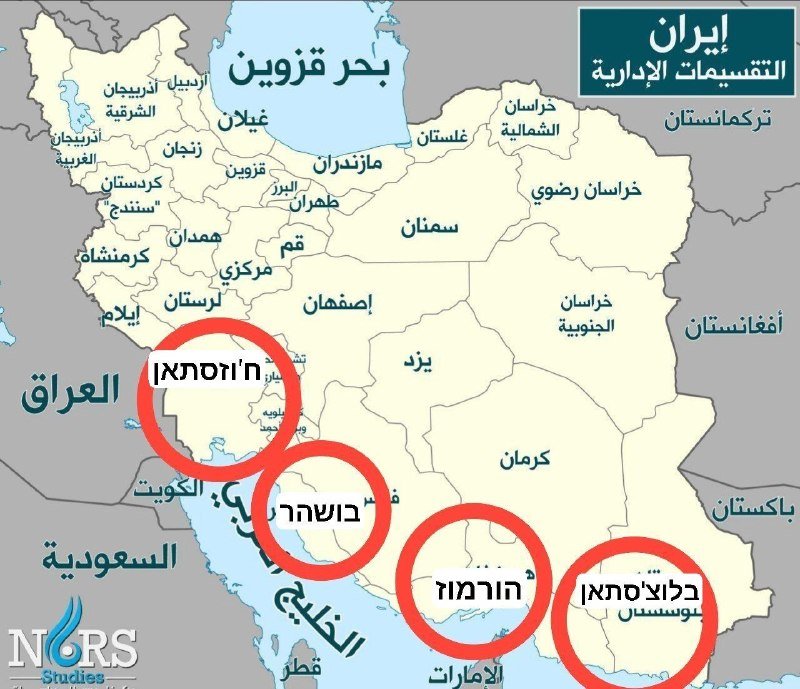
- The geographic precision of the "country's south" referenced in the MQ-9 claim is not further specified in the items on file; South Iran typically in Iran's security lexicon includes the Persian Gulf coast, Hormozgan and Bushehr provinces, and parts of Sistan-Baluchestan, but no item pinpoints which.
- The scale of the strike package — beyond the "more than 80" floor carried by both CENTCOM-affiliated and BRICS-aligned read-outs — has no higher-resolution breakdown in the items on file: target counts per category, weapon types, sortie numbers, or duration are not specified.
The structural frame, in plain language
The pattern visible here is not new, even if the scale is. A US administration that wants negotiations also wants leverage; an Iranian government that wants sanctions relief also wants to advertise that it is not surrendering. Both sides have now run a single news cycle in which one announced a major strike operation as concluded, while the other announced that foreign military pressure does not work. Both messages are internally truthful for the audiences they target, and both can run simultaneously because they are aimed at different audiences.
The larger pattern this fits — hegemonic transition in plain terms — is that an incumbent power is signalling that escalation remains available while leaving a diplomatic door open, while a regional power is signalling that escalation has a cost while leaving a diplomatic door open. The room for miscalculation is the gap between these two signalling games. The room for de-escalation is the same gap.
Stakes
If CENTCOM's "strike over" framing holds — if the package is genuinely the full intended scope and further escalation does not follow within hours or days — then Tehran's signal that negotiations are still alive is more credible, the regional oil price impact is shorter, and the open question is what the diplomatic track in Geneva or Vienna or Doha can extract on inspection regimes, enrichment limits, and ballistic-missile programmes. The IRGC's shoot-down claim, in that case, becomes a tactical narrative win Iran can carry into those talks.
If a second strike package follows, or if a US official statement confirms the loss of an MQ-9 with a crew or significant ISR asset, the calculus flips. The diplomatic channel does not die — channels in these crises rarely die outright — but the price of staying in the room rises on the Iranian side, and Tehran's negotiator's "we do not fold" line begins to function less as bargaining posture and more as the prelude to a decision already made.
What is clear in the 24 hours on the clock is that both sides want to be on record as having acted and as having not backed down. The news cycle covered here is one of the windows in which that record is being written in real time.
— Monexus filed this as a developing situation. The article will be updated if CENTCOM, Iranian state media, or independent corroboration materially alters the verified floor above.
Wire provenance
This editorial synthesis draws on the following public wire/social posts:
- https://t.me/presstv/123456
- https://t.me/presstv/123457
- https://t.me/ClashReport/123
- https://t.me/bricsnews/123