Gertrude Abercrombie and the Midwestern Surrealists Who Built Their Own Scene
Two Milwaukee exhibitions recover the painter and her circle of jazz-playing, séance-holding friends — and ask why the canon still treats the Midwest as a way station rather than a centre.
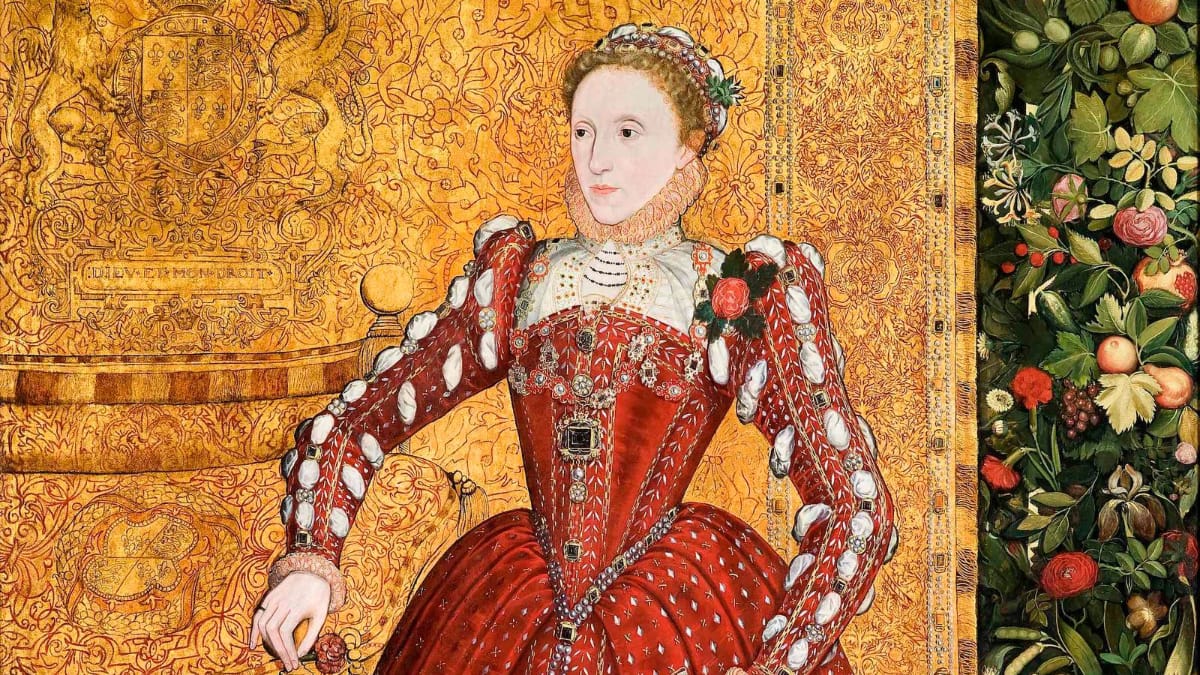
The Milwaukee Art Museum opens two shows this summer devoted to Gertrude Abercrombie, the Chicago painter who died in 1977 and has spent the half-century since as a footnote in American Surrealism's standard histories. Brought together for the first time under a single curatorial frame, the pair of exhibitions argue that Abercrombie and her circle of musician friends, poet neighbours and séance-room habitués were not a regional curiosity but a self-contained movement — one that built its own audiences, its own vocabulary and its own institutional scaffolding long before the New York art world came knocking.
Abercrombie is best known for flat, dreamlike interiors haunted by a single female figure, a black cat, an owl, a bare tree branch and the long, empty horizons of the Illinois prairie. What the Milwaukee shows press into view is the social infrastructure around those paintings: the rent parties on the South Side of Chicago where musicians like Sun Ra and Muhal Richard Abrams played for an audience of artists; the late-night poker games at Abercrombie's Hyde Park apartment where the poet Charles Gullenzu and the gallerist Phyllis Kind held court; the paintings Abercrombie produced as gifts for friends, knowing the work would never enter the commercial market. The pictures were inseparable from the lives that produced them. To separate them, the curators suggest, is to misread them.
A circle, not a satellite
The dominant story of American Surrealism in the post-war decades runs through New York: the émigré generation around Peggy Guggenheim's gallery, the migré Surrealists who arrived from Europe in the 1940s, the Abstract Expressionists who either absorbed or rejected that inheritance on their own terms. Chicago appears in that narrative, if at all, as a tributary — a place the New York dealers visited occasionally to scout talent. Abercrombie, who showed at the Boris Mirski Gallery in Boston and at the Catherine Viviano Gallery in New York, has usually been slotted into that tributary story.
What the Milwaukee curators, working from Abercrombie's papers and the recollections of surviving friends, reconstruct is something different. By the early 1950s, Abercrombie was already hosting a regular salon that mixed visual artists, jazz musicians and poets, many of them Black and almost all of them working outside the gallery system. Sun Ra's Arkestra rehearsed in her building. Abrams, who would go on to co-found the Association for the Advancement of Creative Musicians in 1965, treated her apartment as a way station between Chicago clubs. The painter Karl Priebe drifted in from San Francisco; the photographer John Watt was a near-permanent fixture. The exhibitions position this circle as a parallel institution — one whose members influenced each other's work directly and whose influence radiated outward through the AACM and the broader Chicago jazz renaissance of the 1960s and 1970s.
The work, re-read
The pictures themselves reward the contextual reframing. Abercrombie's recurring figure — long-faced, dark-haired, self-possessed — has usually been read as a Surrealist self-portrait in the Dalí vein: the artist as dreamer, isolated against a sterile landscape. The Milwaukee installation places that figure alongside portraits of her actual friends and alongside photographs of the rent parties, the poker nights and the holiday gatherings. The flat interiors stop looking like dreamscapes and start looking like stage sets for a community that was, by design, off-camera for the mainstream press.
A second room gathers Abercrombie's paintings of the Lake Michigan shoreline, including several canvases from the late 1960s that have rarely been exhibited together. The curators read the empty beaches, the recurring owls and the stripped-down colour palettes as responses to the political weather of Chicago in those years — the 1968 Democratic convention, the disintegration of the old machine politics, the rapid demographic change on the South Side — rather than as autonomous oneiric exercises. The reading is plausible without being forced; the paintings hold up either way. The point is that the option of a contextual reading has been suppressed for decades by the prevailing critical frame, which had no place to put a Midwestern Surrealist with political weather behind her.
Why now, and why it matters
Two things have shifted to make the Milwaukee reassessment possible. The first is archival: Abercrombie's papers, dispersed after her death, have been progressively reunited and made available to scholars, and a generation of curators has now grown up working with that material. The second is institutional: the Milwaukee Art Museum, like a number of Midwestern museums in recent years, has made a deliberate bet that regional collections can support serious scholarship without waiting for New York or Los Angeles to validate the work. The exhibitions are part of that bet.
The structural frame is plain. The American art canon is written from a small number of coastal cities and is enforced by a small number of dealers, auction houses and graduate programmes. When that canon encounters a body of work produced outside its geography and outside its commercial channels, it tends either to ignore the work or to absorb it as a minor satellite of whatever the dominant narrative happens to be. The Milwaukee shows make a quiet case that the absorption model distorts the history. Abercrombie and her circle were not waiting to be discovered by New York. They had their own audiences, their own economics — gifts, swaps, party fees, the occasional teaching post — and their own influence, much of it travelling through jazz and poetry rather than through the gallery-museum pipeline that the standard histories track.
What the exhibitions cannot settle
The reassessment has limits. The Milwaukee shows do not, and cannot, claim that Abercrombie's influence on the New York mainstream was comparable to her influence on Chicago. The canvases themselves, for all the contextual richness around them, are the work of a single painter with a recognisable signature; the argument for her centrality is partly an argument about her circle, not only about her brushwork. Some visitors will come away persuaded that the circle was the real movement and that Abercrombie's paintings are its most legible record. Others will come away persuaded that the pictures are minor and that the circle, however interesting, did not produce the kind of formal breakthroughs that earn canonical status. The exhibitions do not resolve the disagreement; they make it possible to have it on better evidence.
That, more than any single curatorial claim, may be the shows' lasting contribution. For decades, the Midwestern Surrealists were either invisible or flattened into a regional anecdote. The Milwaukee installation gives them a serious exhibition history and a serious body of archival support. Whether that history eventually rewrites the canon, or only adds a long footnote to it, is a question the next decade of scholarship will settle.
The Monexus culture desk treats regional reassessments as serious art-historical events in their own right. Where wire coverage often files Midwestern exhibitions as travel pieces, this publication reads them as evidence about how the American canon is built — and about who gets to build it.
Wire provenance
This editorial synthesis draws on the following public wire/social posts:
- https://en.wikipedia.org/wiki/Gertrude_Abercrombie
- https://en.wikipedia.org/wiki/Association_for_the_Advancement_of_Creative_Musicians