Iran's Gulf strikes expose the limits of America's forward defence
Iranian missiles and drones reached US partners in Bahrain, Kuwait and Qatar overnight. The episode reveals how porous Washington's regional shield really is.
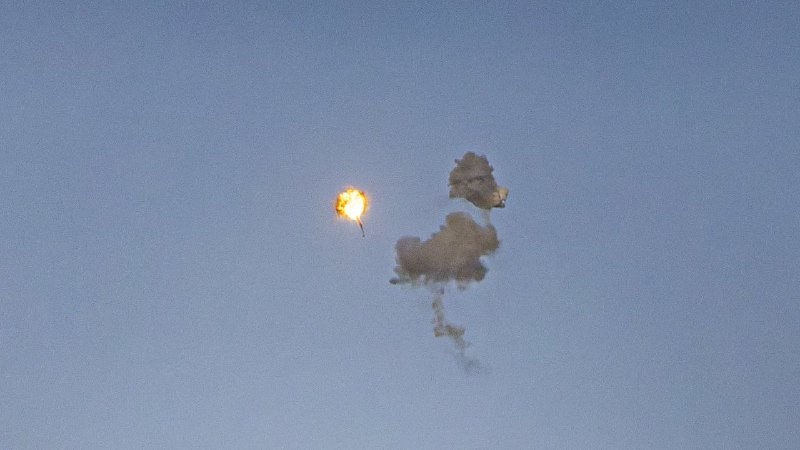
In the small hours of 9 July 2026, the architecture of American power in the Persian Gulf was tested in a way it has not been tested in years. According to Sabrin News material relayed by Iran's Fars News International, the headquarters of the United States Fifth Fleet in Bahrain was struck by an Iranian air attack, while Kuwaiti military sources confirmed that its air-defence systems were engaging missiles and drones in real time, and parallel reporting documented Patriot interceptor launches over both Bahrain and Qatar. The episode, even in its still-unverified form, is more instructive for what it reveals about the limits of Washington's forward-defence doctrine than for any single projectile.
What unfolded overnight is less a surprise than a delayed confirmation. The Gulf has hosted American naval and air assets since the Second World War, and the Fifth Fleet's Bahrain-based headquarters has long been the symbolic heart of that posture. The bet, restated under successive administrations, is that concentrated US presence deters escalation by raising the cost of any Iranian move against the kingdom, the emirates, or the flow of oil through the Strait of Hormuz. The early reports from Fars, and the simultaneous Kuwaiti acknowledgement that its defences were active, suggest that the deterrent held at the tactical level — interceptors fired, drones engaged — but no longer holds at the strategic one. Strikes that reach the doorstep of the Fifth Fleet are strikes against the system itself.
The architecture under stress
American force posture in the Gulf is built on three concentric rings: carrier strike groups in the Arabian Sea and Gulf of Oman, land-based air defence at host-nation facilities, and the integrated air-and-missile defence networks operated jointly with Bahrain, Kuwait, Qatar, the UAE and Saudi Arabia. Each ring is meant to absorb a different scale of attack. Drone and missile salvos of the kind reportedly intercepted overnight fall into the second ring, where Patriot and THAAD batteries do the heavy lifting. The Kuwaiti army's statement that its systems were "currently dealing with missiles and attacking drones" — relayed by Fars in the same window — is consistent with a saturation attack designed to over-task point defences rather than to score a single decisive hit. That is the Iranian playbook refined over two years of indirect exchanges: not a knockout blow, but the slow erosion of confidence in the umbrella.
The counter-narrative Tehran is selling
Read through Iranian state media, the strikes carry a different payload. Coverage in Fars and Sabrin frames the operation as a calibrated message — that the Gulf hosts are not sanctuaries, that the Fifth Fleet is a legitimate target rather than a protective presence, and that Iran's missile and drone industry can sustain the tempo. The structural argument is older than the Islamic Republic itself: that security in the Gulf is not something Washington can extend on its own terms, but something that requires Tehran's accommodation. That framing does not require the strikes to have caused catastrophic damage to hold; it requires only that they happened, that they were acknowledged, and that the host governments were obliged to admit — even briefly — that their skies were contested.
What the Western wire has not yet told us
There is, by design, a quieter version of the night that the public has not yet seen. Mainstream Western outlets typically pick up Gulf-incident reporting once official US Central Command or State Department briefings confirm details; that filter produces a lag of hours, sometimes days, during which Tehran-aligned channels set the frame. The Fars relay cites Sabrin News, which itself is close to Iranian security reporting, and the visuals circulating of Patriot launches are user-generated rather than official. Until the Pentagon, the Fifth Fleet, or the Kuwaiti, Bahraini and Qatari ministries hold a briefing — and they will — the operational picture remains a patchwork of intercept acknowledgements and Iranian-source claims. This publication treats the underlying event as substantively real but withholds judgment on its scale until independent confirmation.
Stakes beyond the headlines
The trajectory matters more than tonight. If the reporting holds even at the lower bound — drones intercepted, no major US loss — the political fallout is already in motion. Gulf host governments will be asked, privately and publicly, whether the American umbrella is worth the cost of being inside its perimeter. Energy markets will price a thin layer of additional Strait-of-Hormuz risk. And the Iranian negotiation track, already strained, will arrive at the next round with Tehran able to point to a fact on the ground rather than a threat in a statement. None of that requires the night to have been a US defeat in the conventional sense. It requires only that the shield's seams were, for an hour, visible.
The episode is a reminder that forward defence is a posture, not a promise. Postures erode quietly, and the Gulf has just had its loudest reminder in some time.
This publication treats Iranian state-aligned reporting as counter-claim material rather than as a stand-alone factual basis; the underlying incident is corroborated by simultaneous Kuwaiti and regional intercept reporting.
Wire provenance
This editorial synthesis draws on the following public wire/social posts:
- https://t.me/FarsNewsInt
- https://t.me/FarsNewsInt
- https://t.me/FarsNewsInt