Live Wire
06:45ZAMKMAPPINGNew Zealand is considering joining the Ocean of Peace Alliance, a mutual defense pact signed by Australia and…06:45ZAMKMAPPINGNew Zealand considers joining Australia-Fiji defense pact Ocean of Peace Alliance06:45ZRNINTELAustralia, Fiji sign defense pact, pledging mutual support if attacked06:41ZDAILYNATIOOl Kalou by-election reveals fractures in opposition coalition06:41ZWFWITNESSTrump says Israel will withdraw troops from southern Lebanon06:41ZFARSNEWSINTropical storm Maysak floods southern China, killing 39 people06:40ZCORRIEREDENATO summit held; US-Iran tensions in focus; World Cup reaches quarterfinals06:38ZTASNIMNEWSIRGC commander says Iranian forces blocked terrorist movement
Markets
S&P 500745.4 0.31%Nasdaq25,871 0.20%Nasdaq 10029,253 0.27%Dow522.77 1.07%Nikkei92.54 0.57%China 5033.44 2.92%Europe88.18 0.97%DAX41.31 1.76%BTC$62,778 0.34%ETH$1,753 0.24%BNB$573.55 1.30%XRP$1.1 1.04%SOL$78.34 0.37%TRX$0.3309 0.64%HYPE$68.16 0.25%DOGE$0.0728 1.23%RAIN$0.0146 1.67%LEO$9.49 0.58%QQQ$711.44 0.28%VOO$685.26 0.26%VTI$368.25 0.37%IWM$293.48 0.91%ARKK$80.16 1.27%HYG$79.66 0.13%Gold$374.45 0.81%Silver$52.83 2.99%WTI Crude$112.21 3.02%Brent$43.57 3.91%Nat Gas$11.6 1.36%Copper$37.07 0.86%EUR/USD1.1404 0.00%GBP/USD1.3348 0.00%USD/JPY162.49 0.00%USD/CNY6.8002 0.00%
CLOSEDNYSEopens in 6h 42m
The Monexus
Vol. I · No. 190
Thursday, 9 July 2026
Saturday Ed.
Updated 06:47 UTC
  • UTC06:47
  • EDT02:47
  • GMT07:47
  • CET08:47
  • JST15:47
  • HKT14:47
← The MonexusGeopolitics

Iran strikes Bahrain and Kuwait in overnight barrage, hitting US bases

Iranian missiles hit targets in Bahrain and Kuwait in the early hours of 9 July 2026, with air-defence activity reported across both Gulf monarchies hosting US forces.
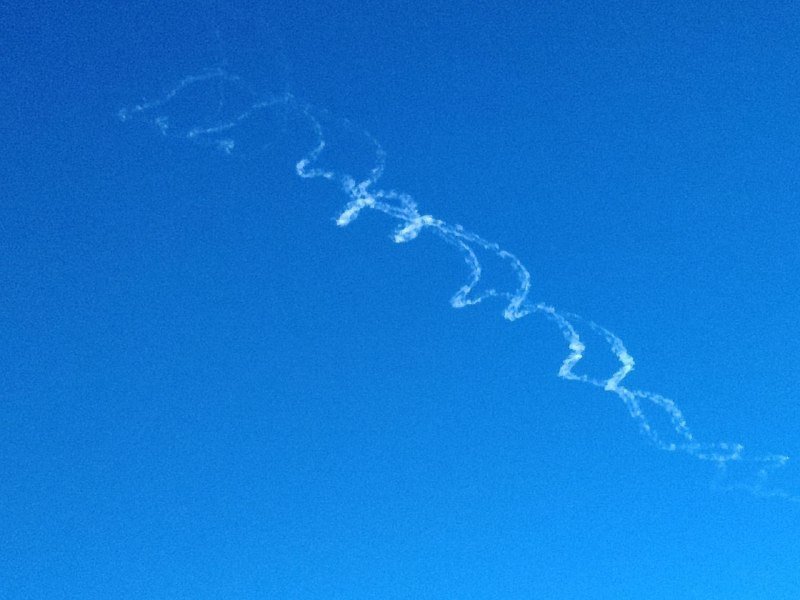
Iranian missiles hit targets in Bahrain and Kuwait in the early hours of 9 July 2026, with air-defence activity reported across both Gulf monarchies hosting US forces. @tasnimnews_en · Telegram

Iranian missiles struck targets inside Bahrain and Kuwait in the early hours of Thursday 9 July 2026, with footage of interceptions and impacts circulating on Gulf-watcher Telegram channels from roughly 00:49 UTC onward. According to Iranian state broadcaster PressTV, Bahrain's air-defence systems were activated to intercept the incoming missiles, and military bases hosting US forces in Kuwait were hit in what Tehran framed as a retaliatory strike. The barrages marked a sharp overnight escalation along the Arabian Peninsula and put two of Washington's principal Gulf hosts on the front line of an Iran–US confrontation that has, until this week, played out largely through proxies and deniable channels.

The exchange is the clearest signal yet that Tehran is willing to fire directly at Gulf states that host American troops, betting either that local monarchies will absorb the pressure and refuse retaliation, or that the United States will hesitate to widen a war it did not start. The overnight timing — strikes began before 01:00 UTC and continued past 01:43 UTC — suggests a coordinated salvo rather than a single test round, and the geographic spread across two countries points to an operational objective beyond symbolic punishment.

What the overnight footage shows

The first verifiable timestamps come from two independent Telegram feeds monitoring Gulf airspace. At 00:49 UTC on 9 July 2026, PressTV reported that Bahrain's air-defence systems were activated to intercept Iranian missiles, and that military bases hosting US forces in Kuwait had come under Iranian retaliatory strikes. By 00:52 UTC, footage attributed to events in Bahrain was circulating on the Middle East Spectator channel. At 00:57 UTC, the wfwitness channel posted imagery described as a missile, likely an interceptor, visible over Kuwait, followed at 01:03 UTC by further footage of interceptor launches and reports that commercial flights bound for Kuwait International had begun to redivert. By 01:30 UTC, footage of interceptions over Bahrain was posted on the same channel, and at 01:43 UTC the AMK_Mapping feed circulated material it described as Iranian missiles striking Bahrain.

Iranian state media framed the operation explicitly as retaliation. PressTV's overnight post stated that Bahrain's air-defence systems had been activated and that bases hosting US forces in Kuwait were under Iranian retaliatory strikes — language that ties the barrage directly to the wider Iran–US confrontation rather than to any bilateral dispute between Tehran and Manama or Kuwait City. The framing matters: Gulf monarchies have spent two decades positioning themselves as brokers and de-escalators, and being cast as battlefield geography rather than mediators is a categorically different political position.

Why Bahrain and Kuwait

Both countries host the infrastructure that makes US power projection in the Gulf possible. Bahrain is home to the US Navy's Fifth Fleet and Naval Support Activity Bahrain, the principal maritime hub for American operations in the Persian Gulf, Red Sea and parts of the Indian Ocean. Kuwait hosts Camp Arifjan, a major US Army logistics hub used for staging into Iraq and the wider region, as well as Ali Al Salem Air Base, which has hosted coalition aircraft during past Iran-related operations. Striking these facilities puts pressure on the United States without requiring Iranian forces to confront Israel directly — a calculation consistent with Tehran's reported preference, since the start of the latest round of hostilities, for an asymmetric rather than a symmetric front.

For Manama and Kuwait City, the political problem is acute. Neither government has, on the record, authorised the use of its territory for strikes against Iran. Their militaries operate integrated air-defence architectures with US Central Command, and the visible interception activity captured on the overnight footage reflects that integration in real time. Whether the Gulf monarchies choose to frame the strikes as an attack on their own sovereignty, or quietly treat them as an Iran-versus-America problem happening on their soil, will shape the diplomatic trajectory of the following days.

The structural frame

The overnight barrage is the latest expression of a contest that no longer has any genuine off-ramp. Tehran's strategy of calibrated escalation — striking US-linked targets while preserving the option of a wider regional war — has been visible since the Israel–Iran exchanges of mid-2025 and the subsequent Houthi campaign in the Red Sea. Each round has widened the geography of the conflict: from Iranian and Iraqi territory to Israeli and Lebanese skies, from Red Sea shipping to Gulf bases. The pattern is one of escalation that preserves deniability for as long as possible while steadily raising the political cost for the United States and its partners.

The structural shift underneath that pattern is the slow erosion of the Gulf's old role as a guaranteed safe rear for American forces. For two decades the assumption held that any direct Iranian strike against a US base would trigger a US response, and that the costs of such a response made Iranian first strikes irrational. The overnight footage suggests Tehran has decided the calculation has changed — either because it judges Washington unlikely to retaliate under domestic political pressure, or because it has accepted a wider war as the likely price of continuing its nuclear and missile programmes. Both readings point in the same operational direction: more strikes, more US bases, more Gulf airspace contested.

What remains uncertain

The available reporting does not specify casualty figures, the precise number of missiles fired, or which specific facilities were hit inside Bahrain and Kuwait. Initial footage is consistent with both successful impacts and successful interceptions, and Telegram-channel descriptions — "reportedly," "likely interceptor," "footage of interceptions" — reflect the limits of open-source verification in the first ninety minutes of a fast-moving strike. The official statements from Manama, Kuwait City, Washington and Tehran that would convert overnight video into a confirmed operational record had not been published at the time of the source threads cited here. The scale of the damage, the diplomatic posture of the two host governments, and the US response will become clearer in the hours and days ahead, and Monexus will update this piece as those statements are verified.


Desk note: Monexus treats this strike cluster as a single operational event distributed across two countries, and distinguishes Tehran's framing of the barrage as retaliation — sourced to PressTV and flagged accordingly — from the still-pending official accounts from Bahrain, Kuwait and the United States, which the available source material does not yet contain.

Wire provenance

This editorial synthesis draws on the following public wire/social posts:

  • https://t.me/presstv
  • https://t.me/Middle_East_Spectator
  • https://t.me/wfwitness
  • https://t.me/wfwitness
  • https://t.me/Middle_East_Spectator
  • https://t.me/wfwitness
  • https://t.me/AMK_Mapping
© 2026 Monexus Media · reported from the wire