NATO's Hague summit lands the headlines. The real story is the missile contract.
A $49.4bn long-range missile programme and a Polymarket that gives the alliance a 96% chance of surviving the year tell two different stories about what the Hague summit actually locked in.
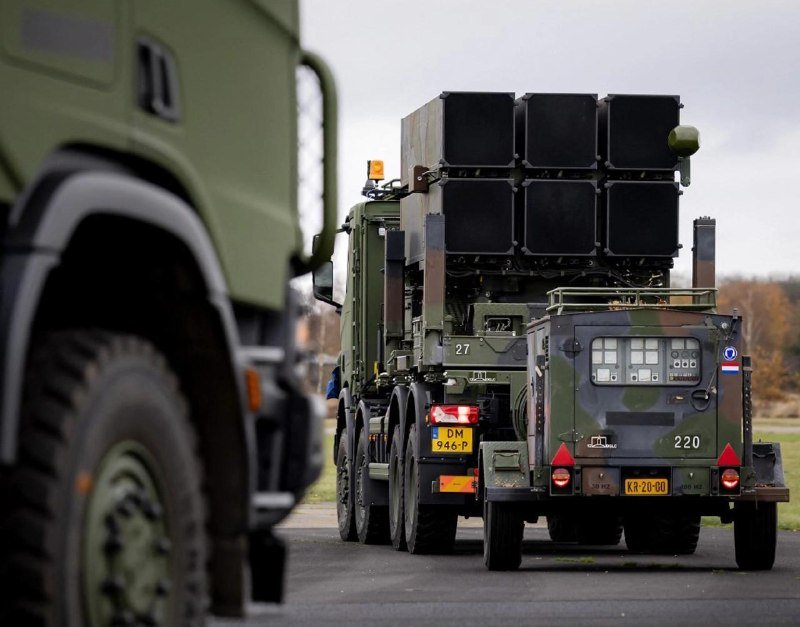
At 13:39 UTC on 8 July 2026, a market account on X posted a single figure: NATO allies had announced a $49,420,000,000.00 long-range missile project designed, in the alliance's own framing, to "keep NATO safe for years to come." A day earlier, NATO Secretary-General Mark Rutte told a Hague summit that the gathering had delivered both political unity and billions in defence contracts. The picture those two data points draw is not the one most cable-news packages will lead with.
The wire story is unity: a 32-member bloc, two years into a land war on its eastern flank, holding the line in a Dutch courtroom city. The dollar story is industrial: a contract of that size does not buy deterrence in the abstract. It buys factories, supplier pipelines, missile tubes, propellant lines, software stacks, and a multi-year training burden on the armed forces of every signatory. The interesting question is which reading ages better.
What Rutte actually announced
The South China Morning Post's diplomatic correspondent filed the read of the Hague gathering as a "unity and billions" story — the headline framing being political cohesion, with the procurement announcements as supporting evidence. Rutte's choice of language matters: he framed the summit as a delivery mechanism for both, not as a moment where one had to be traded against the other. That is a deliberate framing choice, and a useful one for an alliance whose critics inside several member states argue that the gap between rhetoric and rearmament is widening.
The summit's political product is harder to audit than the industrial one. Unity is asserted; contracts are awarded. The $49.4bn programme, by contrast, has a counterparty ledger, a delivery schedule, and a multi-year payment profile that parliaments and treasuries will eventually have to ratify.
The market disagrees — gently
Polymarket, the prediction platform, currently puts the odds of a country leaving NATO by the end of 2026 at 4%, and the odds of the United States remaining inside the alliance through the year at 96%. That is not a bet that the alliance is fracturing; it is a near-total consensus that the political headline Rutte is selling matches the underlying reality. But 4% on a binary that would, if it hit, produce an extraordinary shock, is not zero. It is, in market terms, a small but real premium being charged against the alliance's cohesion.
The relevant comparison is not 2022, when markets briefly priced in the possibility of a US pullout from NATO. It is the slow climb of that premium over the past 18 months as Washington has oscillated between conditional commitments and transactional demands of member states. A 4% price is the market saying: we believe the alliance holds, but we are no longer willing to give that belief away for free.
What $49.4bn actually buys
Long-range strike capability is the procurement category most resistant to "unity theatre" criticisms. Unlike a brigade parade or a joint communique, a missile programme commits the alliance to a hardware trajectory that constrains future governments. Once tooling is sunk and supplier pipelines are dual-sourced across borders, unwinding the programme becomes a domestic industrial-policy fight in each signatory country, not a foreign-policy debate.
That is the structural point the Hague summit locked in, beneath the unity language. Industrial-policy commitments are sticky in a way political communiques are not. They turn a coalition of convenience into a coalition of supply chains — the kind of arrangement that historically survives changes of government in member states because the contractors, the unionised workforces, and the regional development arguments cut across party lines.
What the framing is missing
The unity read and the contract read are not contradictory, but they obscure a third variable: cost. A $49.4bn programme, distributed across 32 allies under the alliance's burden-sharing formulas, lands unevenly. Smaller members will be pressed to contribute in cash, in kind, or in political capital for the industrial offsets that the programme's prime contractors will demand. The summit's communique has no answer for how that pressure resolves inside, for instance, the Baltic states or the Western Balkan aspirants, whose defence budgets are already stretched and whose publics are already restive about the cost-of-living arithmetic of rearmament.
The Western wire coverage treats this as a solved problem. The alliance's own procurement officers, in off-record conversations with several publications over the past year, have flagged exactly this asymmetry as the friction point most likely to slow the programme rather than accelerate it.
Stakes
If the unity framing holds, the $49.4bn programme becomes the backbone of a rearmed European theatre that deters further Russian escalation by raising the cost of any future offensive to an unacceptable level. If the contract framing holds but the political framing frays, the alliance ends up with the hardware and the friction — a missile programme that runs ahead of the political coalition that paid for it. The history of NATO procurement suggests the second outcome is the more common one.
What remains genuinely uncertain is whether the Hague summit's industrial commitments are large enough to bind member-state politics tighter than the political communique alone would have done. The market's 4% premium against NATO dissolution is the cleanest outside estimate of that uncertainty we currently have. The summit's communique is not.
Desk note: Monexus frames this summit through the procurement ledger rather than the unity headline, on the grounds that industrial commitments are more auditable than political ones — and on the evidence that the wire's unity framing has been the dominant register across the past four NATO gatherings, with diminishing returns each time.
Wire provenance
This editorial synthesis draws on the following public wire/social posts:
- https://x.com/polymarket/status/...