Trump pairs NATO summit largesse with Iran escalation as '20-to-1' doctrine hardens
A NATO summit that closed with surprise arms packages for European allies and Ukraine coincided with a US president openly threatening Tehran at a 20-to-1 ratio — a dual-track posture that complicates any exit from the Iran war.
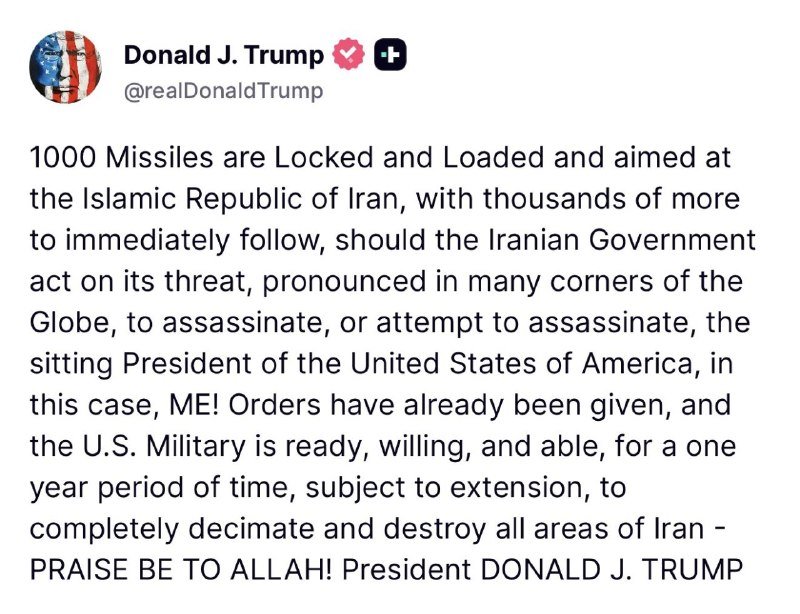
At 00:38 UTC on 9 July 2026, the South China Morning Post's diplomatic desk reported a closing NATO summit that had surprised its European members and Ukraine with new American arms packages — a posture that, hours earlier, sat awkwardly beside a US president publicly framing his Iran policy as a force-ratio promise to the American public.
The two threads are now braided. A summit that ended in praise from the US side, according to SCMP's wrap, was followed almost in real time by the same president telling reporters that NATO had failed Washington over Iran, and that any future US retaliation would be calibrated at a "20-to-1" ratio. The combination suggests an administration that wants to leave the Iran war behind, as Reuters framed it on 8 July, while reserving the right to keep escalating it.
What the summit actually delivered
The SCMP dispatch from 00:38 UTC describes a meeting at which Trump surprised NATO allies, the European Union and Ukraine with arms deals — an unusual framing for a closing summit, where communiqués are typically calibrated to the lowest common denominator among the thirty-two members. The piece emphasises the surprise element and the warm closing tone; it does not enumerate the specific platforms, dollar amounts or recipient countries. Monexus finds the substance of those packages worth watching, but the sources available do not specify which systems changed hands, against which timeline, or under what authority — Title XXI-style Foreign Military Financing, presidential drawdown, or direct commercial contracting.
For Ukraine, the political value of being folded into an American arms announcement at a NATO summit is real even without a list of items. Kyiv's standing inside the alliance has been the subject of sustained negotiation; a US readout that pairs Ukraine with EU and NATO members as a co-recipient of US hardware is a symbolic upgrade. That symbolism, however, has a finite shelf life if the underlying deliveries slip.
The NATO complaint, stated in public
At 23:03 UTC on 8 July, the same evening, Trump told reporters that NATO allies "had a chance and opportunity to help us with Iran" and "chose not to" — and that Washington was "sort of forgetting about that" even as the same allies now wanted to help. The remark is more than a passing grievance. It reframes the Iran war as a burden the United States carried largely alone and reads the allies' present willingness to assist as belated.
That framing matters because it sets the political terms for any future de-escalation. An American president who has publicly told allies they were absent in the hard stretch has limited room to claim a collective NATO victory when the file eventually closes. The complaint also establishes a precedent: that alliance solidarity is conditional on reciprocal support during the wars that hurt most.
The '20-to-1' doctrine
At 22:56 UTC on 8 July, Trump told reporters that "we just hit them very hard. We hit them 20 to 1. Every time they hit us, we are going to hit them 20." A second remark two minutes later — relayed by Telegram channel rnintel at 22:35 UTC — echoed the formula: "Every time they hit us we're going to hit them twenty. When we hit we hit back much harder." The clarity is unusual. Most administrations maintain deliberate ambiguity about retaliation ratios to preserve bargaining space; this president has named his.
A named ratio is also a public commitment that constrains future moves. If a future Iranian strike produces a measured US response, the gap between promise and action will be visible to Tehran, to Gulf states and to US domestic audiences. The doctrine, in other words, is as much a domestic political instrument as a military one.
The diplomatic track, on Trump's terms
At 22:57 UTC on 8 July, the same news cycle, Trump said Iran "called a while ago" and "want[s] to make a deal so badly," adding: "I just don't know if they are worthy. I don't know if they are going to honor the deal. That's the problem." Reuters framed the broader picture the same evening at 22:35 UTC as a president who "wants to leave the Iran war behind" while acknowledging that "won't happen soon."
The combination — public scepticism about Iranian sincerity paired with a stated force ratio — is a familiar American negotiating posture, but with the escalator left down. Tehran's incentive to negotiate is increased by the visible willingness to escalate; the credibility of any agreement is reduced by the same president's public doubts that Iran will honour it. Both effects can be useful to a US administration that wants the deal but not the responsibility for it.
Counter-read and structural frame
The dominant framing — Washington rewarding allies while punishing Tehran — is not the only available reading. An alternative is that the arms announcements and the 20-to-1 language are part of the same auction: the harder the US sounds on Iran, the more leverage Washington has to extract European commitments on Ukraine, burden-sharing, and any future coalition operation. Under that reading, the NATO complaint and the Iranian warning are not two separate events but two sides of a single price-discovery exercise.
The structural context is older than this summit. The incumbent order is being renegotiated in real time: the United States is signalling that security guarantees, arms transfers, and diplomatic access are no longer free goods but transactional items, priced in reciprocal support during the wars that hurt most. Allies that read this clearly will arrive at the next summit with pre-positioned commitments to offer; allies that do not will find themselves publicly reminded of what they failed to do.
What remains uncertain
The available sources do not specify the size, composition, or contracting authority of the arms packages announced at the summit. They do not specify whether any NATO member has formally responded to the US complaint about Iran, or whether the European Union has signalled its own willingness to take on a larger role in any negotiation. The Iranian "call" that Trump referenced is described only in his own remarks; it has not been independently corroborated in the available reporting, and the sources do not specify its timing, channel, or content.
What can be said with confidence is that the 20-to-1 language and the NATO complaint are both on the record, both stated within a two-hour window on 8 July, and both followed, hours later, by a summit readout that emphasised surprise and praise. The combination is coherent. Whether it produces a stable equilibrium in either file — the war with Iran or the alliance behind the war — is the question the next several weeks will answer.
This article focuses on the dual-track posture evident in the available reporting — NATO arms announcements alongside open-ended Iran escalation language — rather than on the underlying military operations, which the cited sources do not describe in detail. Monexus treats the alliance's Iran posture and its Ukraine posture as a single negotiating field, in line with the public remarks the US president made on 8 July.
Wire provenance
This editorial synthesis draws on the following public wire/social posts:
- http://reut.rs/4wyhMx8
- https://t.me/ClashReport/
- https://t.me/ClashReport/
- https://t.me/ClashReport/
- https://t.me/rnintel/