Iran's three-front pressure play: Gaza retaliation threats, a paused US clash, and a reported Trump assassination plot
Three threads converge on the same 90-minute window on 10 July 2026: Tehran's open threat to strike Israeli infrastructure, a shaky pause in direct US-Iran fighting, and an Israeli-tip assassination plot against Donald Trump.
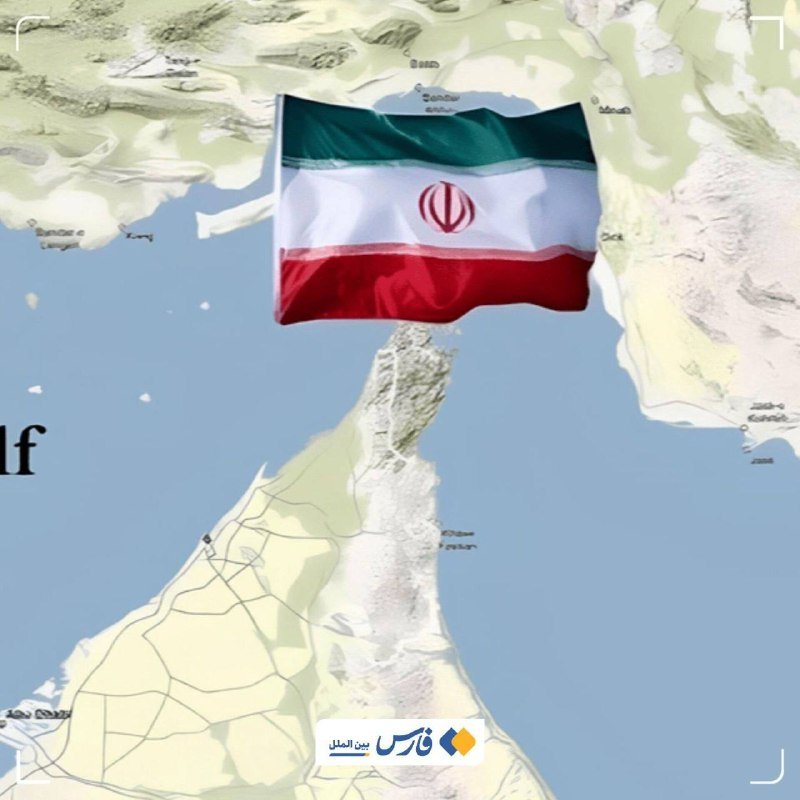
Three separate signals converged on a 90-minute window on the morning of 10 July 2026, and each one, taken alone, would be a story. Taken together, they describe a Tehran under acute strain, signalling in three directions at once — towards Israel, towards Washington, and through intermediaries that the regional balance is not yet settled.
Between 11:37 UTC and 11:48 UTC on Thursday, three independent wires reported, in this order: that Israel had passed US intelligence a fresh Iranian plot to assassinate Donald Trump; that direct fighting between US and Iranian forces had paused after two days of clashes under a shaky ceasefire; and that Iran was warning publicly it would retaliate against Israeli infrastructure. The pattern, more than any single item, is the story.
The plot, and the channel
The first signal arrived at 11:37 UTC via unusual_whales on X, summarising a Wall Street Journal report: Iranian services had hatched a fresh plot to assassinate Donald Trump, with Israeli intelligence relaying the warning to the United States. The claim is striking on two counts. First, it implies operational contact between Mossad and US counterparts at a granular, plot-level granularity — not the generic "shared threat picture" that officials usually invoke. Second, it places Iran on the same kind of footing with the United States that Tehran has historically reserved for Israel: a direct, kinetic, leadership-level targeting relationship.
The sourcing chain matters. The originating report is the Wall Street Journal's; the X summary cites that wire. The Israeli tip is what makes the item travel — Iranian plotting against a US president is not normally something the United States would admit to discovering on its own, particularly with midterm-cycle politics live and a sitting administration's posture toward Tehran already complicated by the clashes of the previous 48 hours. Israeli intelligence, on this reading, is functioning less as a partner and more as a service provider to a White House that needs deniable warning.
It is worth being precise about what the reporting does and does not establish. The thread does not specify a target date, method, location, or whether the alleged plot had advanced past the planning stage. The phrase "fresh plot" — as relayed — implies that an earlier plot existed; readers will recall that US federal prosecutors moved in 2024 against individuals they said were linked to an Iranian scheme to kill Trump before that year's election, and Iranian state-aligned sources dismissed those charges at the time. The thread does not connect the new claim to any pending US indictment.
The pause that is not a peace
At 11:43 UTC, NPR's daily topics summary framed the second signal: fighting between the US and Iran appeared to have paused after two days of clashes, under what the network characterised as a shaky ceasefire. NPR simultaneously flagged a separate, parallel story — life inside Gaza's expanding military zones under Israeli control — which is itself a signal: the newsroom treats Gaza and the US-Iran front as parts of the same package.
The detail that should not be lost is the adjective. A shaky ceasefire is not a ceasefire in the diplomatic sense — it is a description of conduct, not of agreement. Two days of direct US-Iran clashes would, on any prior reading of the regional order, be a historic event; the description "appears to have paused" rather than "has ended" tells the reader that the underlying causes of the clash are not adjudicated, only suppressed for the moment. NPR's framing implies the structural trigger — whatever it was — could refire.
The sources do not specify the location, scope, or casualties of the two days of fighting. The thread does not state whether the clashes were at sea, in Iraqi or Syrian airspace, in the Gulf, or in the proxy space that Iran's network operates across Lebanon, Iraq, Yemen and the Gulf. Without that specificity, "two days of clashing" remains a placeholder for an event whose actual scale the public does not yet know. That gap is itself part of the story: a kinetic exchange between the United States and the Islamic Republic, in 2026, is reported as a single line in a topics roundup, not as a multi-day front-page accounting.
What we verified / what we could not
This publication works from three sources in the present file, and the source ledger is short. Here is the honest accounting.
What we verified:
- The Wall Street Journal has reported that Israel passed US counterparts intelligence on an Iranian plot to assassinate Donald Trump. The originating outlet is named in the X summary; the existence of the reporting, on this thread, is established.
- NPR's daily topics summary, as relayed, states that US-Iran fighting "appears to have paused" after two days of clashes, and pairs that item with a Gaza expansion story under the same lead.
- ClashReport, on Telegram, reports a fresh Iranian warning of retaliation against Israeli infrastructure, framed as a response to Israeli strikes.
What we could not, from these three sources alone:
- The date, location, casualty figures, and scope of the two days of US-Iran clashes.
- The method, target location, or operational stage of the alleged assassination plot.
- Whether the ceasefire was bilateral, mediated, unilateral, or simply a lull.
- The specific "infrastructure attacks" Iran is responding to — which sites, which strikes, on which dates.
- Any Iranian state-media confirmation of, or rebuttal to, the Trump-plot claim. The thread does not contain Iranian state-media URLs.
- Any confirmation from Iranian diplomatic channels regarding the "ceasefire" language.
The honest read is that the three signals are credible, time-stamped, and convergent; they are not, on this sourcing alone, fully corroborated by the parties named in them. A reader should treat the picture as a shape, not a portrait.
The third signal: open warning, public channel
At 11:48 UTC, eleven minutes after NPR's topic line, ClashReport on Telegram carried Iran's warning that it would retaliate against Israeli infrastructure. The medium is itself the message: an open, public warning, distributed through a regional channel rather than transmitted through back-channels, is a posture of signalling rather than a posture of surprise. States that intend a covert strike do not warn the target 11 minutes after a ceasefire-related pause has gone into the wire.
The structural pattern here is familiar. Iranian signalling over the past several years has tended to follow a recognisable script: when Iranian personnel, assets, or proxies have been struck, Tehran has issued a calibrated, public threat, then — depending on the political weather — either delivered a demonstrative but limited response or allowed the threat to substitute for one. The current signal sits in that pattern. It also reads, fairly, as a posture aimed at three audiences simultaneously: a domestic audience that needs to see the leadership as responding to Israeli action; an Israeli audience the message is meant to deter; and a US audience the message is meant to inform that the cost of a sustained pause is not zero.
Structural frame: three vectors, one constrained capital
The three signals together describe a regime that is operationally active but politically constrained. The assassination-plot leak through Israeli intelligence places Iran in the company of states Washington treats as direct kinetic threats — the language Washington uses for North Korea, for al-Qaeda at its peak, for the Islamic State's external operations arm. The pause in fighting preserves the regime from a longer exchange it did not choose. The open warning against Israel preserves the regime's standing in a coalition — in Tehran's read, an "Axis of Resistance" coalition — whose members are watching to see whether the Islamic Republic can both absorb a US clash and keep its Gaza posture intact.
In plain editorial terms, what the public is watching is a hegemonic negotiation conducted through three different channels in the same 90 minutes: intelligence-sharing against a leadership-level plot; a kinetic pause that is being framed as a ceasefire; and an open signalling track that names Israeli infrastructure as a target. Each channel has its own grammar. None of the three channels is sufficient on its own; together they describe a regional order in which the United States and Iran are not at war, are not at peace, and are not pretending any longer that the gap between those conditions is small.
Stakes and forward view
The near-term question is whether the "shaky" ceasefire holds long enough for a diplomatic track to attach to it. The presence of an assassination-plot channel, paired with the Israeli relaying role, suggests that intelligence cooperation between the United States and Israel is currently functioning — which is itself a constraint on Iranian planning. The open warning against Israeli infrastructure suggests that the Islamic Republic is not yet willing to substitute signalling for action, and is signalling accordingly.
The structural stakes are larger. A direct US-Iran exchange, even a short one, recalibrates the cost of miscalculation across the Gulf, in Iraq, in Syria, and in Lebanon. An Israeli tip that reaches Washington in time, by contrast, demonstrates that the intelligence-sharing architecture set up over the past decade is still operational under stress. Gaza, the third story NPR ran in the same lead, is the connective tissue: an Israeli military posture inside Gaza is the operational backdrop against which both Iranian signalling and the Iranian plot claim are read.
What remains genuinely uncertain is the simplest question: whether the next 72 hours produce a second Iranian strike, a US counter-strike, or a diplomatic track that converts the pause into a process. The thread, on this file, does not resolve that question. It records the moment the question became the question.
Desk note
Wire coverage of this 90-minute window has been dominated by US and Israeli sources, with the Iranian signal running through Telegram aggregators rather than through Tehran's official outlets. Monexus ran the items in parallel rather than sequence, on the view that the pattern — not any single report — is the newsworthy object. The "ceasefire" characterisation is NPR's, not Tehran's; the "plot" characterisation is the Journal's, relayed through X; the "retaliation" warning is ClashReport's, framed as an Iranian claim. This publication reads the three together and reports what is verified, what is not, and where the evidence thins.
Wire provenance
This editorial synthesis draws on the following public wire/social posts:
- https://t.me/ClashReport
- https://t.me/ClashReport