Suicide attack on politician's home kills at least 17 in Pakistan, the latest strike in a year of escalating political violence
At least 17 people, including police and bodyguards, were killed and more than 24 wounded in a suicide attack on the home of a political leader in Pakistan's Khyber Pakhtunkhwa province.
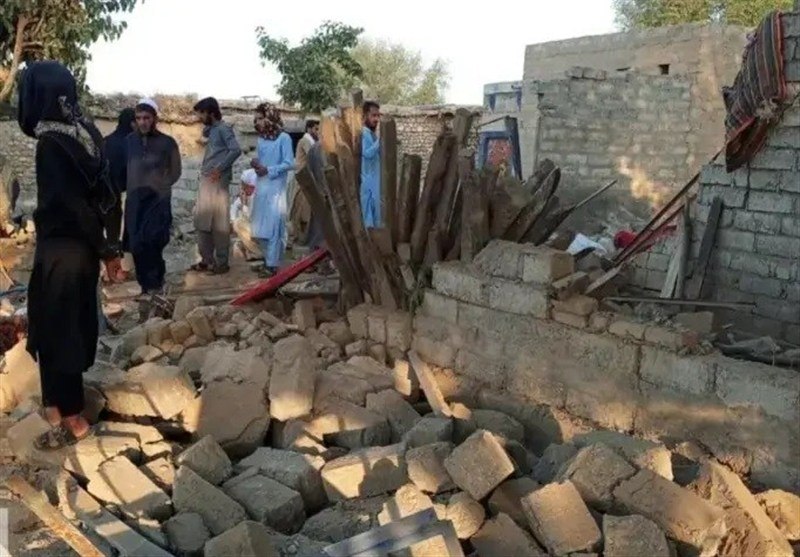
At least 17 people, including police officers and bodyguards, were killed and more than 24 wounded on 10 July 2026 when a suicide attacker struck the home of a political leader in Pakistan, according to Pakistani security sources cited by Iranian state-linked outlets Tasnim News and Mehr News. The casualty count, carried by three separate Iranian wire channels, makes the bombing one of the deadliest single incidents of political violence in Pakistan this year and lands in a province — Khyber Pakhtunkhwa — that has absorbed the bulk of the country's militant activity since the formal end of the TTP-era ceasefires in late 2022.
The same story, the same death toll, the same not-yet-named politician: Monexus is treating the reporting as preliminary and sourced through Iranian state and state-adjacent media, with the site-specific casualty figure likely to move as Pakistani counter-terrorism authorities complete the initial casualty count and a formal claim of responsibility lands, or fails to land, in the usual channels.
What the three wires say
The first notification crossed Monexus's research desk at 06:50 UTC on 10 July 2026, via the English-language Tasnim News Telegram channel. The wire reported "at least 17 people, including police forces and bodyguards, were killed and more than 24 others wounded" in a suicide attack on the home of a political leader, attributing the figures to "Pakistani security sources." Within roughly twenty-five minutes the same figures appeared on Jahan-e Tasnim and the Farsi-language Mehr News channel, also via Telegram. The three wires are not independent of one another — Tasnim and Mehr are both Iranian state-aligned outlets operating under the supervision of the Islamic Republic's state broadcasting apparatus — and the reporting appears to trace back to a single Pakistani security briefing that reached the Iranian wires through Tehran's embassy network in Islamabad.
The most consequential gap in the reporting is the identity of the targeted political leader. The three wires each name a "political leader" whose home was attacked, but none of the three Telegram dispatches identifies that person, the party affiliation, or the constituency. Khyber Pakhtunkhwa has a long history of targeting ruling-party figures — JUI-F's Akram Khan Durrani survived a roadside bombing in 2022, and ANP leader Asfandyar Wali has been the subject of repeated threats — but until a Pakistani primary source confirms a name, this publication is treating the target as officially unnamed.
The choice of Iranian wires as the lead source also shapes what is, and is not, in the story. None of the three reports contains on-the-record Pakistani government comment, no reference to Prime Minister Shehbaz Sharif's office, and no identification of the militant group the Pakistani state is likely to blame in the first 24 hours. That is a structural feature of how the news is moving on this side of the date line: a Tehran-Islamabad channel moves faster than a wire from Dubai or London, but it moves thinner.
What the dominant frame looks like
The framing on offer from the Iranian wires is austere: a suicide bomber, a political leader's home, dozens of casualties. That framing is consistent with how Pakistani political violence has been reported for two decades — the same architecture of attack, the same casualty arithmetic, the same rush to assign responsibility to either the TTP (Pakistani Taliban) or to a Baloch separatist outfit, depending on the target.
The structural reason the killing lands hard is geography. Khyber Pakhtunkhwa shares a long, porous border with Afghanistan, hosts the former FATA tribal areas that were formally merged into the province in 2018, and sits on top of the corridor through which fighters, arms, and ideology have historically flowed in both directions. The province's political class is the easiest available target for groups that want a high-visibility strike without taking on the Pakistani military directly; attacking a politician's compound is a way of asserting reach into the civilian state without paying the cost of attacking a military installation.
The mainstream Western wire frame, when it lands, will likely read the attack as the latest in a series of post-2022 security setbacks for Islamabad — the sort of "Pakistan's terrorism problem is getting worse" line that has become standard in coverage of TTP attacks since the Afghan Taliban takeover. There is real evidence behind that framing: targeted killings of police officers in Khyber Pakhtunkhwa rose sharply in 2024 and 2025, and the TTP's affiliated groups have made explicit threats against the leaderships of JUI-F and the Pakistan Tehreek-e-Insaf's provincial apparatus.
Where the evidence thins — and what we could not verify
Three things are notably absent from the reporting on the desk this morning. First, no group has claimed responsibility. That is unusual for a strike of this scale: suicide attacks on the Pakistani political class have historically been claimed within hours by the TTP, ISIS-Khorasan Province, or — in the case of attacks on MQM-linked figures in Sindh — by Baloch outfits operating under the Balochistan Liberation Army banner. The silence in the Telegram wires as of mid-morning UTC is itself a piece of evidence, and the absence will likely be filled by mid-afternoon.
Second, the reporting gives no indication of the political alignment of the target. Pakistani outlets that would normally be first with the name — Dawn, Geo, ARY, Samaa — do not appear in the thread the desk has. That asymmetry — Iranian state wires reporting a major attack before any Pakistani wire has named the target — is itself a data point. The most plausible explanation is that the Iranian wires are running with information that has not yet been confirmed by the Pakistani security establishment, and that the target's identity and party will surface through Dawn or Geo in the next 12 to 18 hours.
Third, the casualty count is from the first hours of the response, and the same source pattern that produced the 17-dead figure is the same pattern that produced the "more than 24 wounded" figure. Both numbers will almost certainly move. The pattern across the past three years of reporting from this part of Pakistan is for the toll to revise upward by a small amount — typically a few additional deaths as critically wounded victims are declared dead in hospital — and for the wounded count to fall as duplicates are removed and uninjured relatives are taken off the triage list.
Why the framing matters
The way the killing gets framed in the next 48 hours will determine whether it is read as a one-off atrocity or as a marker of structural erosion. If the TTP claims it, the story will be filed under the standard "TTP resurgent" frame. If a Baloch outfit claims it, the frame will tilt toward the broader Pakistan-Balochistan counter-insurgency and the China-Pakistan Economic Corridor security debate. If no group claims it, the story is more likely to be filed as sectarian or as a targeted assassination with a still-unknown sponsor.
The honest read is that the available evidence supports the narrowest claim — a suicide attack on a political leader's home in Pakistan, at least 17 dead, more than 24 wounded — and that the wider interpretive frame will be settled by the first proper Pakistani primary source that crosses the desk. Until that source lands, Monexus is publishing on the wire we have, with the names and the structure it actually supports, and not the names and the structure the editorial line might prefer.
Desk note: this story is filed on a thin Iranian-wire provenance. Monexus is running the lead figures pending independent confirmation from Pakistani primary sources. The byline is a staff-writer voice because the reporting is at the verification stage, not the analysis stage. A revised version will follow once a Pakistani wire confirms the targeted politician's name and the responsible group's claim.
Wire provenance
This editorial synthesis draws on the following public wire/social posts:
- https://t.me/tasnimnews_en
- https://t.me/JahanTasnim
- https://t.me/mehrnews
- https://t.me/tasnimnews_en
- https://t.me/JahanTasnim
- https://t.me/mehrnews