Strikes on Bushehr: what we know, what we don't, and why Khuzestan matters
Iranian state media reported explosions and air-defense activity across Bushehr and Khuzestan in the early hours of 12 July 2026. The picture is fragmentary, and the actors are still being named.
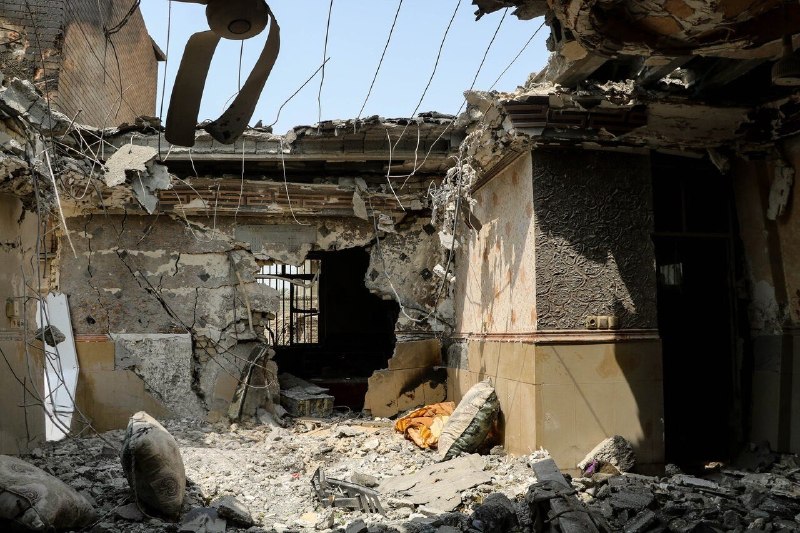
At 03:37 UTC on 11 July 2026, Iran's Press TV network reported explosions in the southern cities of Bushehr and Asaluyeh, on the Persian Gulf coast. Within twenty minutes, the IRIB state broadcaster said Iranian military bases and economic infrastructure had been struck in four cities in Bushehr Province. By 00:40 UTC on 12 July, the Mehr News Agency was reporting that air-defense systems had activated in Bandar Mahshahr, in neighbouring Khuzestan, and that activity had been observed at the Dezful air-defense base further inland. The claims are unverified by any independent party, the United States has not acknowledged strikes on Iranian soil, and Iran has not formally attributed the attack. What is clear is that something of military consequence happened across a wide arc of Iran's south-western frontier overnight, and that the official Iranian framing is being assembled in real time.
What the Iranian sources are claiming
The reporting so far comes entirely from Iranian state outlets and channels that republish them. Press TV, IRIB and Mehr News, the official state news agency of the Islamic Republic, together describe a multi-site event rather than a single strike. IRIB names four cities in Bushehr Province, including the provincial capital Bushehr itself and the petrochemical hub of Asaluyeh, the site of the South Pars gas-processing complex. Mehr News adds Khuzestan, naming the Dezful air base and the port city of Bandar Mahshahr, which sits on the Shatt al-Arab waterway near the Iraqi border.
Iranian state media has a documented pattern of partial or delayed disclosure during security incidents, and outlets sympathetic to the regime have an incentive to amplify successful air-defense interceptions while downplaying penetrations. The early framing here, coordinated, multi-province, economically significant targets, fits a public narrative of resilient defence rather than successful bombardment. Independent confirmation of damage, casualties or the nationality of any aircraft involved remains absent.
What sits on the ground in Bushehr and Khuzestan
Bushehr Province is not a symbolic target. It hosts the Bushehr Nuclear Power Plant, the only operating civilian nuclear reactor in Iran, and the South Pars field, the world's largest natural-gas deposit, which Iran shares with Qatar. Asaluyeh hosts the petrochemical and gas-processing infrastructure that handles a large share of Iranian hydrocarbon exports. Any sustained damage to either would constrain Iranian state revenue and the country's civilian nuclear programme at the same moment.
Khuzestan is the heart of Iran's oil industry and a long, exposed border with Iraq. The Dezful air base is one of the operational hubs of the Islamic Republic of Iran Air Force, and Bandar Mahshahr sits across the Karun River from the Abadan refinery complex. Air-defense activity in this province is read, by regional analysts, as covering both oil installations and cross-border aerial traffic from Iraq and the Gulf.
Why the silence from Washington is itself a signal
No US combatant command, no Pentagon spokesperson and no Central Command feed had acknowledged strikes on Iranian territory at the time of writing. The Israeli Defense Forces similarly had not issued a confirmation. The Washington pattern, established through the 2025 exchanges, has been to deny operational involvement in real time and let diplomatic language do the work later; the Israeli pattern has been to refuse comment on events plausibly attributed to it. The absence of a denial is not evidence of authorship, but it is consistent with the sequencing seen during the previous round of US-Iranian confrontation.
The counter-reading is just as live. Iran's regional adversaries, Israel and Saudi Arabia most prominently, have their own reasons to keep their distance from a public attribution. So do Gulf Arab states hosting US Central Command assets, who would rather absorb the diplomatic cost of ambiguity than be named as staging platforms. The result is a familiar gap: a real event, a closed attribution, and a public that learns the actors only when one side chooses to confirm.
What is being withheld, and what to watch next
Three things are missing from the available reporting and will determine whether this episode becomes a regional conflagration or recedes. First, damage assessment: satellite imagery over Bushehr and Asaluyeh in the next 24 to 48 hours will show whether the petrochemical complex, the nuclear plant's perimeter, or the South Pars processing trains were hit, or whether air-defense interceptions absorbed the inbound ordnance. Second, Iranian retaliation calculus: any response from Tehran, through proxies in Iraq, Syria or the Gulf of Aden, or directly against Gulf shipping, will signal whether the Islamic Republic reads the strikes as a calibrated message or as an opening move. Third, the oil market: a sustained hit to South Pars output would tighten global LNG supply within days; an intact Asaluyeh would let prices retrace.
Desk note: the wire so far is entirely Iranian state media plus channels republishing it. Monexus treats Press TV, IRIB and Mehr as primary-source attributions of what Tehran is willing to say happened, not as independent confirmation that it did. We will update this piece when a second, non-Iranian source, wire service, intelligence leak, satellite analysis, is available.
Wire provenance
This editorial synthesis draws on the following public wire/social posts:
- https://t.me/BellumActaNews
- https://t.me/BellumActaNews
- https://t.me/BellumActaNews
- https://t.me/WarMonitors
Follow the event.
These dated source records provide context. They do not retrospectively verify this archive article.
Separate what the nuclear watchdog reported from what it could not determine after the June 2025 strikes.