IRGC missile strike on cargo ship in Strait of Hormuz triggers US counterstrikes on Iranian targets
An IRGC anti-ship missile hit a commercial cargo vessel in the Strait of Hormuz late on 11 July 2026, after which US forces struck Iranian targets in the same waterway in response.
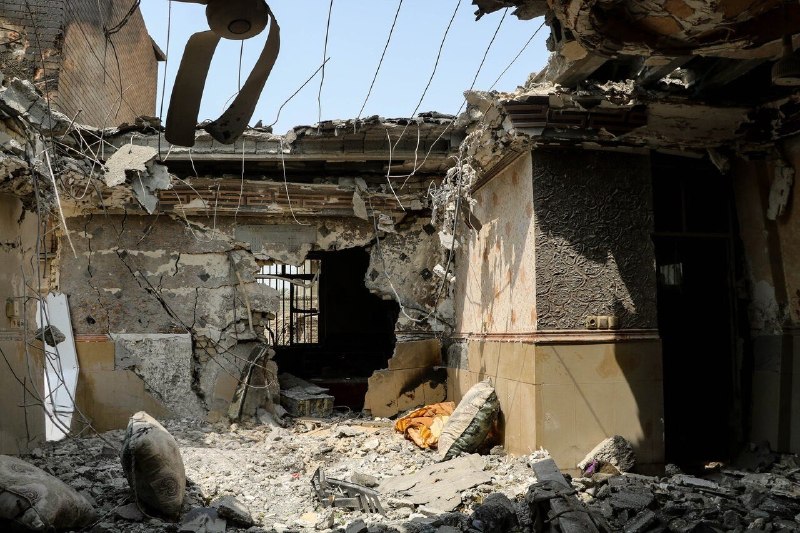
An anti-ship cruise missile launched by Iran's Islamic Revolutionary Guard Corps struck a commercial cargo vessel in the Strait of Hormuz late on 11 July 2026, according to a US official cited by open-source monitors and Iranian state media, with the ship sustaining damage. Within hours, American forces had begun attacking Iranian targets in the same waterway, per a US official who spoke to Axios correspondent Barak Ravid about the strikes, framed by Washington as retaliation for Iran's closure of the chokepoint.
The sequence, beginning at roughly 22:09 UTC on 11 July 2026 with an initial Tasnim Plus report of a missile fired at an "offending ship," marks a sharp escalation around a corridor through which a significant share of the world's seaborne oil transits. It also collapses a week of speculation about whether Tehran would follow through on threats to weaponise the strait into an active exchange of fire, with shipping, mining, and US airstrikes now reported inside the same nautical theatre.
What the initial reports say
Tasnim Plus first moved the story at 22:09 UTC on 11 July 2026, saying a missile had been fired from Iran toward an offending ship in the Strait of Hormuz. About twenty-three minutes later, at 22:32 UTC, the same outlet amplified a US official's account: the IRGC had fired a missile at a commercial cargo ship trying to pass through the strait, and the vessel had been hit and damaged. By 22:33 UTC, the open-source channel osintlive carried a parallel report from a US official confirming the strike on a commercial cargo ship in transit. WarMonitor, reposted by osintlive at 23:34 UTC on 11 July 2026, framed the incident in a single line: Iran reportedly fired a missile at a commercial cargo ship in the Strait of Hormuz.
The vessel type and ownership were not specified in the threads reviewed. The phrase "offending ship" in the initial Tasnim Plus report leaves unresolved which party the IRGC judged to be in violation of Iranian-directed maritime controls, but the US-side framing across open-source channels treated the ship as a routine commercial transit, not a military target.
Mining, then closure
At 23:18 UTC on 11 July 2026, the Telegram channel DDGeopolitics added two further layers. Iranian special forces were reportedly deploying mines on the Omani side of the Strait of Hormuz, and the previously struck vessel had been hit by an anti-ship cruise missile rather than a shorter-range weapon. The combination matters: a single missile strike damages one hull, while naval mining threatens every subsequent passage until the field is cleared, an exercise that historically takes days to weeks.
At 23:41 UTC on 11 July 2026, Fars News International, a state-affiliated outlet, conveyed an American official's account that the US military had launched attacks on Iranian targets in the Strait of Hormuz region. The framing of an attack on "Iranian soil" was Fars's; the underlying fact of US strikes in the area was corroborated independently.
The American response, per Axios
The cleanest articulation of the US framing came via rnintel at 23:39 UTC on 11 July 2026, citing Barak Ravid of Axios and unnamed US defense officials: the strikes were in response to Iran's closure of the Strait of Hormuz. Axios is a tier-one outlet for this type of exclusive and the Ravid attribution carries weight: it puts a named journalist and a named outlet behind the US characterisation, while the underlying officials remain anonymous. The Ravid reporting, as relayed through the Telegram wire, treats the US operation as reactive rather than pre-emptive, a sequencing claim that frames the legal and political terrain on which any subsequent escalation will be argued.
The corollary to that sequencing claim is significant. If Iranian mining preceded the US strikes by a measurable interval, Washington can argue it acted in collective self-defence of shipping under attack. If the interval is shorter or contested, the legal picture gets murkier. The threads reviewed do not resolve the timing question.
What remains unclear
Several load-bearing details are not specified in the open-source material reviewed. The vessel's flag state, ownership, cargo, and crew composition are all absent. The Iranian "offending ship" language has not been publicly clarified by Tehran. The number and type of US strikes, the targets hit, and any Iranian or third-party casualties are not in the record. The status of the mining operation on the Omani side, including whether mines are confirmed in the water or merely being positioned, is described but not independently verified; Omani authorities had not, in the threads reviewed, issued a public statement. Fars News's "Iranian soil" reference is itself imprecise, since the targets reported as struck are in the strait rather than on Iranian land territory.
The sourcing chain also warrants explicit flagging. Initial confirmation flowed through Iranian state-linked outlets (Tasnim, Fars) carrying US official claims, a configuration that can run both ways: Tehran has incentives to publish US concessions or admissions of force, while Washington can use the same channel to shape narrative abroad. Open-source channels (osintlive, DDGeopolitics, rnintel) redistributed both the Iranian and American accounts without, in the threads reviewed, producing independent corroboration such as satellite imagery, AIS data on the stricken vessel, or shipping-insurance advisories. Independent maritime trackers had not, in the inputs reviewed, publicly located or named the vessel.
Stakes on the water
Even before any further strikes, the practical effect is binding. Commercial hulls transiting the strait now face three distinct hazards laid out in the threads: an active IRGC anti-ship missile posture, reported naval mining on the Omani side, and a US counterstrike campaign that has already hit Iranian targets in the region. Insurers typically respond to a combination like this by raising war-risk premiums sharply or instructing masters to avoid the affected area altogether, none of which requires an official closure for traffic to slow. A fifth of the world's seaborne oil moves through the strait in normal conditions, a denominator that explains why the initial Tasnim Plus report on a single ship drew global attention within minutes.
The trajectory to watch through the coming days is whether Iran's mining operation produces verifiable contacts, which would convert the threat from implicit to realised and would likely pull in mine-countermeasure vessels from the US and regional navies. The second is whether Tehran publicly claims the US strikes as a casus belli, given that the Fars report of strikes on "Iranian soil" is the framing Tehran would prefer for any domestic mobilisation. The third is shipping itself: if AIS tracking over the next 48 hours shows a drop in strait transits that exceeds ordinary seasonal variation, the de facto closure that Iran did not need to declare will be visible in the data.
Desk note: Monexus leads with the open-source and Axios reporting; the Iranian state-side accounts are treated as Iranian-side framing, not as independent confirmation of the strike on the cargo ship, in line with our standing sourcing tier for the Iran file.
Wire provenance
This editorial synthesis draws on the following public wire/social posts:
- https://t.me/tasnimplus
- https://t.me/tasnimplus
- https://twitter.com/Osint613/status/2076072222796
- https://t.me/DDGeopolitics
- https://t.me/osintlive
- https://t.me/rnintel
- https://t.me/FarsNewsInt