US widens Iran strikes as Centcom confirms renewed bombardment
US Central Command confirmed renewed strikes on Iran starting 21:00 UTC on 12 July 2026, with Iranian state media framing the action as a fresh aggression and a US warplane photographed overhead.
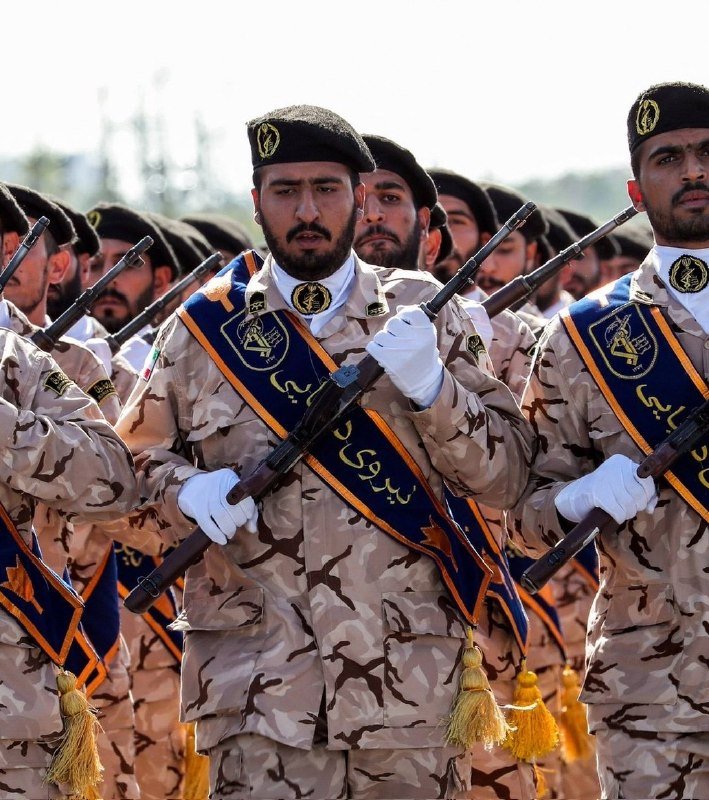
At 21:00 UTC on 12 July 2026, US Central Command confirmed that American forces had begun launching additional strikes against Iran, an escalation disclosed in near-real time through US-allied open-source monitors and quickly echoed by Iranian state broadcasters. The disclosure, framed by Centcom as a continuation of a previously announced campaign, was characterised within minutes as "renewed acts of aggression" by Press TV and as confirmation of "an aggressive attack on Iran" by the Telegram channel Jahan Tasnim. By 21:40 UTC, the headline had migrated from operational channels to X, where Disclose.tv relayed the same Centcom statement: that US forces had begun striking Iran at 5pm Eastern Time.
The news is narrow on facts and broad on consequence. A standing military chain of command has publicly acknowledged bombing a sovereign state for a second time on the same day, while the targeted state's official media, restricted in what it can say but not in what it can transmit, has labelled the operation in the language of an unprovoked assault. The pattern matters more than the press release: when the warring parties describe the same event with opposite verbs, the world reads the diplomacy that follows through whichever verb it hears first.
What Centcom actually said
The Centcom statement carried by Disclose.tv on X at 21:40 UTC was short and procedural. US forces had begun launching additional strikes against Iran at 5pm Eastern Time on 12 July 2026 (21:00 UTC). The phrasing implied a sequenced operation rather than a single sortie, consistent with the air-tasking cycle that has characterised the US air campaign against Iranian assets since the opening salvos of the present cycle of hostilities. Centcom did not, in the circulated clip, specify the target set, the platforms used, or the ordnance delivered. It also did not characterise the strikes as retaliation, pre-emption, or escalation, leaving the framing to downstream media.
That silence is itself a story. American military communiqués in active campaigns are typically austere, but they are rarely this stripped. The 5pm Eastern Time anchor is unusual: US air operations out of the central command area tend to be scheduled around sunset in the target area, not aligned to a prime-time news window in Washington. The fact that the hour was emphasised suggests the disclosure was timed, either to coordinate with a forthcoming political statement from Washington, or to pre-empt leaks from the operational theatre.
How Iran read it
Iranian state media was ready. Within minutes of the Centcom statement propagating on X, Press TV had posted to Telegram that Centcom had confirmed "the US's renewed acts of aggression against Iran." The Iranian framing is consistent across official channels: the strikes are described as aggression, not as military action; as renewed, implying a prior and presumably unjustified wave; and as acts, not operations, the latter term carrying a legality that Iranian state broadcasters are unwilling to grant. Jahan Tasnim, an Iranian Telegram channel with close ties to the security establishment, used near-identical language. The OSINT aggregator Osint Live reposted the Disclose.tv flash at 21:59 UTC, completing the loop between US military disclosure, Iranian official narrative, and the open-source intelligence audience that consumes both.
Iranian spokespeople have, in recent weeks, argued that any continued US strike campaign would constitute a violation of sovereignty regardless of target, and that defensive retaliation would be framed as aggression in Washington but as legitimate response in Tehran. The two grammars are now running on the same news cycle, minute by minute.
The information topology of a live war
What makes the 21:00 UTC disclosure worth dissecting is not the ordnance. It is the channel stack. The originating voice was Centcom, a US combatant command. The first amplification inside Iran came through Press TV and Jahan Tasnim, both official or quasi-official. The bridging layer, where most international readers actually encountered the news, was Disclose.tv, an X account whose audience is open-source analysts, financial market desks, and journalists. The final aggregation was Osint Live on Telegram, an audience of conflict-tracker hobbyists and professionals.
This is the new media architecture of a great-power air war: official sources on both ends, a thin layer of independent verification in the middle, and a vast audience consuming the result without ever reading a wire-service piece. The structural consequence is that framing defaults to the belligerents themselves. Press TV writes "aggression." Centcom writes "strikes." The reader is left to choose a verb. Where once Reuters or AP sat in that gap, providing third-party language, today the gap is filled by aggregators that rarely add original reporting and frequently strip context.
What the sources do not yet show
Three hours after the Centcom statement, the public record remained thin. Target locations, weapon types, and any Iranian retaliatory action were not disclosed in the four source items circulating by 21:59 UTC. Casualty figures, if any, were not available from either US or Iranian channels within the window of the thread. Iranian civil defence and the Iranian Red Crescent had not, in the materials reviewed, issued a statement. The US National Security Council and the US State Department had not, in the materials reviewed, added political context. The Iranian mission to the United Nations had not, in the materials reviewed, requested an emergency session.
Those absences will fill in over the next 24 hours. What is already clear is that the operation has been publicly disclosed rather than denied, which carries its own diplomatic weight. A covert campaign rarely announces its timing. A declared campaign invites escalation, calculation, and a press cycle. The 5pm Eastern Time anchor is a press cycle.
The next variable to watch is the Iranian response. Tehran has, in prior exchanges, used proxy strikes, cyber operations, and Strait of Hormuz signalling as proportional-but-deniables. The choice between those instruments and a direct Iranian missile launch is the single decision that will determine whether the news cycle of 12 July 2026 is read tomorrow as a continuation, or as a hinge.
This publication framed the story through the US military statement and the Iranian official readout in parallel, rather than defaulting to one. The wire stack above does not contain independent third-party reporting; readers seeking target and casualty detail should treat the next 24 hours of agency copy as the first reliable layer.
Wire provenance
This editorial synthesis draws on the following public wire/social posts:
- https://t.me/JahanTasnim
- https://t.me/presstv
- https://t.me/osintlive
Follow the event.
These dated source records provide context. They do not retrospectively verify this archive article.
Separate what the nuclear watchdog reported from what it could not determine after the June 2025 strikes.