Strait of Hormuz returns to the front line as Iran's precondition reshapes the diplomacy track
Tehran says no talks unless Washington delivers on Hormuz transit and Iranian oil exports. A senior US official tells the NYT to expect a bigger round of strikes.
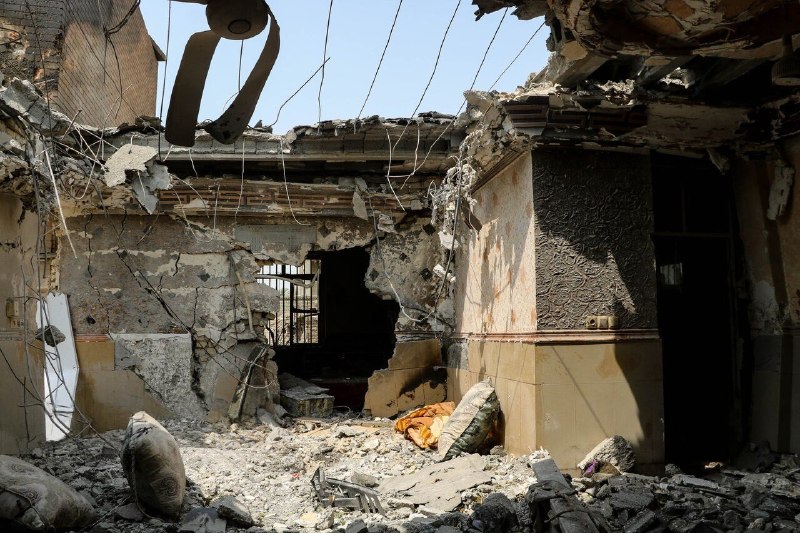
A senior US official told the New York Times on 12 July 2026 to expect a bigger round of strikes against Iran, hours after Tehran publicly rejected any new negotiation unless Washington first honours what it calls "agreed-upon understandings" on transit through the Strait of Hormuz and the unfettered flow of Iranian crude. The two signals, landing within hours of each other, are pulling the conflict back to the waterway that has done more than any negotiation table to set the terms of the relationship since 2019.
That chokepoint is the story. Roughly a fifth of the world's seaborne oil transits the strait, alongside a large share of the LNG that heats European winters. Whoever sets the rules of passage effectively taxes the global economy. Tehran's demand is therefore not a bargaining chip bolted on at the end of a draft communiqué; it is the dispute itself, repackaged as a precondition.
What Tehran actually wants
The Iranian line, carried by state-linked outlets on 11 July, is procedural: the United States must implement already-agreed understandings before any new round of talks is scheduled. In the Iranian framing that means two things in particular: guarantees that Iranian tankers are not intercepted or sanctioned mid-transit, and a working definition of "free passage" through the strait that recognises Iranian sovereignty over its own northern shore.
The framing matters because it reframes sanctions enforcement as a maritime question. Iran's argument is that any deal worth the paper it is written on has to be visible from the bridge of an oil tanker, not buried in a joint statement. That is a structural posture, not a tactical delay.
What Washington is signalling
The US response, delivered through a senior official quoted by the New York Times on 12 July, was the opposite of procedural restraint. To expect a bigger round of strikes soon, in the middle of a public diplomacy cycle, is a deliberate escalation. It tells interlocutors in Oman, Qatar and Switzerland, all of whom have run back-channel tracks in recent months, that the military file is being widened while the diplomatic file is being narrowed.
That sequencing is not new. It echoes the pattern of mid-2019, when the administration of the day publicly called off a strike and then reimposed maximum pressure within weeks. The lesson Tehran drew then was that American restraint is provisional. The lesson Europe drew was that de-escalation in the Gulf is rarely led from Washington.
The energy consequence no one wants to price
For European buyers, the operational question is what happens to freight and insurance if even a partial interdiction resumes. Hull-war premiums for tankers transiting Hormuz spiked during the 2019 episode and again during the Houthi campaign in the Red Sea from late 2023. A second disruption inside two years would push insurers back into the war-risk band that effectively reroutes tonnage around the Cape of Good Hope.
The rerouting is not free. Each diverted voyage adds roughly two weeks of steaming and a fuel bill large enough to swing delivered prices by single-digit dollars per barrel, depending on route length and bunker spread. European refiners, already working through the structural shift away from Russian Urals, would absorb most of that cost on their margins before passing it through.
What the rest of the wire was doing while this broke
The 12 July news cycle was unusually crowded, and the Hormuz story did not run in isolation. London announced a national dementia registry intended to accelerate clinical trials. The FCC cleared a startup's "space mirror" satellite designed to extend daylight for solar generation and emergency response. UK mobile coverage slid below that of every EU and G7 peer in a reported ranking. US employers were reportedly told to prepare for the departure of hundreds of thousands of immigrant workers as temporary statuses expired. Each of those stories is a separate policy file; the connective tissue is that none of them is being governed by a foreign-policy bandwidth that is now pointed firmly at the Gulf.
The bandwidth point is the underrated one. A second Hormuz crisis does not just raise diesel. It pulls senior attention away from industrial-policy files that Europe's political calendar has spent two years trying to put on the table, from the semiconductor package to the next tranche of the energy-security dossier. The opportunity cost of escalation is denominated in legislation that does not get drafted.
What we do not yet know
The senior US official quoted by the Times did not specify the timing, the targets or the coalition footprint of the expected strikes. The Iranian rejection came through a state-linked summary rather than a direct foreign minister statement in the items available to this publication. Whether the "agreed-upon understandings" Tehran invokes are a written text, a verbal understanding or a public position paper is not clear from the reporting in hand. The European and Gulf back-channels, by long custom, do not disclose themselves until a deal is either concluded or collapsed, and they are silent so far. Until at least one of those gaps is closed, the diplomatic track is best read as suspended rather than terminated, and the military track as expanded rather than imminent.
The open question for European capitals is whether the next forty-eight hours bring a quiet contact through Oman or Doha, or a maritime incident that turns the precondition into a footnote. Either outcome will set the price of the next quarter's energy bill.
How Monexus framed this: the wire treated Iran's statement as a procedural delay and the US official's comment as a separate escalation. This publication reads them as a single negotiation, with Tehran holding the rule of passage and Washington holding the timetable of force. The European stake is the bandwidth cost of a second Hormuz crisis on industrial-policy files already running late.
Wire provenance
This editorial synthesis draws on the following public wire/social posts:
- https://t.me/bricsnews/22049
- https://x.com/Polymarket/status/1812345678912
- https://x.com/Polymarket/status/1812345678913
- https://x.com/Polymarket/status/1812345678914
- https://x.com/Polymarket/status/1812345678915
- https://x.com/Polymarket/status/1812345678916
Follow the event.
These dated source records provide context. They do not retrospectively verify this archive article.
Separate what the nuclear watchdog reported from what it could not determine after the June 2025 strikes.