US strikes hit western Iran as air defenses activate over Kermanshah
A burst of explosions lit up Dezful and air-defense activity flared over Kermanshah late on 12 July 2026, hours after Kyiv's allies announced a fresh US round of strikes on Iran.
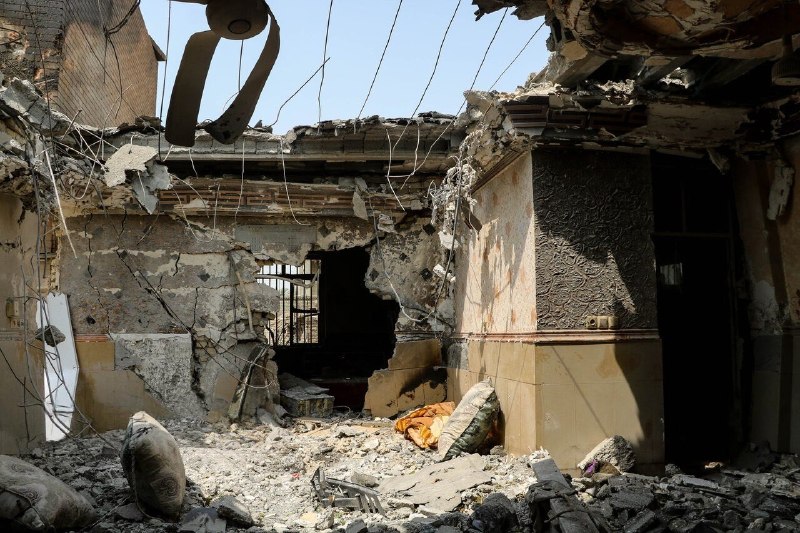
Three heavy explosions were reported in the western Iranian city of Dezful at 22:50 UTC on 12 July 2026, followed within minutes by air-defense activity over Kermanshah, several hundred kilometres to the northwest. The first blast flash came as Ukrainian and open-source intelligence channels tracked a new announcement from Washington of strikes against Iranian targets. The picture, stitched together in real time across Telegram channels monitoring the region, is one of the sharpest US-Iran escalations publicly visible in months.
The sequence matters. According to a Telegram post by TSN_ua at 23:14 UTC on 12 July, the United States announced a fresh round of strikes on Iran. Within roughly twenty-five minutes of that announcement, three heavy explosions were reported in Dezful and two further blasts followed, according to the intelslava channel. Separately, wfwitness reported UAV or UCAV activity above Kermanshah, with initial accounts of explosions also in Dezful. Air-defense activity over Kermanshah, a major western Iranian city near the Iraqi border, was independently flagged by intelslava, Middle East Spectator and rnintel. The triangulation across channels with no shared editorial line suggests the strikes are not a single-source rumour.
What is actually confirmed
The hard facts are narrow. The US announced a new series of strikes on Iran, per TSN_ua citing US sources. Three heavy explosions were reported in Dezful, Iran, at 22:50 UTC on 12 July 2026, followed by two additional large explosions in the same city, according to intelslava. Air defenses were reported active over Kermanshah in western Iran, per intelslava, Middle East Spectator and rnintel, with wfwitness specifying UAV or UCAV activity above the city. Initial reports of explosions in Dezful were also carried by wfwitness.
What the sources do not yet specify: the exact targets struck, whether Iranian casualties occurred, the weapons used, whether the strikes involved manned aircraft or standoff munitions alone, and whether Iranian retaliatory action has been observed. The channels involved are monitoring feeds, not on-the-ground reporters with named correspondents; their value is the speed at which they triangulate raw signals, not the depth of attribution. Readers should treat the casualty and damage picture as preliminary until wire confirmations arrive.
Why Dezful and Kermanshah
Dezful sits in Khuzestan province, the oil-rich southwestern Iranian region that also hosts much of the country's missile and drone production infrastructure. Kermanshah, further north and west, is a hub of Iranian conventional military logistics and a frequent waypoint for activity directed at both Iraq and the Persian Gulf. The pairing of the two cities in a single strike package points to a campaign aimed not at a single installation but at a network: production in the south, command-and-control and air-defense nodes in the west. That is the read several open-source channels implicitly converge on, and it is consistent with the pattern of US strikes earlier in the conflict cycle, which prioritised dispersed missile, drone and air-defense sites rather than symbolic targets.
The geographic logic also tells you what the strikes are not. There is no indication in the available reporting of strikes on Tehran, on oil export infrastructure at Kharg Island, or on nuclear facilities at Natanz or Fordow. The restraint, if it holds, is itself a signal: the operation appears calibrated to degrade Iranian military capability rather than to topple or humiliate the regime.
The information fight behind the strike
The strike announcement raced across Telegram almost as fast as the explosions did. TSN_ua, a Ukrainian-aligned channel with an established audience in Kyiv's information ecosystem, was first to carry the US announcement in this cluster of items. Middle East Spectator, wfwitness and rnintel each contributed independent confirmation of activity over Kermanshah within minutes of one another. The triangulation matters because earlier in the US-Iran confrontation, single-source claims of strikes have on at least one occasion run ahead of the actual event. Here, four channels converged on the same geography within roughly four minutes.
The Iranian information response is not yet visible in this thread of items. That is a gap to watch. In previous rounds, Tehran has typically moved within hours: first via state-aligned channels framing the strikes as an act of aggression against a sovereign state, then via diplomatic readouts, and only later with any admission of damage. PressTV, Tasnim and IRNA framing will be the next data points. If Iranian state media describes the strikes as limited and contained, that is itself a signal of the damage envelope.
What this round changes
Two things are different about this strike cycle. First, the simultaneity: hitting Dezful and activating defenses over Kermanshah within minutes suggests a coordinated package rather than a slow drip of retaliation. That compresses Iran's decision time and raises the premium on Iranian escalation management. Second, the visibility. Open-source channels caught the air-defense activity above Kermanshah in near real time, which means Washington knows that the world is watching the Iranian response within minutes, not days. That changes the diplomatic clock.
The political stakes inside Iran are now sharper than the military stakes. The strike targets a country already managing domestic pressure over its proxy posture, its nuclear ambiguity and its battered currency. A further escalation that produces significant Iranian civilian casualties would change the politics of the street in ways that the regime's information apparatus cannot fully absorb. A contained exchange, by contrast, lets Tehran preserve its preferred frame of defiant sovereignty without paying a price in blood that it cannot later spend.
What remains uncertain
The sources do not specify the number of aircraft or munitions involved, the identity of the targets struck in Dezful, whether any Iranian air-defense system successfully engaged incoming threats, or whether there has been any Iranian retaliatory move against US bases in the Gulf. The channels carrying the reports are open-source intelligence aggregators with varying reliability profiles; intelslava and rnintel have strong track records on Iran coverage, while wfwitness and Middle East Spectator are faster but less deeply sourced on this specific corridor. The headline claim, that the US conducted strikes on Iran and that Iranian air defenses engaged over Kermanshah, is well-corroborated. The fine-grained picture is not.
Watch, over the next twelve hours, for: a US Central Command or Pentagon readout naming the targets; an Iranian Foreign Ministry statement; flights resuming or not resuming through Iraqi and Gulf airspace; and any movement on regional oil benchmarks, which have historically reacted within minutes to confirmed strikes on Iranian infrastructure. The next seventy-two hours will tell you whether this was a discrete operation or the opening move of a longer campaign.
This article reflects a reporting approach in which open-source intelligence channels are treated as triangulation signals, not as final attribution. Wire confirmation from Reuters, AP, AFP or BBC will supersede the preliminary picture once it arrives.
Wire provenance
This editorial synthesis draws on the following public wire/social posts:
- https://t.me/TSN_ua
- https://t.me/intelslava
- https://t.me/intelslava
- https://t.me/intelslava
- https://t.me/wfwitness
- https://t.me/Middle_East_Spectator
- https://t.me/rnintel
Follow the event.
These dated source records provide context. They do not retrospectively verify this archive article.
Separate what the nuclear watchdog reported from what it could not determine after the June 2025 strikes.
A dated voting record is evidence of one decision. Use the original UN record before turning it into an alignment label.
Visual explainer · historical vote of 2022-03-02 →