Strikes on Sirik and a 31% Polymarket Line: Iran’s MOU Calculus Heading Into Late July
Three Telegram-flagged explosions at Sirik on 14 July 2026 land against a 31% Polymarket line on Tehran walking away from its MOU by month-end, sharpening the question of whether escalation or diplomacy drives the next move.
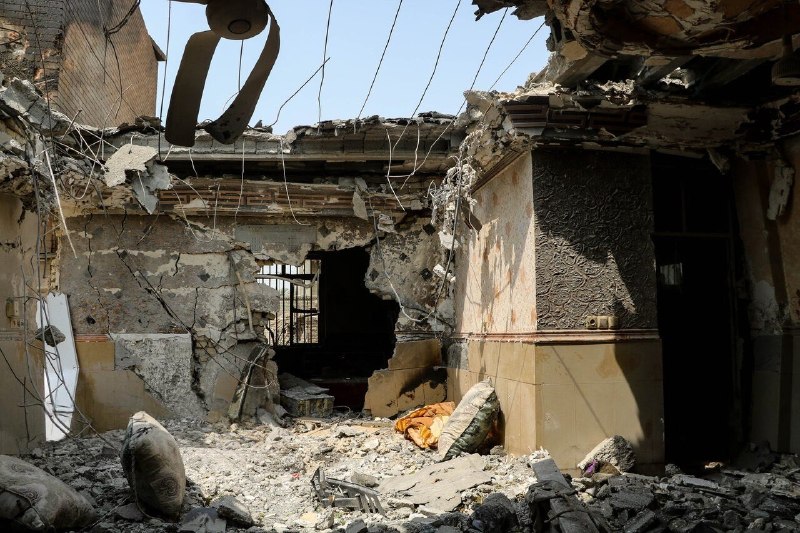
At 19:56 UTC on 14 July 2026, the Telegram channel Intelslava posted a brief alert: an explosion had been reported in Sirik, Iran. Less than two hours later, at 21:22 UTC, the OSINT account GeoPWatch logged the same location under a US-versus-Iran flag pairing, and by 21:30 UTC Intelslava had upgraded the language to a US airstrike on Sirik. Three short dispatches, the same coastal town in Hormozgan province, and a counter-narrative contest already underway inside the first hour of the news cycle.
Sirik sits roughly 160 kilometres east of Bandar Abbas on the Persian Gulf coast, a few minutes’ flight time from the Strait of Hormuz shipping lanes. That is the geographic anchor that turns a one-line Telegram flash into a market-moving event. A strike package hitting infrastructure in this corridor, if confirmed by Western wire reporting, lands directly on the chokepoint that handles a substantial share of seaborne oil flows out of the Gulf.
The Polymarket line that opened earlier the same day, at 19:03 UTC, frames the political layer cleanly. The contract prices a 31% probability that Iran formally withdraws from the MOU by the end of the month. The MOU, the memorandum of understanding that has governed the quiet US-Iran de-escalation track mediated through Oman since the spring, has been the principal diplomatic guardrail preventing a kinetic exchange over the Hormuz corridor. A 31% implied probability on collapse before 1 August is high enough to mean the market treats a breach as a real tail risk, not a fringe scenario.
What Telegram is reporting, and what it is not
The three alerts from Intelslava and GeoPWatch are event-stamps, not forensic claims. Both channels have a track record of being first to a flash but not the last word: their value is the timestamp and the location, not the attribution. The early 19:56 UTC line carries no flag pairing and no claim of agency; the 21:22 UTC post from GeoPWatch introduces the US-versus-Iran framing; the 21:30 UTC Intelslava post asserts a US airstrike outright. That sequencing matters. The interpretive leap from "explosion" to "US airstrike" happened inside the OSINT ecosystem, not on the back of a US Central Command statement or a Reuters wire.
Readers should treat the strike attribution as an open question until a primary source carries it. Iranian state-aligned outlets, which would normally amplify an external strike on Iranian soil within minutes, had not, as of the alert window, published corroborating claims through the major wires covered by this thread. The asymmetric information environment around Sirik is the story as much as the explosion itself.
The MOU that the 31% line is pricing
The MOU in question is the framework that has kept tanker traffic flowing and held off a wider confrontation since the last round of escalation. The Polymarket contract does not specify which clauses trigger withdrawal, but the contract’s existence is itself a signal. Prediction markets thrive on ambiguity, and a 31% line implies that informed money sees at least a one-in-three chance the diplomatic channel snaps inside two weeks. If Sirik is read as an Iranian retaliatory move, the contract will reprice higher. If Sirik is read as a US warning shot intended to keep the MOU intact, the contract will reprice lower. Either reading sits inside a 31% prior.
The interesting structural fact is that a prediction market has become the cleanest publicly available thermometer for a bilateral understanding that neither government has published in full. When traders price the survival of an undisclosed deal at one-in-three by month-end, the de-escalation track has already lost opacity.
Sirik, Bandar Abbas and the Hormuz overlay
Geography sets the stakes. Bandar Abbas is the home port of the Iranian Navy’s southern fleet and the terminal for the bulk of the country’s southern hydrocarbon exports. Sirik, a short coastal hop east, sits inside the radar envelope of any Gulf-routed strike package and inside the launch envelope of any retaliatory coastal-defence posture. Strikes in this corridor do not need to hit a specific refinery or radar to be strategically legible: they advertise a willingness to operate inside the Iranian coastal belt.
That is also why the Telegram-led attribution is so contested. A US strike package openly hitting Sirik would be an escalation step several rungs above the shadow war that has defined the past two years, and the absence of immediate Pentagon or CENTCOM confirmation gives the Iranian and Omani mediations a window to either absorb the event or break.
What to watch before 1 August
Three concrete signals will determine whether the 31% line reprices toward 50% or back toward single digits. First, a confirmed US or Iranian official statement on Sirik, with a target description. Second, an Omani MFA readout; Muscat’s silence or statement on a given day is itself the news. Third, the next Polymarket print. If the contract crosses 40%, treat the MOU as effectively on life support in trader eyes; if it slips below 20%, treat Sirik as absorbed.
The deeper pattern is older than any single Telegram post. The Strait’s shipping lanes, a coastal Iranian town, and a prediction market sitting at 31% are the moving parts of the same arrangement: an unwritten deal whose survival is now priced in dollars by participants who have never seen the text. When the price of that deal moves on a single flash from a Telegram channel, the de-escalation track has already become a tradable instrument.
Desk note: Monexus is running this alert on the Telegram wire first and the Polymarket line as the only independently priced probability in the public record. Strike attribution remains open; readers should treat the US-airstrike framing as the channel layer’s read, not a confirmed fact, until a wire or government readout carries it.
Wire provenance
This editorial synthesis draws on the following public wire/social posts:
- https://t.me/intelslava
- https://t.me/GeoPWatch
- https://t.me/intelslava
Follow the event.
These dated source records provide context. They do not retrospectively verify this archive article.
Separate what the nuclear watchdog reported from what it could not determine after the June 2025 strikes.