Trump opens 60-day war window on Iran as third night of strikes targets Strait of Hormuz capabilities
A formal notification to Congress dated 7 July treats the US–Iran fight as resumed, not restarted, opening a fresh statutory clock for force while the president names a fortified underground site for destruction.
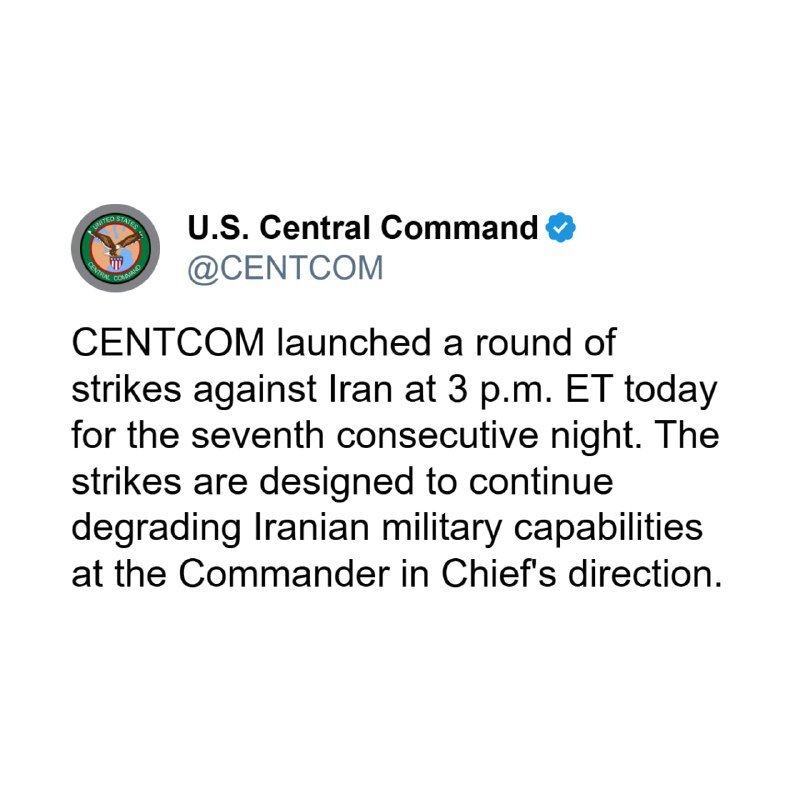
At 22:45 UTC on 13 July 2026, President Donald Trump told reporters the United States was attacking Iranian capabilities tied to the Strait of Hormuz. By 00:05 UTC on 14 July, US Central Command confirmed a third consecutive night of airstrikes inside Iran, ordered by the president. Hours earlier, the administration had delivered Congress a formal notification that hostilities with Iran had resumed on 7 July, a letter the White House treats as the start of a fresh 60-day statutory window authorising the use of military force in the region.
What had been an undeclared escalation is now an administration-defined war. The notification does not name a new authorisation; it asserts that an earlier conflict was never legally terminated, and that the clock reset on 7 July. That distinction, technical as it sounds, is the whole game: it lets the Pentagon sustain high-tempo operations without returning to Capitol Hill for fresh votes while the legal debate continues in court filings and committee hearings.
The 60-day clock, and what it buys
Reuters reported on 13 July at 23:40 UTC that Trump had sent Congress formal notice that the Iran conflict had resumed; a follow-up wire at 02:50 UTC on 14 July made the dates and the administration's reading explicit. The letter, the White House argues, opens a new 60-day window under the War Powers Resolution framework that permits the use of armed force without a fresh declaration of war, provided Congress does not affirmatively block the action.
The practical effect is administrative, not strategic. It gives the Pentagon a defensible legal posture for sustained strikes through mid-September and shields commanders from the political exposure that comes with unilateral action past statutory deadlines. For the administration's lawyers, the framing also dovetails with the operational story: strikes that began in late June were never, in this telling, a discrete campaign with a start and end, but the continuation of a hostile relationship the US never formally closed.
Pickaxe Mountain and the Strait of Hormuz
The named targets reveal where the campaign is heading. On 13 July at 21:10 UTC, Trump said the US would "take out Pickaxe Mountain" in Iran, a heavily fortified underground nuclear facility whose location has been the subject of Israeli and US intelligence reporting for years. Al Jazeera's breaking-news desk, in a wire distributed at 05:15 UTC on 14 July, described the threat as targeting an underground complex that has resisted earlier strike packages because of its depth and dispersal.
Hours later, Trump widened the target set. The 22:45 UTC Reuters wire quoted the president saying the United States was attacking Iranian capabilities "related to the Strait of Hormuz," the narrow chokepoint through which a substantial share of seaborne oil passes. Strikes on Hormuz-related military infrastructure are a different kind of message than strikes on a nuclear site: they are aimed less at Tehran's enrichment programme than at its ability to threaten Gulf shipping or close the strait in retaliation. That dual-track targeting, nuclear facilities on one hand, maritime-denial capability on the other, is what makes the third consecutive night of operations read as escalation rather than mop-up.
A speech to the nation, on the president's schedule
France 24 reported on 13 July at 23:10 UTC that Trump would deliver a prime-time address to the nation on Thursday, without disclosing the topic. The timing, hours after the strike tempo was confirmed and the day before a 60-day window begins to matter in committee rooms, suggests the address will be used to frame the resumed conflict to a domestic audience that has so far received the campaign as a series of presidential statements and overnight CENTCOM releases.
A national address also pre-empts congressional reaction. If the White House can shape the public frame before members return from recess to debate the 7 July notification, the political cost of voting to constrain the campaign rises. The sequencing matters: notification, strikes, address, in that order, is the order in which the administration wants each fact to land.
The counter-narrative, and what the sources do not settle
There is no Iranian readout in this thread. That absence is itself a fact about the reporting cycle on 14 July 2026: the wire traffic captured here is overwhelmingly from the US side and its Western partners, with Al Jazeera and France 24 filling in the gaps. Iranian state outlets have, in past rounds, framed the same strikes as an act of aggression against a non-proliferating state; their absence from this cluster means Monexus cannot quote that line today without leaving the source floor.
The 60-day reading is also contested in advance. The administration's claim that hostilities "resumed" on 7 July, rather than that a new conflict began, is a legal posture designed to fit a specific statutory template. Congressional aides of both parties have, in prior cycles, argued that a gap of weeks between operations is itself evidence that any earlier hostilities had concluded. That argument will land in court and in committee hearings, not on cable news in the next 48 hours. For now, the Pentagon operates; the lawyers brief; the calendar runs.
Stakes, on a 60-day horizon
If the strikes succeed in degrading Pickaxe Mountain and the Hormuz-related capabilities, the White House's political problem narrows: a fait accompli is easier to defend than an open-ended campaign. If they do not, particularly against an underground facility engineered to absorb penetration, the third night of operations reads as the start of an attritional phase that the 60-day clock was built to manage, not to win. Either way, the domestic fight is now scheduled: a Thursday address, committee work in the weeks after, and a clock that runs out in mid-September, just as the autumn legislative session opens.
The sources assembled here settle the who, the when, and the stated target. They do not settle the how-much: no casualty figures, no damage assessments, and no Iranian response appear in this cluster. They do not settle the legal question either, only the administration's preferred answer to it. A reader who wants the Iranian counter-frame, the on-the-ground damage picture, and the congressional objection will need a second-day wire pass, not this one.
Desk note: Monexus framed this as a legal-and-operational escalation rather than a pure battlefield story because the 60-day notification is the load-bearing fact. The Western wires lead; the Iranian response is flagged as absent rather than paraphrased.
Wire provenance
This editorial synthesis draws on the following public wire/social posts:
- http://reut.rs/4pi9CGL
- http://reut.rs/4aQciFB
- http://reut.rs/44x7i54
- https://t.me/sprinterpress/
Follow the event.
These dated source records provide context. They do not retrospectively verify this archive article.
Separate what the nuclear watchdog reported from what it could not determine after the June 2025 strikes.