US strikes on three Iranian port cities: what the wires say, and what Tehran denies
Initial Telegram channels reported US airstrikes on three southern Iranian port cities on 13 July 2026. Iranian state media denied any strikes occurred.
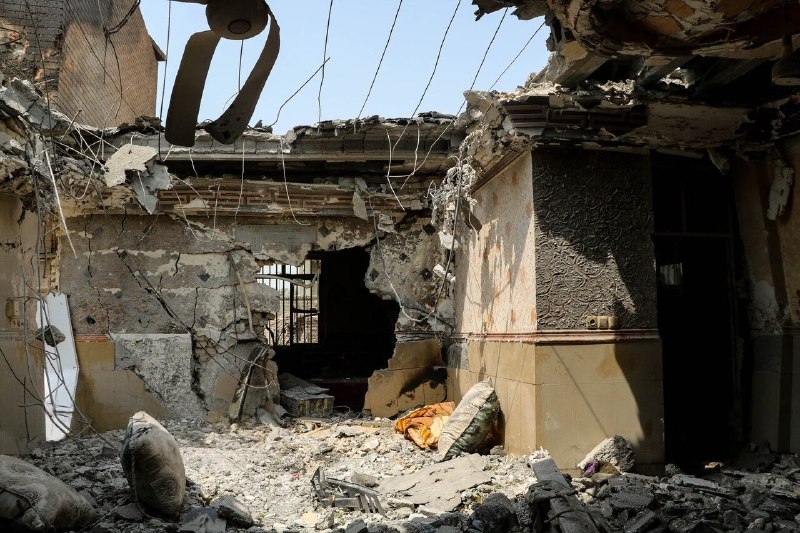
At 19:13 UTC on 13 July 2026, the Telegram channel RNIntel reported air-defence activity over Bandar Abbas followed by several US airstrikes on Chabahar and Bandar Abbas, both on Iran's southern coast. A minute later, GeoPolitical Watch pushed a parallel claim, adding the port city of Konarak to the target list. By 19:33 UTC, Middle East Spectator posted what it called a confirmation of US strikes on all three locations, while flagging that Iran's state broadcaster IRIB had put out the opposite line: no strikes had taken place on Iranian soil.
What is on the table, on the evidence available at publication, is a contested opening round of a US air operation against three of Iran's most strategically significant southern cities, paired with a flat denial from Tehran. The two readings have not yet been reconciled by any major wire service in the inputs to this report. The shape of what is being claimed, however, is specific enough to warrant laying out plainly, including the geography, the assets that would be in range, and the political cost of a denial that turns out to be untrue.
What the three initial reports actually say
The earliest item, posted to RNIntel at 19:13 UTC on 13 July 2026, layers two distinct claims. The first is that Iranian air-defence systems activated over Bandar Abbas, a city of roughly half a million people that hosts much of the navy of the Islamic Republic of Iran and sits on the western shore of the Strait of Hormuz. The second is that several US airstrikes followed, on Chabahar and Bandar Abbas. Chabahar, around 300 kilometres to the east, is Iran's only deep-water port on the Arabian Sea and the terminus of a transit corridor India has spent years building to bypass Pakistan.
GeoPolitical Watch, posting at 19:14 UTC, expanded the target set to three cities, adding Konarak. Konarak sits a short distance east of Chabahar and hosts the Iranian navy's southeastern fleet headquarters, the operational base that would cover the Gulf of Oman approach to the strait.
The third item, from Middle East Spectator at 19:33 UTC, repeats the three-city strike claim as confirmed and prints, in the same message, the IRIB denial that no strikes had taken place on Iran. The channel frames IRIB's denial as inaccurate.
The three reports are consistent on the three target cities. They diverge from IRIB on whether the strikes occurred at all. No casualty figures, weapon types, sortie counts, or US unit identifications appear in any of the three items.
What Iran has said, and what is at stake in the denial
The Iranian line, as carried by IRIB and relayed in the Middle East Spectator post at 19:33 UTC on 13 July 2026, is that no strikes have hit Iranian territory. That denial, if it holds, explains itself: an admission of successful US strikes on three cities, two of which host major naval installations and one of which is the centrepiece of a foreign-built commercial corridor, would be an admission of a serious failure of Iranian air defence and a strategic-political humiliation for the Islamic Republic. The incentive to deny is high, even before the question of physical damage.
What makes the denial unusually costly, if it is false, is the city's own information environment. Bandar Abbas and Chabahar are not isolated outposts. Cellular video, shipping traffic data, satellite passes, and the presence of foreign commercial crews at Chabahar all make a complete information blackout harder to maintain than for, say, a strike on a remote missile site. If strikes did occur, the verifiable signal will arrive within hours, not days, and the IRIB line will have a short shelf life.
The geography and why these three cities, specifically
The three locations on the reported target list are not random, and the choice tells you what kind of operation is being claimed.
Bandar Abbas is home to the headquarters of the Islamic Republic of Iran Navy's southern fleet and to the bulk of Iran's conventional naval infrastructure on the strait. Chabahar is the terminal of the International North–South Transport Corridor, the Moscow-Tehran-New Delhi commercial route that the United States has had reasons to want to slow for years. Konarak, adjacent to Chabahar, hosts Iran's southeastern naval command, the unit tasked with covering the Gulf of Oman flank.
A strike package concentrated on those three points is a strike package aimed at the Iranian navy and at a piece of transport infrastructure Washington has never liked. It is not aimed, on its face, at oil export terminals at Kharg Island, at nuclear sites at Natanz or Fordow, or at the missile production complexes around Isfahan and Shahroud. The signal, if the reports hold, is maritime and corridor, not energy and not nuclear. That is itself a piece of the story.
What remains unresolved
The sources available at publication do not specify which US force carried out the reported strikes, from what basing, with what weapons, or against what specific targets inside each of the three cities. There are no casualty figures in any of the three Telegram items. There is no statement from the US Department of Defense, from US Central Command, or from the Iranian foreign ministry in the input material. There is no satellite imagery, no shipping-insurance zone change, no oil-price print associated with the report. The Strait of Hormuz remained, as of the last item, the subject of a claim and a counter-claim.
Until one of those missing elements arrives from a primary source, this report treats the three Telegram channels as unverified first-pass reporting, treats IRIB's denial as the official Iranian position, and flags that the substantive judgment on whether strikes occurred will turn on verification none of the three initial items supplies.
Forward view
The next 24 to 48 hours will resolve most of the open questions one way or another. Satellite imagery of Chabahar and Bandar Abbas ports will appear within a day. Commercial shipping insurers will reprice transit through the strait. The US side will, almost inevitably, be forced to either confirm or refuse to confirm; silence past the first news cycle will itself become a signal. And IRIB's denial will either harden into a sustained official line, with the diplomatic and information costs that follow, or it will be quietly walked back as footage emerges.
What is already clear is the stakes. If the strikes occurred, three of Iran's most consequential southern installations have been hit in a single opening round, and the strategic contest over the Strait of Hormuz has moved from shadow to action. If they did not, the world's three most active open-source intelligence channels have carried a fabricated report at high confidence for at least twenty minutes, and the credibility cost belongs to them, not to Tehran. Either way, the next reading is not far off.
Desk note: Monexus is publishing the wire claims and the IRIB denial side by side, with no embellishment of either, because the source ledger does not yet support a definitive call. As further verification arrives, this piece will be updated or replaced.
Wire provenance
This editorial synthesis draws on the following public wire/social posts:
- https://t.me/rnintel
- https://t.me/GeoPWatch
- https://t.me/Middle_East_Spectator
Follow the event.
These dated source records provide context. They do not retrospectively verify this archive article.
Separate what the nuclear watchdog reported from what it could not determine after the June 2025 strikes.