Iran claims strikes on US-linked sites in Kuwait as Gulf flashpoint widens
Iranian state-affiliated outlets reported explosions near American facilities in Kuwait on 15 July 2026. Independent confirmation was thin, and the claims sit inside a familiar information pattern: Tehran's framing first, verification later.
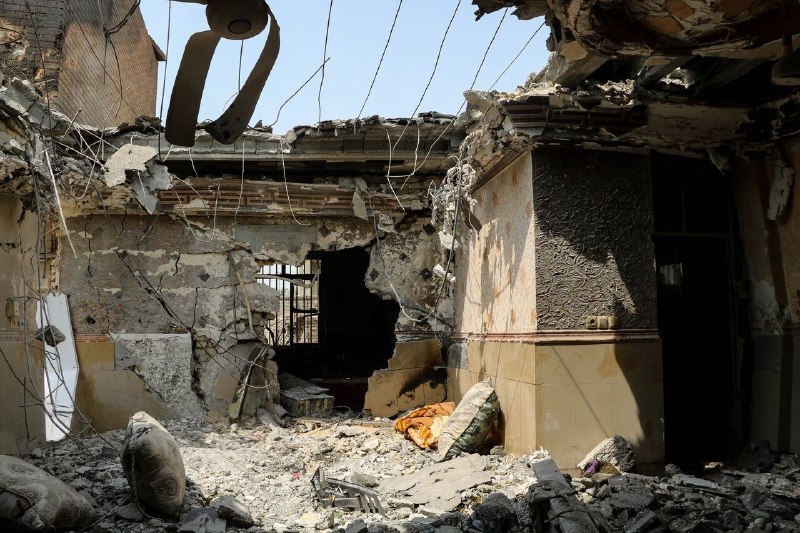
At 22:21 UTC on 15 July 2026, Fars News, an Iranian outlet aligned with the Islamic Revolutionary Guard Corps, posted on Telegram that several explosions had been heard in Kuwait and that "local sources" were reporting attacks on American economic interests and facilities. By 22:51 UTC the same outlet was broadcasting footage it described as direct hits on American interests, naming Ali al-Salem air base as a supplementary target. Within forty minutes the claim had propagated across Fars's Telegram network, complete with video Monexus has not independently verified.
What is verifiable so far is narrow. Fars says it happened. No Western wire, no Kuwaiti government statement, and no US Central Command release carried in this news cycle has confirmed strikes on Ali al-Salem or other American facilities in Kuwait. The information pipeline is, at this hour, almost entirely one-sided.
Why the Fars claims matter even unverified
Iranian state-aligned media operates as both a news organ and a signalling instrument. When Fars posts video of a strike within an hour of an alleged event, the broadcast is doing two jobs at once: it tells a domestic audience that the Islamic Republic can reach American targets beyond its borders, and it tells outside observers that Tehran wants the world to know it is willing to escalate. Whether every frame on the channel is authentic footage of this specific event is a separate question, one that OSINT analysts will spend the next twenty-four hours trying to answer.
Kuwait hosts a US military presence at Camp Arifjan and at Ali al-Salem, the latter one of the largest air bases in the Gulf. Any credible attack on American targets in Kuwait would mark a sharp escalation beyond the long-running Iran-Israel exchange and would drag a Gulf state that has spent decades trying to stay out of regional crossfire directly into the line of fire. The Fars framing, economic interests, facilities, a base, reads as an attempt to claim the broadest possible target set while leaving room to disavow specific incidents.
The information gap on the other side
The Kuwaiti government's silence is itself the most informative data point. Kuwait's Ministry of Interior and its official news agency, KUNA, had not posted corroborating statements by the time Fars pushed its fourth Telegram update at 22:59 UTC. The US embassy in Kuwait City has not been evacuated, according to any public source Monexus could verify. Pentagon and CENTCOM briefings carried overnight focused on other regional matters.
This asymmetry is worth naming plainly. When Tehran claims a strike and neither the host government nor the target's home government confirms it, the burden of proof sits with the claimant. International wire services, Reuters, AP, AFP, have so far treated the Fars reports as claims rather than confirmed events, which is the correct epistemic posture under the circumstances.
What the framing assumes
Fars's repeated use of the phrase "American economic interests and facilities" is deliberate. It widens the target universe from a known military base to the broader American commercial footprint in Kuwait, including oil-sector operations and the Kuwait-America Foundation's portfolio of cultural and educational ties. That phrasing also allows Tehran to retroactively claim credit for incidents it did not cause, a pattern familiar from earlier rounds of regional tension.
The structural reading is straightforward: Iran is testing whether an escalation against US assets in a third country can move the diplomatic needle without producing a conventional military response from Washington. Kuwait, a small state with deep American security ties but a long tradition of mediation in regional disputes, is being asked to absorb the cost of being the terrain on which that test is run.
What to watch next
Three signals over the next twenty-four hours will determine whether the Fars claims harden into a confirmed event or dissolve into the fog of regional information warfare. First, satellite imagery of Ali al-Salem and Camp Arifjan will show whether any visible damage occurred; commercial providers such as Planet Labs and Maxar typically publish imagery within twelve to twenty-four hours of an incident. Second, Kuwait's official channels will either confirm or deny; the Kuwaiti foreign ministry's read on the event is the single most important corroborating document. Third, the US military will issue a force-protection statement from CENTCOM if any American personnel or facilities were genuinely affected.
Until those three arrive, the responsible framing is the one wire services are using now: Iranian state-aligned media have claimed strikes on American targets in Kuwait, and the claims are presently uncorroborated by independent sources. The temptation to either amplify the claims or dismiss them out of hand should be resisted in equal measure. What is certain is that Tehran has chosen 15 July 2026 to put a specific set of words into circulation, and that those words are now part of the public record whether or not the events behind them occurred as described.
Monexus treats Iranian state-aligned reporting as a primary source for claims attributed to Tehran, while flagging the absence of independent confirmation. This story will be updated as Kuwaiti, American, or wire-service reporting becomes available.
Wire provenance
This editorial synthesis draws on the following public wire/social posts:
- https://t.me/FarsNewsInt
- https://t.me/FarsNewsInt
- https://t.me/FarsNewsInt
- https://t.me/farsna
Follow the event.
These dated source records provide context. They do not retrospectively verify this archive article.
Separate what the nuclear watchdog reported from what it could not determine after the June 2025 strikes.