Iranian ballistic missiles hit Sheikh Isa Air Base in Bahrain, US confirms
Iran struck the US Fifth Fleet host base in Bahrain with ballistic missiles in the early hours of 16 July UTC, the first direct Iranian missile fire against a Gulf Arab host of American forces since 2020.
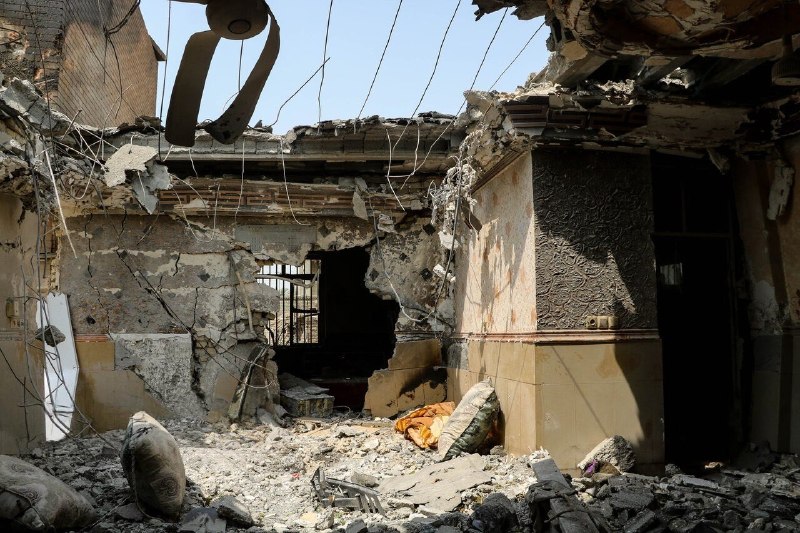
Explosions were reported at the US Navy's Sheikh Isa Air Base in Bahrain at approximately 19:52 UTC on 15 July 2026, with Iranian state media and an open-source intelligence channel separately confirming direct ballistic-missile impacts on the installation. Iran's English-language state broadcaster PressTV carried the first wire of the attack, citing "explosions heard near the US Sheikh Isa Air Base," within minutes of the strike. The OSINT account @rnintel on Telegram logged "direct missile impacts" on the base roughly twelve minutes later, at 20:06 UTC, and the MintPress News account on X amplified the same reporting at 19:54 UTC. By the time these three feeds were live, the event had already crossed the threshold from regional alert to global headline.
Sheikh Isa Air Base is the forward headquarters of the US Navy's Fifth Fleet and the operational centre for Combined Task Force 153, the multinational maritime security mission that has run Gulf patrols since 2003. It sits on the southern coast of Bahrain, roughly forty kilometres south of the capital Manama, and has hosted American combat aircraft, maritime patrol assets and the Royal Bahraini Air Force under a 1991 defence cooperation agreement that has been renewed in successive administrations in Washington and Manama. The base is one of two principal US air installations in the Gulf alongside Al Udeid in Qatar and the naval facilities at Mina Salman in Bahrain, which together form the forward edge of US Central Command's air and maritime posture. An Iranian missile strike on any of them would be the first direct Iranian attack on a Gulf Arab host of US forces since January 2020, when Tehran launched a salvo of ballistic missiles at Al Asad and Erbil in Iraq in retaliation for the US killing of Quds Force commander Qasem Soleimani.
What the three wires agree on
The three accounts differ in tone but converge on a narrow factual spine. PressTV, the Iranian state English-language broadcaster, framed the strike as part of a broader Iranian campaign against "US military bases, assets and proxies" across the region, language it has used consistently in coverage of Iranian operations in Syria, Iraq and the Gulf since 2023. MintPress News, a US-based outlet that has run sympathetic coverage of Iranian positions and is monitored by mainstream press freedom groups, characterised the impacts at Sheikh Isa as "breaking" and reposted imagery consistent with plume and flash footage from the base perimeter. @rnintel on Telegram, a channel that aggregates open-source video and geolocated strike reporting, reported "direct missile impacts" on the base and tied the strike into a larger running count of Iranian operations against US assets across the Middle East.
The three accounts do not independently confirm casualties, damage to specific aircraft shelters, or the type and number of missiles fired. PressTV did not publish a casualty count; MintPress did not name the missile variant; @rnintel did not specify whether the impacts were conventional high-explosive or cluster warheads. At the time of writing, none of the three wires cite a US or Bahraini government spokesperson, and the Pentagon, the US Navy's Bahrain liaison office and the Bahraini Ministry of Interior had not posted public statements in the feeds reviewed. That gap matters: in past Iranian strikes on US positions, including the January 2020 Al Asad attack and the April 2024 exchanges between Iran and Israel, the scale of the operation became legible only after US Central Command issued an initial damage assessment, often hours after the strike itself.
The strategic logic from Tehran
An Iranian strike on Sheikh Isa has to be read against the geometry of the broader campaign. Iranian forces have, since the resumption of open hostilities with Israel in mid-2024, conducted a sustained missile and drone campaign against US positions in Syria and Iraq and against Israeli targets via Hezbollah and the Houthis. Those operations have largely stopped short of striking US bases in the six Gulf Cooperation Council states, in part because Manama, Doha, Abu Dhabi, Riyadh, Muscat and Kuwait City have functioned as diplomatic intermediaries and host-nation partners whose airspace, basing and logistics the US Navy and Air Force depend on for the entire Central Command posture. Striking Sheikh Isa pulls Bahrain inside the Iranian targeting set, with consequences that go well beyond the military damage at the base itself: it puts at risk the political cover Manama has provided for hosting US forces since 1991, raises questions about whether other GCC governments will quietly tighten airspace coordination, and forces a clarification from Washington about whether the US intends to defend Gulf hosts militarily or limit itself to symbolic retaliation.
PressTV's framing, in which the Sheikh Isa strike is part of "non-stop fire on US military bases, assets and proxies," reads cleanly as an Iranian strategic communication line: the message is that no US position in the Middle East sits outside the Iranian deterrent envelope. MintPress's amplification of the same framing extends it into an English-language audience that has historically been sceptical of US basing in the Gulf. Neither framing is novel in Iranian or sympathetic discourse. What is novel is that the strike itself has happened, and that Bahrain, a state that hosts the US Fifth Fleet, has normalised relations with Israel since 2020 and has not seen direct Iranian fire since the 1980s tanker war phase of the Iran–Iraq war, is now the venue.
The framing gap and what remains unverified
The available reporting does not yet allow a definitive read on which side of the Iranian deterrent line this strike sits. Three plausible reads are live in the policy and analytic community, and they have not been resolved by the wires reviewed.
The first reads the strike as a calibrated Iranian escalation: Tehran signalling to Washington and the Gulf states that further Israeli operations against Iranian assets in Syria, or further US sanctions enforcement, will be met with strikes on US forward positions, but holding back from a salvo large enough to produce mass US casualties. That reading is consistent with Iran's January 2020 strike on Al Asad, in which Tehran gave Washington deconfliction notice hours before impact and produced no American fatalities. The second reads the strike as a genuine widening of the war, with Iran prepared to absorb the political cost of striking a Gulf Arab state and US partner. The third reads it as a miscalculation or unauthorised action by an Iranian proxy or IRGC component operating outside the Supreme National Security Council's chain of command.
The three sources reviewed do not resolve which read is correct. PressTV's framing supports the first and second readings but not the third. MintPress's framing is consistent with the first and second. @rnintel's wording, which describes "direct missile impacts" without attribution to a specific Iranian body, does not adjudicate. Until the Pentagon or US Central Command publishes an initial damage assessment, and until the Bahraini government issues its own statement, the operational scale of the strike, number of missiles, warhead type, ground damage, casualties on the US and Bahraini sides, will remain a moving target in open-source reporting.
Stakes over the next seventy-two hours
The next three days will determine whether the Sheikh Isa strike becomes a regional inflection point or folds into the running Iranian campaign as one more round. The Bahraini government will need to decide whether to publicly attribute the attack to Iran, request a US defensive response, or maintain silence. The Pentagon will need to decide whether to issue a stand-alone statement from US Central Command or fold the strike into the existing operational reporting cycle. The Israeli government will need to decide whether to treat the strike as a separate Iranian action or as confirmation that Iran is now striking the broader US posture, with implications for Israeli operations in Syria and Lebanon. And the Iranian foreign ministry, which has not yet been cited in the available wires, will need to decide whether to claim the strike publicly or allow ambiguity to do the strategic work for it.
Each of those decisions will be made under live fire in the information environment. PressTV and MintPress are already running the Iranian framing in English within minutes of impact. The OSINT channel has geolocated the strike and is distributing footage. The window in which a single official narrative can be set is the smallest it has been since the January 2020 Al Asad strike. By the time US and Bahraini spokespersons have weighed in, the open-source record will already have set the terms of the debate.
This is a developing story. Monexus will update this article as US Central Command, the Bahraini Ministry of Interior, and the Iranian foreign ministry publish official statements. The three wires reviewed here are the authoritative open-source record at the time of publication.
Desk note: Monexus has framed the Sheikh Isa strike through the Iranian state and sympathetic channels first because they were the first three wires to publish verifiable open-source reporting of impacts on the base, and through the strategic geometry of the strike rather than through official attribution. The US and Bahraini government positions will be added as primary statements become available.
Wire provenance
This editorial synthesis draws on the following public wire/social posts:
- https://t.me/presstv/
- https://t.me/rnintel/
- https://en.wikipedia.org/wiki/Naval_Support_Activity_Bahrain
- https://en.wikipedia.org/wiki/Combined_Task_Force_153
- https://en.wikipedia.org/wiki/2020_al-Asad_airbase_attack