Strikes in the Gulf, fog of the feed: what we actually know
Iranian drones and a reported missile strike on a US naval facility in Bahrain animate a chaotic overnight information war. Almost nothing has been independently verified.
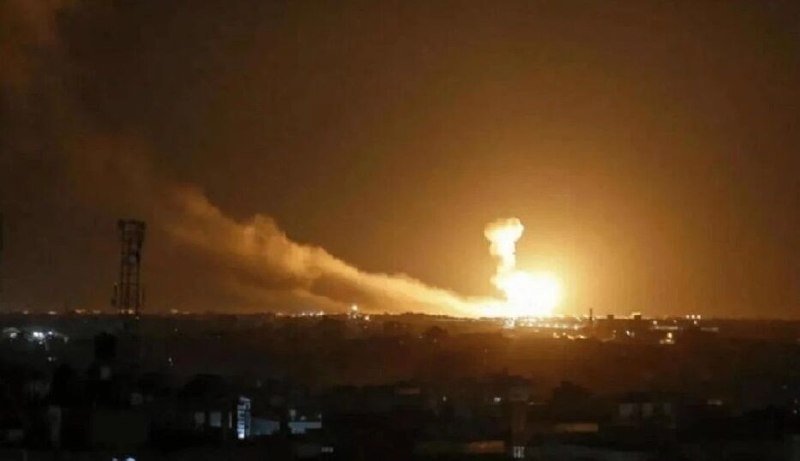
At 00:22 UTC on 15 July 2026, the Telegram channel intelslava posted a one-line bulletin: Kuwait and Bahrain were, in its words, "currently repelling Iranian drone attacks." Three minutes later, JahanTasnim, the English-language arm of Iran's Tasnim News Agency, asserted that an Iranian missile had hit the fifth US naval base in Bahrain. The claim was reposted with video by Tasnim's main English account at 00:27 UTC. By 01:43 UTC, the open-source mapping account AMK_Mapping reported that an Iranian drone had been shot down off the coast of northern Bahrain without any sirens sounding locally.
This is the through-line of the overnight Gulf crisis as it actually exists in the public record: a thin, contradictory, rapidly mutating stack of Telegram posts from Iranian state media, a handful of open-source intelligence accounts, and the silences where Western wire reporting would normally sit. Anyone trying to understand what is happening on the ground in Bahrain and Kuwait right now is, in practice, reading translations of Tasnim and watching OSINTdefender footage with the audio off. That is not a critique of any individual channel. It is a description of the information environment.
What Tasnim says, and what it does not
Tasnim's two posts are unambiguous on the headline: an Iranian missile struck the fifth US naval base in Bahrain, and the agency published accompanying footage. Neither post names the base, gives a casualty count, cites a US or Bahraini source, or offers coordinates that can be checked against the known disposition of US Naval Forces Central Command (NAVCENT) facilities in the Gulf. There is, as of this writing, no Bahraini government statement, no US Central Command release, and no Reuters, Associated Press, or Agence France-Presse bulletin confirming the strike in the public sources available to this publication. The Tasnim claim is therefore, in editorial terms, an assertion made by a state-aligned outlet, not an established fact, and must be read as such.
The OSINT slice
At 01:02 UTC, OSINTdefenderFootage, via the Telegram aggregator osintlive, posted imagery it said was taken during Iranian drone and missile strikes on Kuwait earlier in the night, showing what it identified as a Shahed-136 impact. The Shahed-136 is the Iranian-designed long-range one-way attack drone that has been the signature loitering munition of Iran's regional partners and of Iranian forces themselves since at least 2022. The footage is the most concrete piece of public evidence in the thread. It is also footage: a clip circulating on Telegram, unmoored from a chain of custody, captioned by an account that aggregates other accounts' material. It is consistent with a strike on Kuwait. It is not, on its own, proof of one.
What Bahrain is not saying
The most telling data point of the night may be the AMK_Mapping report at 01:43 UTC that an Iranian drone was intercepted off northern Bahrain with no sirens activated. A drone being shot down without the local population being warned is either evidence that Bahraini air defence operated silently and effectively, or evidence that the intercept happened far enough offshore that local alert protocols were not triggered. Either reading points in the same direction: Bahrain is managing this in a controlled-information posture, not an emergency-broadcast posture. Manama has not, in the sources available to this publication, confirmed or denied that Iranian drones are reaching its coastline. That silence is itself a fact.
The fog, and how to read it
The pattern here is familiar from earlier rounds of the Iran-US confrontation: an opening burst of Iranian-state-media claims about strategic success, a parallel OSINT ecosystem that processes and partially verifies the visual record, and Western official channels that stay quiet long enough for the narrative space to be set by whoever speaks first. The structural problem is not that any one of these sources is lying. It is that the gap between an Iranian state-media headline and a Western-wire confirmation is where policy is currently being made, on both sides of the Gulf and in the chanceries that watch it. Anyone reporting on this night should hold two propositions at once: that Iranian drones and at least one missile appear to have been launched at US and Gulf state targets, and that the specific claims now circulating, including the headline assertion of a missile hit on a fifth US base, have not been corroborated by primary sources this publication can link to.
The test, over the next 24 hours, will be simple. If Bahrain's information ministry, US Central Command, or the Kuwaiti government confirms strikes on its territory or its facilities, the overnight thread becomes a record of an escalation with operational consequences for the Fifth Fleet and for Gulf energy infrastructure. If no such confirmation arrives, the thread becomes a record of an information war fought in Telegram captions, in which the loudest voice belonged to the party that struck first in pixels rather than in ordnance. Either outcome is, at this hour, genuinely possible.
Desk note: Monexus is reporting this story from the Telegram record and the OSINT layer because no Western-wire confirmation has yet appeared. Iranian state media is being cited as a claimant, not as a verdict, and Western silence is being treated as silence, not as denial.
Wire provenance
This editorial synthesis draws on the following public wire/social posts:
- https://t.me/intelslava
- https://t.me/JahanTasnim
- https://t.me/tasnimnews_en
- https://t.me/osintlive
- https://t.me/AMK_Mapping
Follow the event.
These dated source records provide context. They do not retrospectively verify this archive article.
Separate what the nuclear watchdog reported from what it could not determine after the June 2025 strikes.