Araghchi denounces US strikes on Iran as breach of international law
Foreign Minister Abbas Araghchi frames the latest US military action against Iran as a violation of international law, sharpening Tehran's diplomatic posture as war-risk markets price in a wider escalation.
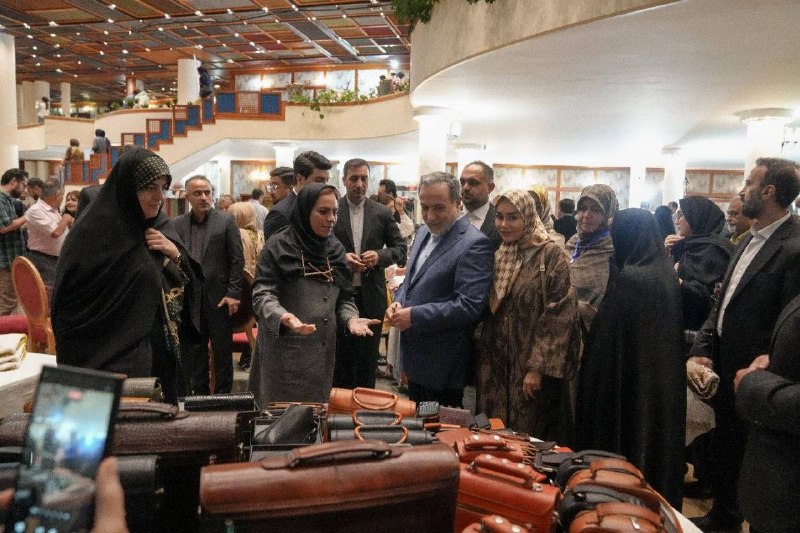
Iranian foreign minister Abbas Araghchi declared on 16 July 2026 that the latest wave of US military action against the Islamic Republic constitutes a violation of international law, the boldest framing yet from Tehran as it seeks to rally diplomatic cover in the days after the strikes. The remarks, carried live by Middle East Eye at 16:41 UTC, slot into a wider public posture in which the foreign ministry has increasingly leaned on the language of sovereign rights and UN Charter obligations to contest Washington.
The escalation matters less for what it changes today than for the legal track it opens next. Iran's calculation appears to be that framing US strikes as illegal, rather than merely aggressive, gives allies in the Global South, the Non-Aligned Movement and the UN General Assembly a procedural basis on which to push back without having to take a side on the underlying dispute. It is a quieter form of warfare than the missiles that preceded it, and one that runs through New York rather than the Strait of Hormuz.
What Araghchi actually said
In a televised statement relayed by Middle East Eye on 16 July 2026 at 16:41 UTC, Araghchi argued that the US attacks on Iranian territory breach the foundational norms governing the use of force between states. The phrase "international law" was the operative frame: not "provocation," not "regime change," but the explicit claim that the strikes fall outside the exceptions the UN Charter permits for self-defence or Security Council authorisation. That formulation gives Tehran a clean, repeatable line it can carry into any UN chamber.
The statement is also notable for what it omits. There is no call for a retaliatory strike, no conditional offer of talks, no reference to a specific US operation by name. The diplomatic machinery around Araghchi has, for the moment, narrowed the conversation to legality. The narrower the frame, the harder it is for Washington to rebut it on factual grounds without conceding the legal terrain.
The market read
Prediction markets have been tracking the trajectory in real time. Two Polymarket contracts referenced in Monexus's wire feed on 16 July 2026, logged at 15:24 UTC and 19:47 UTC, sit inside a dense cluster of forecast instruments that price the probability, duration and character of a US-Iran confrontation. The contracts themselves are short, dated events: will a particular threshold be crossed by a particular date, will a particular channel of de-escalation reopen. Read together they describe a market that no longer assumes the crisis is winding down.
What the contracts do not capture, and what the diplomatic track is now testing, is whether a legal framing at the UN can compress the time horizon. International legal processes are slow by design. Prediction markets price the fast variables. A successful Araghchi play would lengthen the timeline by pulling the dispute into venues where Washington has fewer tools and more rivals.
The structural reading
This is the part of the story that does not fit on a cable. The US, for two decades, has conducted kinetic action against Iranian assets, proxies and, intermittently, Iranian soil while keeping a parallel diplomatic channel nominally open. The pattern depends on the gap between the two tracks staying wide. What Araghchi's statement does, if it lands, is narrow that gap by forcing every government that receives the Iranian diplomatic note to take a position on legality before it takes a position on policy. The room for ambivalence, which is the lubricant of the existing arrangement, shrinks.
The structural shift is subtle and easily missed. A legal framing transfers the burden of justification. Under the older "maximum pressure" logic, Iran had to explain why the United States was wrong to sanction, blockade or strike; under a Charter-based framing, the United States is asked to explain why its forces were entitled to fire. The two questions are not symmetric, and the diplomatic weight sits on the side that has to justify the use of force, not the side that has to justify the response to it.
What to watch next
Three signals will tell whether the Araghchi statement is the opening of a legal offensive or a single news cycle. First, whether Tehran files a formal complaint at the UN Security Council, which would force a vote and a public US veto rather than a quiet objection. Second, whether the foreign ministry names a specific US operation in its next communication, which would lock in the legal posture against any later revision. Third, whether the prediction market contracts on the Polymarket dashboard move materially in the 48 hours after the statement, which would indicate that traders think the framing is landing with consequential audiences.
What remains genuinely uncertain is how Washington's coalition partners will be asked to respond. European foreign ministries have so far kept their language in the conditional tense, neither endorsing the strikes nor denouncing them by name. The Iranian legal framing is, in effect, a request to remove that conditionality, and the answer to that request is the diplomatic event worth watching this week.
Monexus covered this story as a legal-and-diplomatic escalation, not a kinetic one, on the strength of a single Middle East Eye live update and two Polymarket market references. Where the wire lead emphasised the strikes themselves, the angle here is the framing fight that opens once the firing stops.
Follow the event.
These dated source records provide context. They do not retrospectively verify this archive article.
Separate what the nuclear watchdog reported from what it could not determine after the June 2025 strikes.