Iran and the Gulf: What the Bahrain Strikes Tell Us About a War That Has Moved Off the Page
Iranian drones reportedly struck a US installation in Bahrain overnight, and Washington replied with strikes on southern Iranian rail bridges, a sequence that confirms what months of posturing had already made plain: the Gulf has become the live arena of a wider contest.
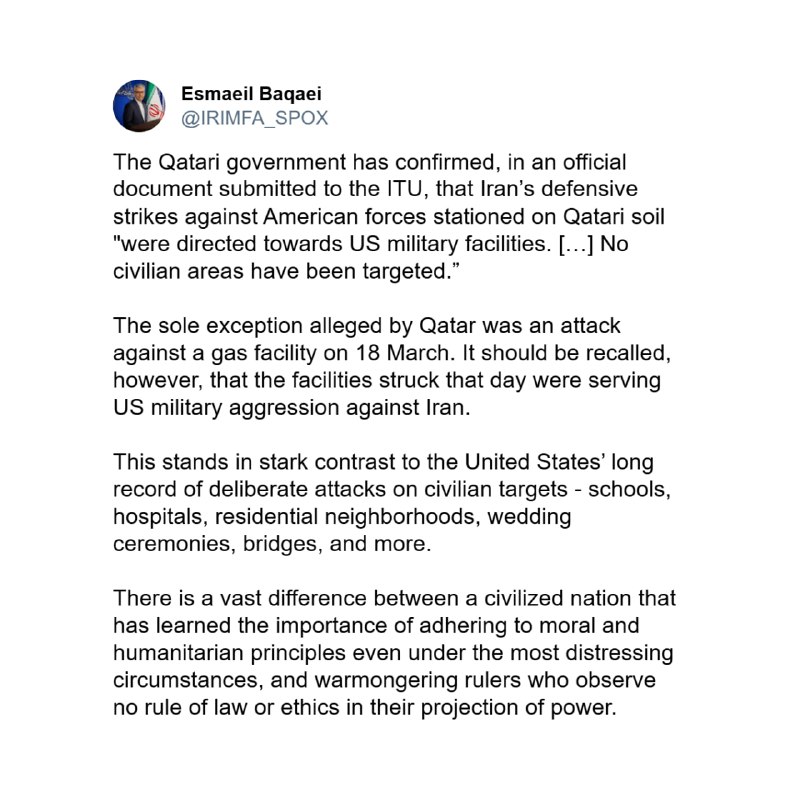
At 23:25 UTC on 16 July 2026, Iran's military said it had launched drone strikes on a United States base in Bahrain, targeting helicopters and P-8 reconnaissance aircraft on the ground, according to Telegram channel ClashReport. Forty minutes later, the open-source intelligence account @wfwitness logged air-defense activity over Bahrain. Earlier the same evening, Middle East Spectator reported that the United States had hit several railway bridges in southern Iran over the preceding six hours, calling the operation limited and targeted rather than a sweeping campaign. Three bulletins, three time stamps, one contested night.
What matters is not which claim survives contact with the morning. What matters is that the choreography is now legible. After months of calibrated rhetoric, sanctions choreography and proxy escalation, the principals have moved from signaling to action, and the action is happening on the territory of two states that did not choose this fight. Bahrain hosts the US Fifth Fleet and a constellation of American air assets. Iran's railway bridges carry the freight and passenger traffic of a country under heavy external pressure. Neither is the strategic prize. Both are the surface on which the prize is being contested.
What the wire actually shows
ClashReport, summarising Iranian military statements, named the target set inside the Bahrain facility: helicopters and P-8 Poseidon maritime patrol aircraft. P-8s are the workhorses of Western surveillance over the Strait of Hormuz; their loss, even temporarily, would force a re-routing of maritime domain awareness at exactly the moment when oil traders are already pricing-in Gulf risk. The @wfwitness post is short on detail but the timing is precise: air-defense activity logged while Iranian drones were reportedly inbound. Middle East Spectator's framing of the US strikes is unusually candid about scope: only a limited number of bridges, not a wide campaign. That qualifier matters. It suggests the White House is calibrating, not escalating, an uncomfortable distinction to maintain in real time.
The Bahrain strikes, if confirmed, would be the first direct Iranian attack on a US installation on the Arabian Peninsula since the early days of the regional shadow war, and the first to be publicly claimed by Tehran's military. That claim itself is a deliberate choice: deniable pressure has been the Iranian default for years. Public claim is a different instrument.
The counter-narrative, and why it holds weight
The Western wire instinct here will be to read the night as Iranian aggression, period. That framing is incomplete. The US strikes on southern Iranian railway bridges preceded the Iranian announcement of the Bahrain operation by hours, according to the Middle East Spectator timeline. Sequence is not causality, and the sources do not establish which side opened the cycle on 16 July, but the asymmetry of framing already visible in the open-source channel ecosystem is worth naming. Iranian-aligned channels describe the Bahrain action as retaliation for bridge strikes. The US response will arrive in the form of official statements, briefed to friendly outlets on background.
This is how escalation narrows the available options for everyone except the most committed actors. Each side frames the other's prior move as cause. Each new move is then described as response. The Iranian claim is explicit and on the record; the American action is described by Middle East Spectator as "reckless," a word choice worth noting because it concedes the attack happened while disputing its proportionality.
The Gulf has become the live arena
For most of the past two years, the contest between Washington and Tehran has been fought in three theatres: the nuclear file, the sanctions ledger, and the proxy networks in Iraq, Syria, Lebanon and Yemen. Each of those theatres is mediated, deniable and slow. The Gulf coast is none of those things. Strikes on Bahrain are not deniable. Strikes on Iranian railway bridges are not deniable. The base in Manama is a fixed address. The bridges have coordinates on a map that anyone can pull up.
That shift carries structural consequences. The US Fifth Fleet's presence in Bahrain is the load-bearing pillar of Western naval posture in the Gulf; insurance for the Strait of Hormuz transit and for the Gulf states' own oil infrastructure. If that pillar becomes a routine target, the calculus in Riyadh, Abu Dhabi and Doha changes in three ways at once. The first is hardening: more Patriot batteries, more US personnel, more terminal cost. The second is hedging: GCC states have spent two decades building economic ties to China and Russia; a hot Gulf pushes those ties from optional to necessary. The third is the credibility discount applied to the US umbrella. If the base gets hit, what does the umbrella actually cover?
On the Iranian side, the calculus is the mirror image. Railway bridges are civil infrastructure. Choosing them rather than, say, a refinery or a military site is a particular kind of message: pressure on the economy, but pressure that stays short of a casus belli. The Iranian claim about Bahrain, meanwhile, is calibrated for an Iranian audience that has been told for years that the cost of confrontation with the United States can be exported.
Stakes, and what the next 72 hours will tell
The honest answer is that the sources do not yet tell us the operational scale of what happened overnight. Telegram channels, even credible ones, are not a substitute for official readouts, and the United States has not, in the material available to Monexus at the time of writing, confirmed or denied the Iranian claim of strikes on the Bahrain base. The Ministry of Defence in Manama has not been quoted in the available items. CENTCOM has not been quoted either. The P-8 fleet's status is unconfirmed; the number of drones is unconfirmed; the number of bridges struck is unconfirmed beyond Middle East Spectator's characterisation as "a limited amount."
What is confirmed is the shape of the night. There was Iranian air activity toward Bahrain. There was air-defense activity over Bahrain. There were US strikes on Iranian rail infrastructure earlier in the six-hour window. The rest is still moving. The window that matters is the next 72 hours. If the United States confirms significant Iranian damage and responds with another strike, the trajectory is set. If the response is rhetorical, the night becomes a warning shot, and the question becomes what the next warning shot is aimed at.
The deeper pattern is harder to miss. For all the diplomatic choreography of the past months, the principals have now accepted that the next phase of this contest will be carried by aircraft and drones rather than by negotiators. That is a much harder phase to walk back. Bahraini airspace is, in effect, the new negotiating table.
Desk note: Monexus is leaning on three Telegram channels for the raw 16 July reporting because that is where the wire currently lives. Mainstream outlets had not yet published confirmed accounts at the time of writing. Where the Iranian military has claimed strikes, this publication has said so; where US action has been described as reckless by one regional channel, this publication has reproduced the framing with attribution rather than smoothing it into a neutral verb. The next update will replace Telegram-sourced claims with confirmed wire reporting as it arrives.
Wire provenance
This editorial synthesis draws on the following public wire/social posts:
- https://t.me/ClashReport
- https://t.me/wfwitness
- https://t.me/Middle_East_Spectator
Follow the event.
These dated source records provide context. They do not retrospectively verify this archive article.
Separate what the nuclear watchdog reported from what it could not determine after the June 2025 strikes.