Strikes on Kish Island knock out a substation and reopen the question of what the Strait of Hormuz can absorb
An electrical substation on Kish Island went dark on 16 July 2026 after US strikes, and Iranian provincial authorities reported a localised outage. The incident lands on one of the most sensitive corridors in global energy.
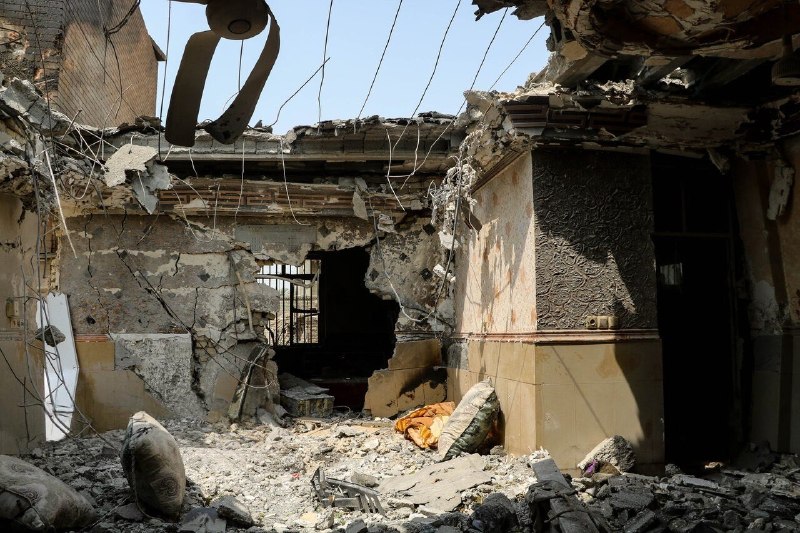
At 22:06 UTC on 16 July 2026, the office of the Hormozgan Province governor told Iranian outlets that an electrical substation on Kish Island had malfunctioned following US strikes on the island earlier that evening, cutting power to part of the free-trade zone. The Tasnim News Agency, carried in English by the Open Source Intel Telegram channel at 22:03 UTC, framed the same sequence: a damaged substation, a localised outage, no further detail on the wider grid. The two accounts match in their outline and diverge only in vocabulary, and the vocabulary is itself part of the story.
The strikes did not, on the evidence available tonight, hit a refinery, a petrochemical complex, or the desalination and power generating assets that sustain the mainland grid. They hit an island with a population in the low tens of thousands, a duty-free bazaar economy, and a strategic location roughly fifteen kilometres off Iran's southern coast. The damage reported so far is electrical, not industrial. That distinction matters, because the reading of this incident in Washington, in Tehran, and in the energy desks of every major trading house will turn on what kind of target Kish Island is judged to be.
What is actually known
Two Iranian-language channels reported the outage in real time and they agree on the basics. The Hormozgan Province governor's office, cited by The Cradle Media's Telegram feed at 22:06 UTC, attributed the malfunction directly to "tonight's violent US attacks on Iran" and described a power cut in one part of the island. Tasnim, Iran's state-aligned news agency, gave a narrower characterisation through Open Source Intel at 22:03 UTC: a substation damaged, a localised outage, no reference to the wider Iranian grid. Neither channel claims casualties, neither claims damage to oil or gas infrastructure, and neither provides a count of the strikes involved.
What the sources do not say is at least as informative as what they do. There is no Iranian claim that export terminals at Bandar Abbas were touched. There is no claim that the Kharg Island loading complex, which handles the bulk of Iran's crude exports, was involved. There is no confirmation yet from US Central Command or the Pentagon, and therefore no authoritative count of munitions, platforms, or intended targets. The Cradle's framing of "violent US attacks" is also a framing choice; Tasnim's reporting sticks to the physical damage. That divergence is small but typical: outlets closer to the Iranian state tend to escalate the political language, outlets closer to the security services tend to keep the language clinical.
The geography does the rest of the work. Kish sits in the eastern part of the Persian Gulf, well inside Iranian territorial waters, and is connected to the mainland by short-hop flights and a maritime shuttle rather than by a power interconnector of any significant capacity. A substation failure there is contained by default. The Strait of Hormuz, the chokepoint that does the global economy's heavy lifting, lies roughly two hundred kilometres to the south, and its shipping lanes were not, on the evidence available at the time of writing, reported as disrupted.
The framing battle
Coverage of US action against Iran has, for two decades, split into two grammars. The first treats Iranian territory as a closed military problem, with kinetic action as a measurable engineering input and damage as the output. In that grammar, Kish Island tonight is a target set: a radar installation, a Revolutionary Guards facility, a drone-storage site, an electrical node that services any of the above. The grammar demands no political narrative, only a target package and an effect.
The second grammar treats any strike on Iranian soil as a political event first, a military one second. In that reading, the same package of strikes becomes an escalation measured not in megawatts lost but in the temperature of the relationship between Washington and Tehran. The Cradle's choice of "violent US attacks on Iran" rather than the blunter "US strikes on Iranian targets" is the grammar in motion: the headline insists that the civilian infrastructure of an inhabited island was hit, and that the fact of hitting it is the news, regardless of what was being targeted inside it.
Neither framing is wrong on its own terms. A staff report written in the first grammar would note the substation damage in a single sentence and move to the operational picture. A report written in the second would lead with the substation damage precisely because it shows that the strike package reached populated, economic, civilian infrastructure on a recognised Iranian island. The decision about which grammar to lead with is, in practice, a decision about which audience the writer serves.
The corridor underneath the story
Strip the rhetoric away and the underlying asset is still the Strait of Hormuz. Roughly a fifth of seaborne oil passes through it on any given day; insurance rates, freight premia, and LNG netbacks all move on perceptions of its security. A strike package that touches a substation on Kish Island, without touching Kharg, without touching the loading terminals at Bandar Abbas, and without touching the petrochemical cluster at Asaluyeh, reads in trading rooms as a calibrated message rather than a campaign. Calibrated messages are intended to move prices and positions, and they do: the next morning's open in Brent and in Middle East distillate spreads will price the message as well as the damage.
This is the longer pattern that tonight sits inside. The United States, over successive administrations, has used the threat of force against Iranian energy infrastructure as a substitute for action against it. Sanctions architecture, naval presence, and periodic kinetic episodes have together produced an equilibrium in which Iranian oil still flows, but at a discount, and in which any given week can produce an incident that spikes insurance premia without producing a sustained disruption. Tonight's substation failure is consistent with that equilibrium: it is severe enough to register, contained enough not to redraw the map.
The pattern is not sustainable in the direction both sides want. Tehran's incentive is to convert any incident into evidence that the United States is striking civilian infrastructure, because that evidence sustains the political framing inside Iran and among its regional partners. Washington's incentive is to keep the incident deniable as a stand-alone event, because escalation breaks the equilibrium that has, until now, kept the Strait open at roughly normal throughput. The substation damage on Kish Island is small. The argument about what it means is not.
What remains uncertain
Several pieces of the picture are not yet on the record. The sources do not specify how many munitions struck Kish Island, nor whether the substation was the intended target or collateral damage. They do not say whether the outage is fully resolved. They do not include any casualty count, and they do not address whether Iran has filed a complaint through any diplomatic channel. The Pentagon and US Central Command had not, at the time of writing, released a public statement on the strike package; Reuters, the Associated Press, and the wires have not yet added their own on-the-ground reporting, which means the next several hours of coverage will determine whether tonight's incident becomes a discrete event or the first chapter of a longer one.
The energy market will price the uncertainty before the facts arrive. That is the usual order. The unusual feature tonight is the target: a substation on a populated island, in a province that also hosts Iran's main export corridor. A staff read is that the damage is local, the framing is contested, and the corridor itself remains open. The next filing from Hormozgan, or the first confirmed Pentagon readout, will tell us whether that read holds.
This publication has reported the Hormozgan governor's office characterisation and Tasnim's narrower substation framing in parallel, rather than collapsing them into a single line, because the divergence is itself the story.
Wire provenance
This editorial synthesis draws on the following public wire/social posts:
- https://t.me/thecradlemedia
- https://t.me/osintlive
- https://en.wikipedia.org/wiki/Kish_Island
- https://en.wikipedia.org/wiki/Strait_of_Hormuz
- https://en.wikipedia.org/wiki/Hormozgan_Province
Follow the event.
These dated source records provide context. They do not retrospectively verify this archive article.
Separate what the nuclear watchdog reported from what it could not determine after the June 2025 strikes.