Iranian strikes hit US-linked targets across four Gulf states in single night
Iranian state-aligned outlets reported coordinated missile and drone attacks against American interests across Saudi Arabia, Kuwait, Jordan and Bahrain on the night of 17 July 2026, with one source citing a US official confirming an Iranian ballistic missile strike on a Saudi base.
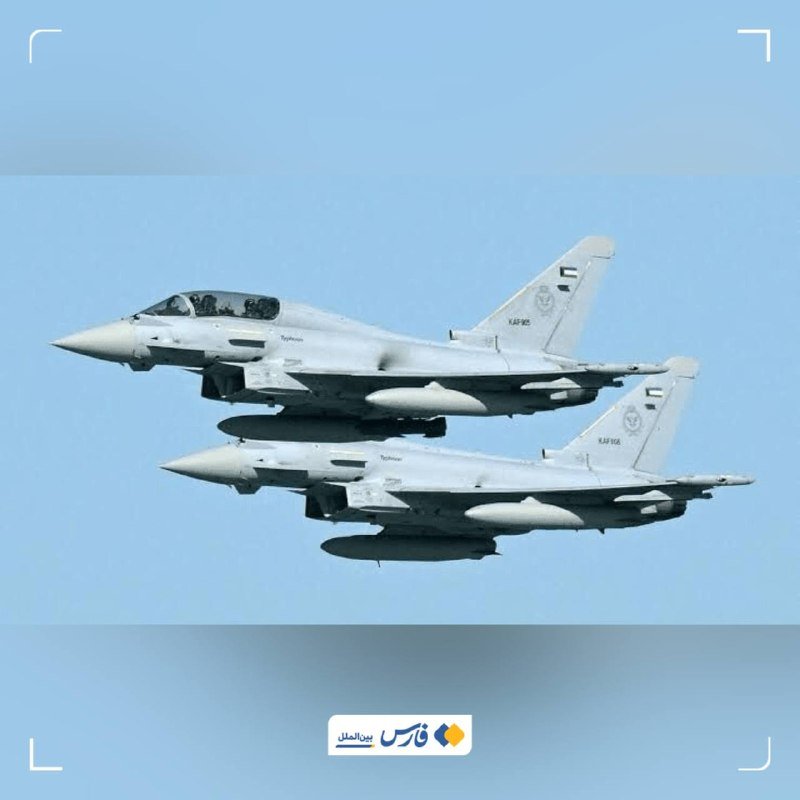
Iranian state-linked outlets reported on the night of 17 July 2026 that the Islamic Republic had launched simultaneous missile and drone attacks against American interests across at least four countries, with explosions reported in Saudi Arabia, Kuwait, Jordan and Bahrain within a 25-minute window. The reporting, carried by Fars, Tasnim and other outlets that translate Iranian state positioning to an Arabic-language audience, marked the broadest regional salvo attributed to Tehran in the current escalation.
What is being claimed, by whom, and against which targets carries real weight, because the same outlets have previously amplified Iranian strikes that later proved either narrower in scope or contested in detail. The reporting this time is denser, more granular, and sourced by name to an unnamed American official. That alone makes the episode worth treating as a discrete event rather than as ambient noise from a noisy information environment.
The 25-minute window
The first signals landed at 23:21 UTC on 17 July, when Fars News Agency's Arabic channel reported that Arab media were tracking "a massive missile and drone attack against American interests and bases in Saudi Arabia" then underway, with some sources flagging an explosion at the industrial port of Yanbu on the Red Sea coast. Five minutes later, at 23:26 UTC, the same outlet relayed what it described as a US official: Iran had "targeted the American base in Saudi Arabia with a ballistic missile," and that explosions had been heard inside Jordan. Six minutes after that, at 23:27 UTC, Fars reported that attacks on Kuwait and Jordan were continuing, and at 23:42 UTC, Tasnim added Bahrain to the list, citing Arab sources reporting an explosion inside the kingdom.
The cluster of timestamps, with Telegram channels that compile Iranian state-aligned reporting and Arabic-language wire pickups, does not by itself prove the strikes happened. It does establish that the claims were coordinated and convergent across at least three outlets, all of them closely aligned with the Iranian state narrative, and that the geographical spread described (four sovereign states in a quarter-hour) is unusually broad for routine tit-for-tat exchanges.
What the reporting claims struck
Two target sets recur. The first is explicit: American bases. Fars cited "the American base in Saudi Arabia" as the destination of an Iranian ballistic missile, a formulation that matches Iranian state messaging during earlier rounds and that locates the strike inside the kingdom's network of facilities hosting US personnel. The second is implicit but consistent: energy and dual-use infrastructure. The reference to Yanbu, a major Saudi petroleum and petrochemical export hub on the Red Sea, sits inside an Iranian signalling pattern that has previously flagged Gulf oil infrastructure as in-scope, particularly during the 2019 Abqaiq-Khurais episode and a series of Houthi-attributed strikes on Saudi facilities since 2022.
Kuwait, Jordan and Bahrain are reported as additional impact locations in the same window, but the thread items do not specify which facilities were struck, what damage occurred, or whether any of the attacks hit military targets versus civilian areas. That gap is the single most important caveat on the entire episode.
Why Iranian-aligned outlets are reporting it this way
Iranian state-adjacent media have a discernible pattern in how they cover strikes attributed to Tehran. They move fast, attribute the action to anonymous American or "enemy" officials where possible, and bundle multiple simultaneous operations into a single frame to project an image of reach. The pattern is not random; it is aimed at three audiences.
The first is domestic. Inside Iran, a coordinated multi-country salvo reads as restored deterrence after years of attritional exchanges and Israeli strikes on Iranian territory. The second is the regional audience that consumes Arabic-language Fars and Tasnim feeds: Gulf publics, Iraqi Shia militias sympathetic to Iran, and Lebanese Hezbollah's media ecosystem, which retranslates Iranian positioning for Arab viewers. The third is the United States. The deliberate naming of an "American official" as a source is the kind of attribution that lets an Iranian-aligned outlet claim the strike was confirmed by Washington without committing Iran to a formal statement that could be retracted.
What Western reporting has not yet confirmed
None of the four target states had, at the time of writing, issued public confirmation of incoming Iranian missile or drone strikes within their territory. The Saudi, Kuwaiti, Jordanian and Bahraini governments, the US Central Command, and the Bahrain-based US Naval Forces Central Command (NAVCENT) had not posted corroborating statements inside the window covered by the thread items. The Iranian-aligned reporting is also absent from wire pickups by mainstream Western outlets in the thread bundle, which is unusual for an event of this scale if the strikes were as broad as described.
That does not make the reporting false. Iran has, in past episodes, released claims ahead of or instead of official confirmation in target states, a tactic designed to manage escalation. It does mean the episode is, right now, sourced almost entirely from one side of the information environment, and any responsible account has to flag that. A reader who only follows Iranian state-aligned feeds could reasonably conclude the four-country salvo is fully confirmed; a reader who only follows Western wires could miss it entirely. Both readings are incomplete.
What the episode sits inside
Iran and the United States have spent the better part of two years inside a tit-for-tat cycle that began with strikes on Iranian proxy assets and accelerated after Iran launched its first direct military attack from its own territory in the early days of the broader Middle East war. The pattern that has emerged is asymmetric: Iran prefers short, demonstrative salvos against US and Israeli interests while reserving escalation space. The Gulf monarchies sit inside that pattern as the geographic backbone of US forward deployment in the region, and as a recurring theatre for Iranian signalling.
A salvo that hits four states in twenty-five minutes, if confirmed, would mark a meaningful upgrade in scope. A salvo that hits one base and produces sympathetic reporting across three outlets is a familiar operational tempo. The thread evidence is consistent with either reading, and it is precisely that ambiguity that makes the next twelve hours consequential. Confirmation by Saudi Arabia's defence ministry, by US Central Command, or by any of the four affected states would settle the question in one direction. Silence from all of them would leave the Iranian claim standing without external corroboration, which is itself an outcome Tehran's information strategy can exploit.
The stakes over the next week
If the strikes land as described, three immediate second-order moves follow. The Gulf monarchies, particularly Saudi Arabia and the UAE, will face pressure from Washington to either publicly confirm or publicly deny the strikes, with the answer shaping how much cover they retain for diplomatic positioning. Oil markets, already on edge over Iranian proxy threats to Gulf shipping through the Strait of Hormuz, will reprice if any of the strikes touched energy infrastructure, and Yanbu is on that list. And the Iranian domestic political system, currently mid-transition in its foreign-policy decision-making, will use confirmed targeting for leverage in any back-channel negotiation that survives the night.
The narrower reading of the thread items is that Iranian state media has produced an unusually broad and internally consistent claim about a salvo the international community will spend the next 12 to 24 hours trying to verify. The wider reading is that, verified or not, the claim itself is a unit of Iranian statecraft.
*Desk note: Monexus has chosen to lead the thread as reported by Iranian state-adjacent outlets and named each of them by outlet rather than by inline attribution, on the ground that the news value of the episode is the claim itself, sourced to those outlets, rather than any independently corroborated fact pattern. Western wire outlets have not yet confirmed the strikes at time of publication.
Wire provenance
This editorial synthesis draws on the following public wire/social posts:
- https://t.me/tasnimplus
- https://t.me/farsna
- https://t.me/FarsNewsInt
- https://en.wikipedia.org/wiki/Yanbu
- https://en.wikipedia.org/wiki/US_Central_Command
- https://en.wikipedia.org/wiki/Abqaiq%E2%80%93Khurais_attack
Follow the event.
These dated source records provide context. They do not retrospectively verify this archive article.
Separate what the nuclear watchdog reported from what it could not determine after the June 2025 strikes.