Rubio puts air-defence interceptors at the centre of US Middle East posture, draws a public line on Iran-Russia alignment
In remarks circulated by Telegram channels on the afternoon of 2 September 2026, US Secretary of State Marco Rubio cast interceptor missiles as the planet's most sought-after weapon and publicly conceded US-Russia disagreement over Iran.
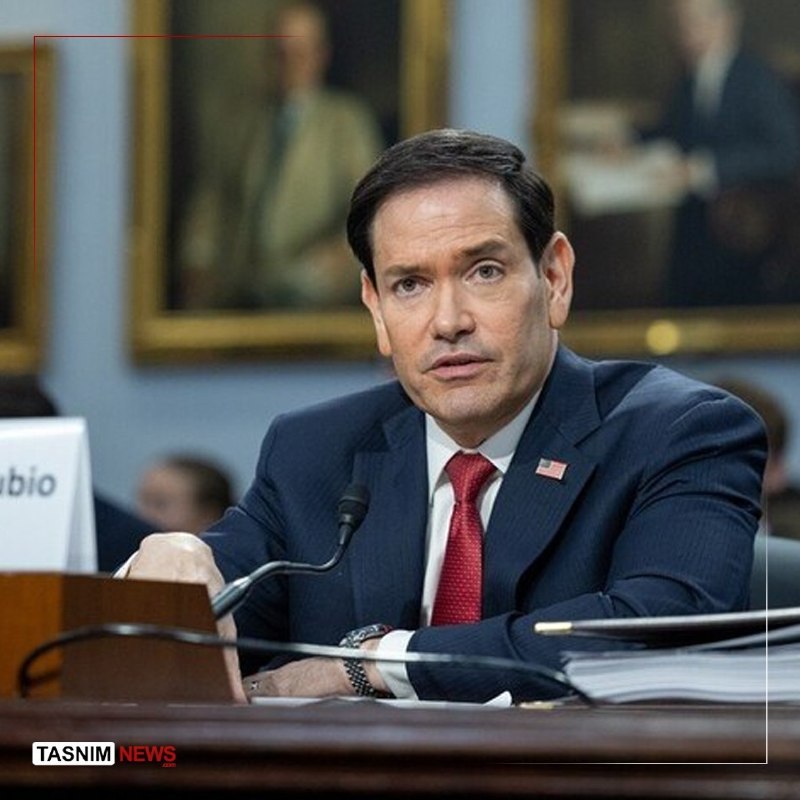
On the afternoon of 2 September 2026, US Secretary of State Marco Rubio did something the State Department rarely does in plain sight: he named a weapons category, named the demand for it, and named the two great-power relationships where Washington's patience is thinnest, all in the same news cycle. In remarks circulated by the Telegram channel wfwitness between 15:42 and 15:56 UTC, and by ClashReport at 15:42 UTC, Rubio said "the whole world is asking for more air interceptors," described the munition as "the number one defence need on the planet, not just for Ukraine," and told reporters that countries in the Middle East are seeking the same class of system (ClashReport, 2 September 2026, 15:42 UTC; Tasnim News English, 2 September 2026, 16:36 UTC).
The practical admission underneath the rhetoric is one of stockpile arithmetic. Rubio said the United States must first ensure its own reserves before supplying others, framing the constraint in plain language. He bundled that scarcity message into two sharper, quieter points about Russia and Iran: that Washington and Moscow are "not aligned" on Iran, and that "nothing that anyone is providing Iran is in any way impeding our ability to act as necessary to protect the United States" (ClashReport, 2 September 2026, 15:37 UTC; wfwitness, 2 September 2026, 15:50 UTC). The two statements sit in tension by design. They mark the public edge of a posture in which air-defence capacity, sanctions enforcement and great-power management are no longer separable files.
A stockpile problem wearing a diplomatic face
The interceptor question is not new. What is new is Rubio's willingness to treat it as the lead item of a press appearance rather than a sidebar. "The whole world wants more air interceptors," he said. "This has become the number one defence need on the planet, not just for Ukraine" (Tasnim News English, 2 September 2026, 16:36 UTC). The qualifier matters. By naming Ukraine explicitly and bracketing it inside a planetary demand, Rubio framed Patriot and SM-3-class systems as a global public good that the United States alone can underwrite at scale.
For Middle Eastern partners, the message lands in a specific procurement lane. According to the same set of remarks, regional governments are now in the queue for finite American production, and the State Department is no longer pretending the queue is comfortable. "First, we must ensure our own stockpiles," Rubio said, in lines carried by Tasnim's English feed (Tasnim News English, 2 September 2026, 16:36 UTC). The signal is direct: regional demand for interceptors now competes for finite US production capacity, and Washington is saying so out loud.
The Russia-Iran line, drawn in public
Rubio's comments on Russia are the more consequential passage, because they concede a disagreement on Iran that the rest of the appearance does not soften. "In the case, unfortunately, of Iran, we're not aligned with the Russians and the Russian system in terms of their view of the situation," he told reporters, in a line broadcast twice within minutes by wfwitness (wfwitness, 2 September 2026, 15:50 UTC; wfwitness, 2 September 2026, 15:52 UTC). The word "unfortunately" does structural work in the sentence: it signals that Washington would prefer alignment and cannot get it, rather than that alignment has been formally renounced.
The same appearance produced the second Russia-Iran passage, in which Rubio pushed back against the suggestion that any third-party assistance to Iran is constraining American freedom of action. "Nothing that anyone is providing Iran is in any way impeding our ability to act as necessary to protect the United States," he said, in remarks carried by ClashReport and echoed by wfwitness (ClashReport, 2 September 2026, 15:37 UTC; wfwitness, 2 September 2026, 15:54 UTC). Read alongside the sanctions-enforcement language that followed minutes later, the pair of statements describes a posture that pairs deterrence pressure on Tehran with an insistence that the United States retains freedom of action, whatever Moscow or anyone else is doing for Iran.
Monexus analysis: the bundled effect of the four passages is to make scarcity the headline, the Russia-Iran divergence the constraint on future movement, and the sanctions warning the enforcement backstop. The pattern is consistent with a State Department that has decided to manage allied expectations about air defence through public acknowledgement of scarcity rather than through quiet rationing. That is a reading of the appearance; the available source items do not contain a State Department readout confirming intent.
The sanctions third rail
At 15:56 UTC, wfwitness posted Rubio's sanctions language, which moves from generality to instruction. "No country should be helping Iran evade sanctions. No country should be out there helping them create mechanisms by which they can" (wfwitness, 2 September 2026, 15:56 UTC). The line cuts off in the circulating clip, but the verb construction is plain: Washington is publicly warning third countries against standing up alternative mechanisms for Tehran. The available source items do not specify which countries Rubio had in mind, nor whether he named any in the full remarks that the clip does not capture.
What we verified / what we could not
The quoted material in this article is drawn from three Telegram channels that circulated short clips of Rubio's 2 September 2026 press appearance: wfwitness, ClashReport, and Tasnim News English. The clips are consistent across the three feeds on the substantive passages cited above, including the air-defence framing, the Russia-Iran alignment line, and the sanctions language. Two qualifications apply.
First, the available source items do not specify the venue of Rubio's remarks, the moderator or interviewer, the full transcript of the exchange, or whether the appearance was a press conference, a televised interview, or a corridor remark. The Telegram posts are presented as direct quotation but are circulated as clips rather than as a published State Department transcript, so Monexus treats them as relay material and has lowered certainty on any characterisation of the primary event beyond what the quoted words themselves support. Second, the sanctions line in the wfwitness clip is cut mid-sentence. The full predicate clause is not present in the available source material, so any characterisation of what follows "create mechanisms by which they can" rests on the visible fragment only.
On the substantive question of whether the United States and Russia are publicly at odds on Iran, the cited Telegram posts are consistent with each other on the specific words Rubio used; the available source items do not, however, contain a Russian government response to the specific remarks of 2 September 2026, and Monexus has not independently established whether Moscow has issued one in the hours since the appearance.
The shape of the next seventy-two hours
Three tracks now move in parallel. The first is interceptor allocation: how the United States sequences deliveries to Ukraine, Gulf partners and its own forward-deployed forces is now a documented public question rather than a procurement secret. The second is the Russia channel: Rubio has named the disagreement, which raises the cost to Moscow of any visible move that helps Iran financially or militarily, and raises the cost to Washington of any visible move that looks like it is trading Ukraine support for Russian cooperation on Iran. The third is the sanctions perimeter: the wfwitness clip is a warning to third countries that the United States intends to police evasion rather than tolerate it.
The honest uncertainty is whether any of the three tracks is actually new. Rubio has been saying versions of all three since taking office, and air-defence scarcity has been a known constraint in coverage of the war well before 2 September 2026. What is new is the bundling: a single appearance in which stockpile honesty, Russia-Iran divergence and sanctions enforcement are presented together, in plain language, with the word "unfortunately" doing the work that formal demarches usually do.
Monexus framed this around Rubio's own sequencing of remarks rather than the Iranian-state framing Tasnim applied to its repost; the quoted substance is the same across feeds, but the editorial emphasis on interceptor scarcity as the lead item is Monexus's, not the wire.
Wire provenance
This editorial synthesis draws on the following public wire/social posts:
- https://t.me/ClashReport/94742
- https://t.me/ClashReport/94739
- https://t.me/wfwitness/109494
- https://t.me/wfwitness/109495
- https://t.me/wfwitness/109496
- https://t.me/wfwitness/109497
- https://t.me/tasnimnews_en/33958