Iran's IRGC claims strike on US special operations site near al-Tanf as US air campaign enters sixth night
Tehran says it hit a US command center in southern Syria. A Syrian military source puts the impact off-base. The discrepancy matters because it lands on the same night US strikes on Iran resumed.
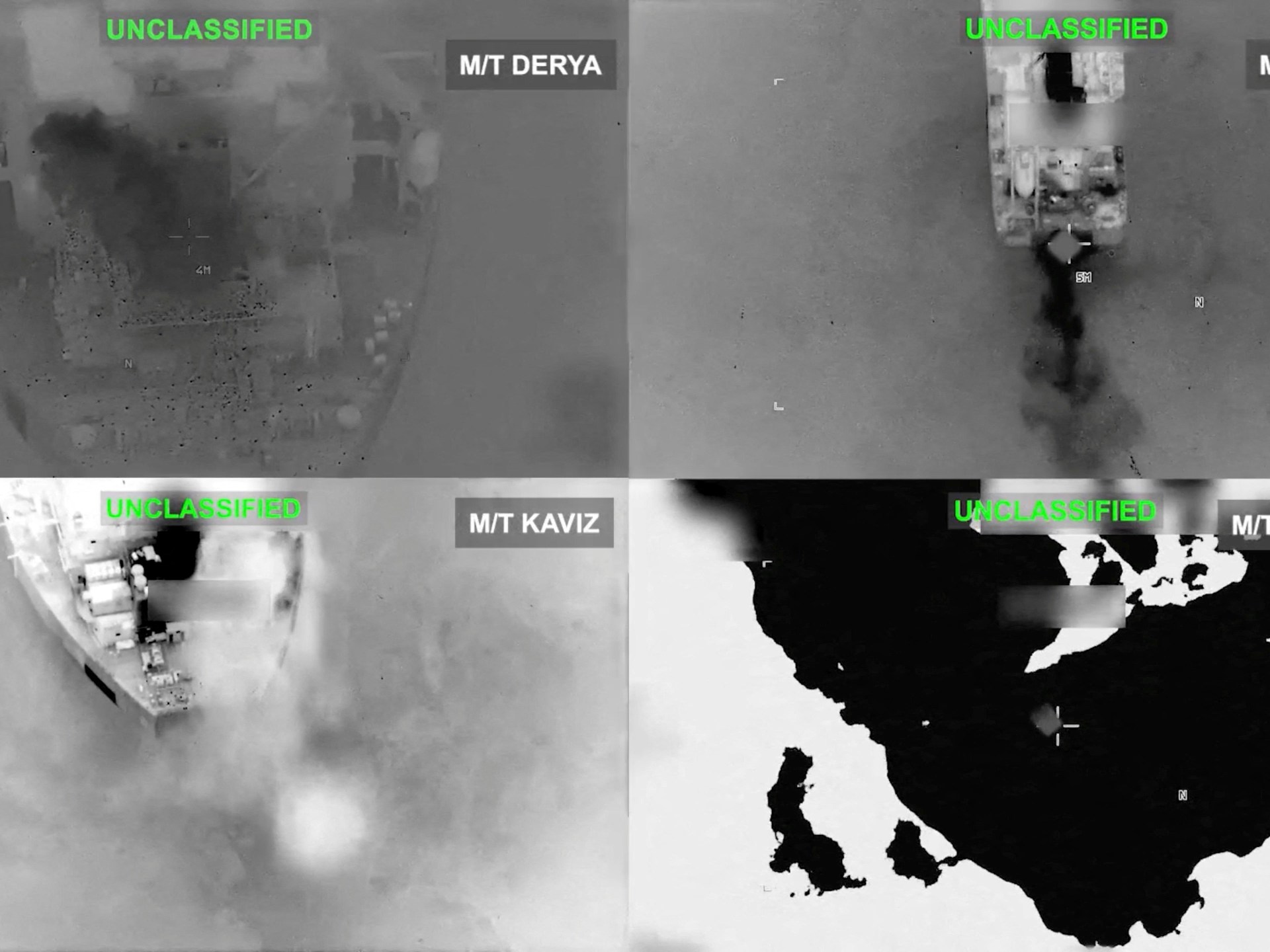
The Islamic Revolutionary Guard Corps said on 17 July 2026 that it had carried out a surprise attack on a United States special operations command center in Syria's al-Tanf region, claiming the strike destroyed a radar system and several helicopters. The announcement, carried by Iran-aligned channels, came on the sixth consecutive night of US strikes on Iranian territory and amounted to the first publicly claimed Iranian strike inside Syria since the current war began. Reuters, citing its own reporting, separately confirmed that Iran struck eastern Syria in what it called the first such attack during the conflict. A Syrian military source told Middle East Eye that the IRGC carried out the attack near al-Tanf but not on the US base itself. That disagreement, between the Iranian claim of a direct hit on a US position and the Syrian account of a strike in the surrounding area, is the single most important fact in the day's reporting, because it determines whether the episode is a symbolic message or an escalation that the United States cannot ignore.
The pattern on the ground is straightforward. Iran is hitting back against a US air campaign that is now in its sixth night, and it is doing so on a frontier that both sides treat as a live front. Al-Tanf sits in the tri-border area of Syria, Iraq and Jordan, hosts a US garrison inside a 55-kilometre deconfliction zone, and has been a recurring flashpoint since the early years of the Syrian civil war. Striking near the base, rather than the base itself, would let Tehran claim retaliation without triggering a US counter-escalation; striking the base would foreclose that off-ramp. The Syrian military source's read, that the impact was off-base, is the more stabilising of the two accounts. The IRGC's claim, that the target was a US special operations command center, is the more escalatory.
What the IRGC says it hit
The IRGC's statement, circulated in the morning of 17 July, described the operation as a surprise attack on a US special operations command center in the al-Tanf region and asserted that a radar system and several helicopters were destroyed. The claim was distributed through Iran-aligned outlets and aggregators, and Reuters treated it as significant enough to confirm that Iran had struck eastern Syria during the current war, a formulation that puts the attack on the record without endorsing the IRGC's specific battle-damage assertions. The wording matters. The IRGC did not say it struck the al-Tanf garrison; it said it struck a US special operations command center in the al-Tanf region, language broad enough to cover facilities and staging areas in the surrounding desert as well as the base perimeter itself.
What the Syrian account adds
Middle East Eye's reporting, attributed to a Syrian military source, sharpens the picture in the opposite direction. The strike, the source said, was carried out near al-Tanf but not on the base. That is a meaningful distinction in the escalatory geometry of the war: a US installation on Syrian soil is a protected site under the deconfliction arrangements Washington has maintained with Damascus and Moscow; a position in the surrounding desert is not, in any operational sense, American sovereign territory. The Syrian account also fits the broader shape of the day, in which Iran is signalling resolve to a domestic and regional audience while keeping the door open to de-escalation with Washington.
The geometry of a sixth night
The strike on Syria did not arrive in isolation. The same 17 July cycle that brought the IRGC announcement also brought a sixth consecutive night of US air operations against targets in Iran, framing the al-Tanf episode as a piece of a two-way air campaign rather than a one-off. In that geometry, Iran's choice of al-Tanf is not arbitrary. The garrison sits on a logistics corridor that has, for over a decade, been used to interdict Iranian ground lines running from Tehran through Iraq into Syria and on to Hezbollah in Lebanon. Striking near the base is a way of reminding Washington that the supply architecture of Iran's regional position is itself a target, without forcing a direct US-Iran confrontation on the ground.
The structural reading is straightforward. When a great power conducts a sustained air campaign against the territory of a regional power, the regional power will, if it can, look for a way to retaliate that imposes political cost without triggering a wider war. Iran's choice of an Iranian-aligned channel for the announcement, combined with a strike described by a Syrian source as off-base, fits that pattern. It is escalation by signalling, not escalation by contact.
What remains contested
Two things are not yet settled. The first is the battle damage. The IRGC says radar and helicopters were destroyed; no independent imagery has been published to confirm or refute that. The second is the precise location. The IRGC says a US special operations command center; the Syrian military source says near, not on. Until the Pentagon briefs, or satellite imagery surfaces, those two accounts will sit in tension. The more stabilising reading, that the strike landed off-base and the IRGC's framing of the target is a political claim rather than a geographic one, is the reading a prudent reader should hold provisionally.
A third point is worth flagging because it is easily missed. The al-Tanf episode lands on the first day that the IRGC has publicly claimed an attack inside Syria during the current war. That makes it a precedent as well as an event. The next Iranian retaliation, when it comes, will be measured against this one. If the United States treats an off-base strike as costless, future strikes are more likely. If Washington treats a claim of a direct hit as proven without independent evidence, the escalatory ratchet turns the same way in reverse. The room between those two errors is, for now, where the war's near-term trajectory will be set.
Desk note: Monexus treats the IRGC's claim and the Syrian military source's account as competing primary statements, with Reuters's confirmation of an Iranian strike inside Syria as the wire-level anchor. The piece runs lighter on battle-damage language than the Iran-aligned channels and lighter on US posture language than the Western wires, because neither has been independently verified at the time of publication.
Wire provenance
This editorial synthesis draws on the following public wire/social posts:
- https://t.me/wfwitness
- https://en.wikipedia.org/wiki/Al-Tanf_Garrison
- https://en.wikipedia.org/wiki/Islamic_Revolutionary_Guard_Corps
Follow the event.
These dated source records provide context. They do not retrospectively verify this archive article.
Separate what the nuclear watchdog reported from what it could not determine after the June 2025 strikes.