Nine nights over Iran: what CENTCOM's escalation actually targets
A ninth consecutive night of US strikes on Iranian military sites, three American dead in the latest exchange, and a chokepoint closure Tehran says it will not lift. The pattern is no longer a campaign. It is a posture.
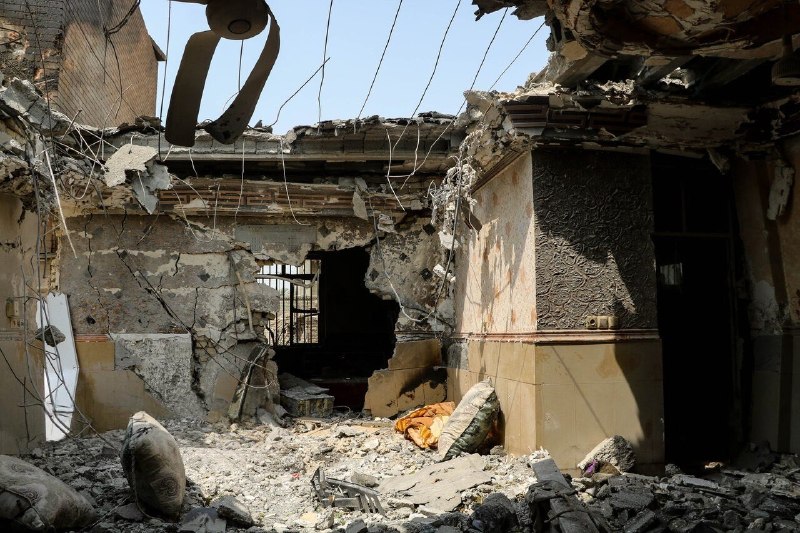
At 7 p.m. Eastern Time on 19 July 2026, US Central Command opened a new wave of strikes against Iranian military targets, the ninth consecutive night of bombardment since talks in dispute over a memorandum of understanding on the Strait of Hormuz collapsed. The escalation, announced by CENTCOM on X and carried by ELINT aggregators at 10:24 UTC on 20 July, is no longer a discrete campaign. It is a posture. Three US service members have been killed in the latest round of exchanges, according to NPR reporting dated 20 July 2026.
What the world is watching is not a single air campaign but a slow grinding contest over a 21-mile-wide waterway through which roughly a fifth of global oil moves on a normal day. Iran says the strait will remain shut as long as "US malice" persists. Washington says it is degrading the very capabilities that threaten the waterway. Both sides are now describing a process, not an event.
What nine consecutive nights actually targets
CENTCOM's language has been deliberately narrow. Strikes are framed as operations against Iranian military capabilities, not the Iranian state. That distinction matters operationally and politically. A nine-day rhythm, repeated daily at roughly the same hour, signals a calibrated tempo intended to attrit specific assets: air defence nodes, missile production lines, naval infrastructure on the Gulf coast, and the command-and-control links that knit them together.
What the public thread does not specify, and what remains contested, is the cumulative effect. CENTCOM's daily social-media updates emphasise continuity and degradation. Iranian state-aligned channels emphasise defiance and continuity of capability. Without independent battle-damage assessment, the gap between the two framings is the campaign's most consequential uncertainty.
The Hormuz dispute that broke the talks
The proximate trigger, by NPR's account, was a memorandum of understanding focused on the Strait of Hormuz. The text is not public. What is public is Iran's insistence, repeated on 20 July by foreign ministry spokesperson lines circulated through IRNA English, that Tehran "is determined to implement all necessary measures to uphold its sovereignty and prevent any misuse of the Strait of Hormuz that could threaten its national interests." That language frames closure not as aggression but as stewardship, a posture consistent with Iran's long-standing position that the waterway's security is inseparable from its own.
The American counter-frame is that Iranian closure of the strait, partial or otherwise, is itself the aggression, and that degrading the capacity to impose closure is a legitimate defensive objective. Each side reads the other as the disruptor. That symmetry of grievance is what has made the diplomatic track so resistant to restart.
What the closure actually means in oil markets
Even a partial or rhetorical closure of Hormuz reroutes tanker traffic, lengthens voyages, and lifts freight and insurance premia. The Polymarket feed cited Iran's declaration that the strait will remain blocked as long as "US malice" persists, treating the statement as a tradable signal rather than a posture. That is the new reality of a kinetic dispute: the same sentence is simultaneously a diplomatic position and a market-moving event.
The structural fact is that no power, including the United States, can fully replace the throughput Hormuz provides on a normal day. Pipeline alternatives through the Gulf and through Israel and the Eastern Mediterranean exist, but at single-digit percentage scale. A sustained disruption does not require Iran to seal the strait completely; intermittent harassment of tankers is enough to push insurance rates to levels that reroute traffic on their own.
What remains uncertain, and what to watch next
Three things are not yet established by the public record. First, the specific Iranian assets destroyed in the nine-night campaign. CENTCOM's nightly updates name categories; independent verification, from satellite imagery or from regional defence attachés, has not been published in the thread. Second, the contents of the disputed memorandum. Until the text or a credible summary emerges, both sides can claim it vindicated their position. Third, Iran's escalation ladder. Tehran has shown restraint at the level of direct strikes on US bases. Whether that restraint holds as the body count of American service members rises, three confirmed so far according to NPR, is the question that will define the next 72 hours.
The plausible alternative read is that this is a pressure campaign designed to bring Iran back to a memorandum Washington can sign, not a march to regime change or ground invasion. The dominant framing, US strikes degrading Iranian capability, holds operationally. But the political test is whether degradation on the ground produces concession in a ministry in Tehran, or whether it produces a longer, lower-intensity war of position the world's oil markets cannot afford.
A useful tell will be whether the nightly rhythm breaks. If CENTCOM's tempo holds into a tenth and eleventh night, the campaign has become the policy. If it pauses, talks have a window.
How Monexus framed this: the wire led on the three US deaths and the collapse of diplomacy. We led on the cumulative pattern, because after nine nights the news is the rhythm, not the raid.
Wire provenance
This editorial synthesis draws on the following public wire/social posts:
- https://t.me/s/osintlive
- https://t.me/s/Irna_en
- https://x.com/polymarket/status/
Follow the event.
These dated source records provide context. They do not retrospectively verify this archive article.
Separate what the nuclear watchdog reported from what it could not determine after the June 2025 strikes.