Nine nights over Iran: what the strike cycle is actually doing
A ninth consecutive night of US strikes on Iran, an American soldier killed by an Iranian drone in Iraq, and a Strait of Hormuz standoff now rewriting the cost of moving oil.
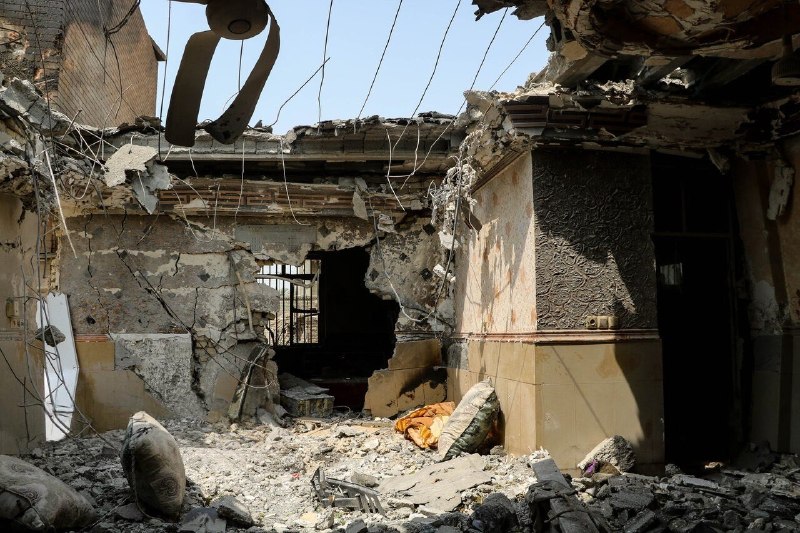
At 09:21 UTC on 20 July 2026, Al Jazeera English reported the United States had bombed Iran for a ninth consecutive night, a tempo of firepower that has now outlasted the first week of any open US-Iranian exchange since 1988. Two minutes earlier, the same outlet said an American service member had been killed in Iraq during what officials described as a "controlled detonation" of an Iranian drone, and by 09:27 UTC footage of the night's strikes was being released from the US side of the operation. The pattern matters more than any single target list: a sustained nightly cadence, a widening geographic footprint, and the first US combat fatality from an Iranian munition since direct exchanges began.
What is unfolding is not a single operation but a slowly compounding one, and the freight on the Strait of Hormuz is now doing what sanctions and diplomacy failed to do over two years of negotiations: pricing in a real risk of closure.
The shape of the nightly strikes
A nine-night arc is a deliberate artefact of military planning. Air planners prefer to sustain pressure in nightly windows rather than deliver a single overwhelming blow, both to deny the defender a recovery day and to allow targeteers to walk down a pre-built kill list. The Al Jazeera English footage released at 09:27 UTC on 20 July confirms the tempo has not slowed into a consolidation phase. By the second week of an air campaign, officials usually substitute fresh strike packages for the opening salvo; the fact that the cadence is being publicly broadcast through American outlet feeds rather than denied or downplayed suggests the political message, not just the military one, is part of the delivery.
The geography matters. Strikes on Iranian territory, Iranian-linked materiel in Iraq, and Iranian-proxy logistics in Syria have, in the space of a week, created a multi-axis targeting picture that defenders struggle to sequence. Iranian air defences are optimised against an Israeli-style raid profile: a few packages, high-altitude, identifiable. A nine-night sustained campaign produces a different demand curve on radar crews, surface-to-air missile reloads, and command-and-control bandwidth.
The Iraq line
The most consequential new data point in the 20 July thread is the death of an American service member in Iraq at 09:23 UTC, attributed by Al Jazeera English to detonation of an Iranian drone. The language matters: a "controlled detonation" framing implies the munition was already in US custody when it went off, rather than a strike on a US position. Either way, the casualty marks the first US combat fatality from an Iranian weapon system since direct US-Iranian exchanges resumed, and it lands inside Iraq, on Iraqi soil, under an Iraqi government that has publicly refused to be a launchpad for either side of the confrontation.
Baghdad's silence so far has been loud. Iraqi officials have spent months negotiating a long-term arrangement with Washington that ties US force levels to Iranian de-escalation; the political cost of an American body bag arriving from an Iranian munition on Iraqi ground is exactly the cost that arrangement was designed to avoid. Iraqi Shia factions with links to Tehran now have a domestic rallying point, and Sunni factions have a security grievance that, for once, points the same way.
Hormuz as the real battlefield
The headline target list inside Iran is the visible war. The consequential one runs through the Strait of Hormuz. Al Jazeera English's 09:21 UTC bulletin framed the strikes alongside escalating Hormuz tensions, in that order, and the sequencing is the story. Roughly a fifth of the world's seaborne crude transits the strait; insurance and freight markets read those two phrases in immediate combination. War-risk premia for tankers transiting Hormuz have, in past episodes of credible closure threat, multiplied inside a single trading session; shipowners have diverted around the Cape of Good Hope at three times the steaming time and at a freight premium that ends up in retail diesel.
Tehran knows this. The threat to close the strait is not a bluff against American carrier groups; it is a market-shaping instrument against the Gulf monarchies, against China and India as Iran's largest crude customers, and against any European government still calculating whether to sanction IRGC entities or to lift them. Each night of strikes raises the implied probability of an actual closure attempt, because the political logic of escalation rewards the actor most willing to absorb the cost of a global oil shock.
What this campaign is actually trying to do
Strip out the rhetoric about nuclear facilities and the immediate question is simpler: whether nine nights of bombing, plus a confirmed Iranian drone fatality on US-allied soil, moves Tehran back to a negotiating table on terms Washington and its Gulf partners can live with. The historical reference point is not 2003; it is the 1988 tanker war phase, when a combination of sustained US naval pressure, Iranian economic attrition, and an Iraqi end-of-war offensive produced, after several months, a ceasefire that did not look like victory for either side but ended the shooting.
The structural frame is older still. When a regional power faces an air campaign it cannot intercept, it shifts from symmetric to asymmetric response: drone swarms rather than fighter jets, harassment of commercial shipping rather than contests for air superiority, and quiet escalation in adjacent theatres rather than matched retaliation. The Iraqi detonation today, the Houthi tempo in the Red Sea, and the militia posture in eastern Syria are the predictable topography of that shift. The question for the next seventy-two hours is whether the Iranian response can be held at a level the US political system can absorb without demanding a ground option, and whether Gulf insurance markets can be talked down before they start pricing a multi-week closure as the base case.
Wire provenance
This editorial synthesis draws on the following public wire/social posts:
- https://t.me/aljazeeraglobal
- https://t.me/aljazeeraglobal
- https://t.me/aljazeeraglobal
- https://t.me/aljazeeraglobal
Follow the event.
These dated source records provide context. They do not retrospectively verify this archive article.
Separate what the nuclear watchdog reported from what it could not determine after the June 2025 strikes.