US strikes hit Basij base and energy sites across southern Iran in overnight escalation
Telegram channels aligned with regional intelligence reporting describe a wave of US airstrikes on Iranian security and energy infrastructure in Bushehr and Sistan-Baluchestan provinces between 23:56 UTC on 19 July and 00:22 UTC on 20 July 2026, with power cuts reported in Khormuj.
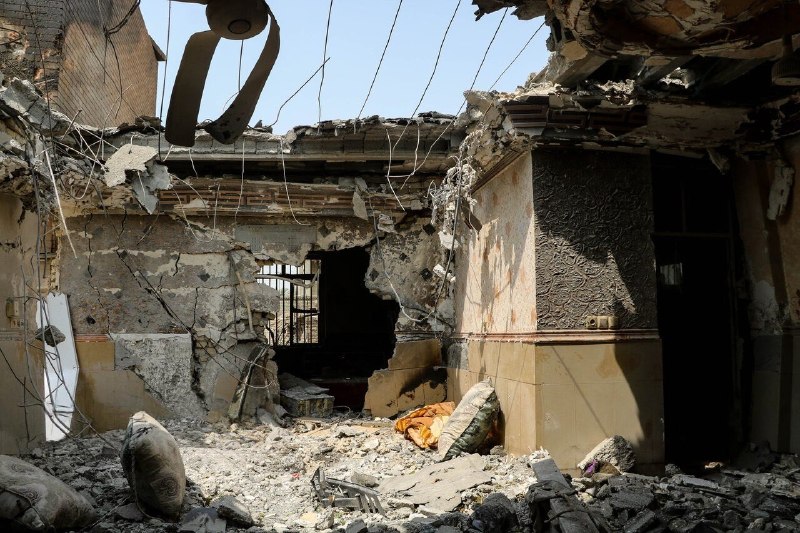
Smoke rose over the Basij base in Khormuj sometime around 23:56 UTC on 19 July 2026, according to the Telegram channel rnintel, which logged what it described as renewed US airstrikes on the Bushehr Province complex. Four minutes later, the same channel reported power cuts across the city. By 00:03 UTC on 20 July, the strikes were being described as ongoing. By 00:05 UTC, Iran's state broadcaster IRIB had confirmed explosions in Bushehr Province and two further blasts near Khormuj, per wfwitness. By 00:22 UTC, images allegedly from Sirik were circulating alongside claims of renewed strikes on the Chabahar-Konarak corridor in Sistan-Baluchestan, several hundred kilometres to the southeast.
The overnight picture, stitched together from two Telegram feeds that track regional military activity, is one of a US operation that appears to be running across at least two provinces and against both paramilitary and energy targets. It is a picture the mainstream wire services have not yet confirmed in detail, and one that, if accurate, marks a sharp widening of the geography of the US-Iran confrontation.
What the two channels are reporting
The reporting divides cleanly. rnintel, which styles itself around regional intelligence, posted at 23:56 UTC on 19 July that US airstrikes had hit the Basij base in Khormuj, Bushehr Province, and followed within minutes with a power-cut alert for the same city. At 00:03 UTC on 20 July, the channel characterised the activity as renewed airstrikes on Khormuj. At 00:19 UTC, it pointed further east, reporting renewed US attacks on the Chabahar-Konarak area of Sistan-Baluchestan, and at 00:21 UTC circulated images allegedly from Konarak showing aftermath footage.
wfwitness, a separate channel, converged on the same geography from a slightly different angle. At 00:05 UTC it logged unconfirmed explosions in Sirik and, citing IRIB, confirmed explosions in Bushehr Province and two further blasts near Khormuj. At 00:16 UTC it flagged fresh unconfirmed explosions in Bushehr. At 00:20 UTC it posted an image from Sirik and at 00:22 UTC published what it said was footage of smoke over Konarak, framing the wider Chabahar-Konarak operation.
The convergent detail matters. Two independent-feeling channels, posting within roughly half an hour of each other, both placed strikes on a Basij paramilitary target in Bushehr Province and on the southeastern coastal corridor in the same window. IRIB, Iran's state broadcaster, is named by wfwitness as the source for the Bushehr Province explosions, which gives the domestic Iranian confirmation an institutional weight that goes beyond Telegram chatter.
Why Bushehr and the Basij
Bushehr Province is not a casual target. It hosts the Bushehr Nuclear Power Plant, the only operating commercial nuclear reactor in Iran, on the Gulf coast. Any US operation in the province, even one aimed at a paramilitary compound in the provincial hinterland at Khormuj, lands inside a sensitive envelope. The reporting from wfwitness places fresh explosions in Bushehr city itself; the reporting from rnintel places strikes on a Basij base inland at Khormuj, where power then failed. Whether the nuclear facility has been touched is not specified in either feed. Both channels stop short of that claim.
The Basij is the paramilitary arm of the Islamic Revolutionary Guard Corps, organised across Iran for internal security, missile operations and rapid mobilisation. A strike on a Basij base in the country's south, hundreds of kilometres from the conventional IRGC concentration in western Iran, signals either a broader target set than the US has previously acknowledged in public, or an attempt to stretch Iranian air-defence coverage across multiple axes simultaneously.
The Chabahar-Konarak axis
The eastern strand of the reporting is harder to square with the conventional US-Iran frame. Chabahar is the port Iran has spent two decades developing as a sanctioned-but-not-cut-off gateway to Central Asia and Afghanistan, with Indian backing. Konarak sits a short distance up the coast. A US strike on this corridor, if confirmed, would land on infrastructure that Tehran has deliberately kept outside the most heavily sanctioned envelope and that serves as a rare node of Iranian-Indian commercial cooperation.
rnintel's 00:19 UTC alert frames the Chabahar-Konarak activity as renewed, implying prior strikes in the same area; wfwitness's 00:22 UTC footage of smoke over Konarak lands in the same window. Neither channel offers a named target inside the corridor. The reporting is thin enough that the strikes could be hitting IRGC naval elements stationed along the coast, an IRGC-affiliated logistics node, or something else again. The geometry is the news: the US operation, on this account, is not confined to the country's west or its nuclear heartland.
What remains unverified
Two caveats are worth stating plainly. First, neither rnintel nor wfwitness is a mainstream wire service; both are Telegram channels whose reporting on regional military activity is widely read but is not edited to the standard of Reuters, AP or the BBC. Their claims are useful as an early read of what is circulating inside regional intelligence networks, not as confirmed fact. Second, the casualty count, the specific military hardware struck, and the duration of the operation are not specified in either feed. The structural claim that can be made from the sources is narrower than the headline implies: across a roughly twenty-six-minute window on the night of 19-20 July 2026, two Telegram channels reported US airstrikes in two Iranian provinces, with power cuts in Khormuj and IRIB-confirmed explosions in Bushehr.
The wider question of whether this represents a new phase of the US campaign against Iran, or a continuation of an existing escalation under a different tactical frame, cannot be answered from these sources alone. What the sources do show is that, on this night at least, the geography of the strikes stretched further south and further east than the public US framing of operations in recent weeks has typically acknowledged.
Stakes
If the reporting holds, three things follow. The Iranian regime faces a stretched air-defence problem along both its Gulf coast and its southeastern frontier, with energy and paramilitary infrastructure simultaneously in play. India's Chabahar calculus, already complicated by US secondary sanctions pressure, becomes harder. And the diplomatic off-ramp, whatever form it might take, gets a narrower aperture the moment strikes are touching a corridor India has invested in and a province that hosts Iran's only operating reactor.
Desk note: Monexus is reporting here from two Telegram channels, rnintel and wfwitness, that specialise in regional military tracking. Their reporting is treated as early-warning input rather than confirmed wire copy, and IRIB is named as the domestic Iranian source for the Bushehr Province explosions. Where mainstream outlets publish confirmed detail, we will update.
Wire provenance
This editorial synthesis draws on the following public wire/social posts:
- https://t.me/rnintel
- https://t.me/rnintel
- https://t.me/rnintel
- https://t.me/wfwitness
- https://t.me/wfwitness
- https://t.me/wfwitness
Follow the event.
These dated source records provide context. They do not retrospectively verify this archive article.
Separate what the nuclear watchdog reported from what it could not determine after the June 2025 strikes.