Three years on, a Bahraini cleric's frame for Gaza and what it costs the resistance
On the third anniversary of the 7 October operation, Bahrain's Sheikh Issa Qassim frames the conflict as a moral ledger. The frame deserves scrutiny on its own terms.
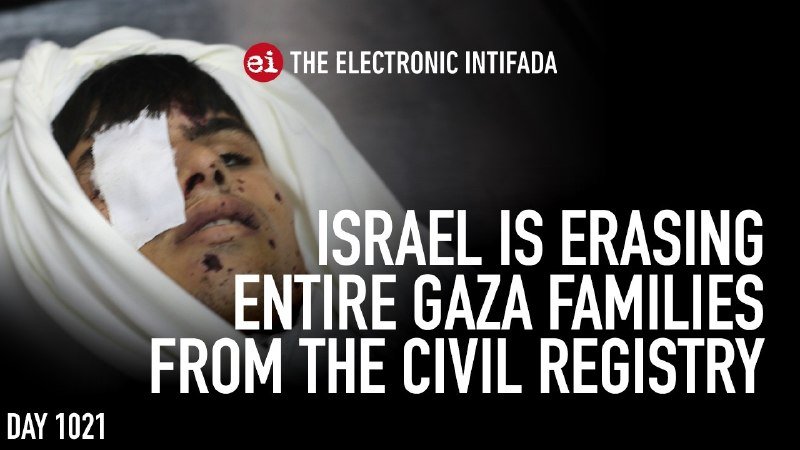
Three years to the day after the 7 October operation, Sheikh Issa Qassim, the spiritual reference of Bahrain's Shia majority, stepped back to the lectern and read out a moral balance sheet. The killing and destruction, he said in remarks carried by Al-Alam Arabic on 21 July 2026, were real. So was the trust, pride and liberation the moment catalysed. The Israeli state and the United States, he added, had failed in three stated objectives: annihilation, the ending of the resistance, and its surrender (Al-Alam Arabic, 21 July 2026, 11:04 UTC). The framing is worth taking seriously for the same reason it is worth contesting. It is the most coherent public statement of what the operation is now meant to mean, articulated by a cleric whose audience stretches from Manama to the southern suburbs of Beirut.
Qassim's remarks matter not because they break news but because they set the canonical narrative for the resistance's anniversary. They also expose a tension at the centre of that narrative: a claim to moral clarity built on top of events that remain contested, with civilian cost continuing to mount on both sides of the border.
What he actually said
The televised remarks were short and structured around three claims. First, that the destruction documented in Gaza over the past three years has, paradoxically, produced a deeper reservoir of trust among Palestinians and their regional backers. Second, that the Israeli government and the United States have been unable to convert military weight into any of their three declared political goals. Third, that the war has been met, in Qassim's phrasing, with "steadfastness and sacrifice" rather than capitulation (Al-Alam Arabic, 21 July 2026, 11:03–11:04 UTC).
The tone is theologically inflected but politically operational. Qassim is not a freelance commentator. As spiritual reference of the Bahraini Shia community, his statements are read by clerical networks and political factions across the Gulf and the Levant, including those with armed wings. That audience is the point of the exercise: an anniversary is a moment to reset the internal narrative before external audiences, not after.
What the counter-narrative says
The official Israeli line since 7 October 2023 has been that the operation was an atrocity against civilians, not a military engagement, and that the war in Gaza is the consequence of that atrocity. Israeli government communiqués and the IDF Spokesperson's office have framed the campaign as one of dismantling Hamas's military and governing capacity. Western wire reporting has tended to mirror that frame, with steady attention to hostage cases, to the size and pace of humanitarian access, and to ceasefire negotiations mediated through Doha and Cairo.
That frame is not wrong. It is, however, incomplete. It treats the resistance narrative as background noise rather than as a competitor claim that has to be out-argued, not out-shouted. Qassim's remarks are useful precisely because they make the competitor claim legible.
The structural cost of a moral ledger
There is a deeper problem with the framing on its own terms. A narrative built on "trust, pride, liberation" cannot survive a body count indefinitely, because moral ledgers are two-sided instruments. The same ledger that records steadfastness records orphans. The same ledger that records defiance also records the conditions under which Gazan civil society, the Palestinian Authority, the diaspora business class, and the prisoner-exchange negotiators have to operate. None of those actors is present in Qassim's three-point summary.
The harder question for the resistance's political wing, and one Qassim does not address in the excerpts carried by Al-Alam, is what the third-anniversary moment is actually delivering to the civilians whose cause it claims to serve. Reconstruction metrics, governance arrangements for the day after, the political status of the Palestinian Authority, the legal fate of Israeli hostages still held in Gaza: these are the items that move markets, that decide whether the war resumes, and that determine whether "steadfastness" translates into a state or remains a posture.
What the framing concedes without saying so
The cleric's silence on reconstruction and governance is itself a tell. If the resistance's political project were on the verge of delivering sovereign outcomes, an anniversary address would be the natural moment to outline them. The fact that the rhetoric stays at the altitude of sacrifice and trust suggests the political class either does not have an answer or has been told not to share one.
It also concedes, inadvertently, that the Israeli and American objective of degrading Hamas's military capacity has been, in tactical terms, partially met, even as the strategic objective of ending the resistance as a political phenomenon plainly has not. That distinction matters because it sets the parameters of any future negotiation: a weakened but intact military formation, a fragmented but unsurrendered political movement, and a civilian population that has paid the largest share of the price and is owed the largest share of the answer.
The next concrete date to watch is the next round of ceasefire talks in Doha. Anniversaries reset the rhetoric; talks reset the map.
This publication frames anniversary rhetoric as a competitor claim to be tested against reconstruction metrics and negotiation outcomes, rather than as background colour to the dominant wire frame.
Wire provenance
This editorial synthesis draws on the following public wire/social posts:
- https://t.me/alalamarabic
- https://en.wikipedia.org/wiki/Isa_Qassim
- https://en.wikipedia.org/wiki/2023_Israel%E2%80%93Hamas_war